Prenatal Yoga Poses and Their Safety Limits
Seven prenatal yoga poses for back pain and breathing, with the safety limits that matter and the signs that mean stop and call a midwife.
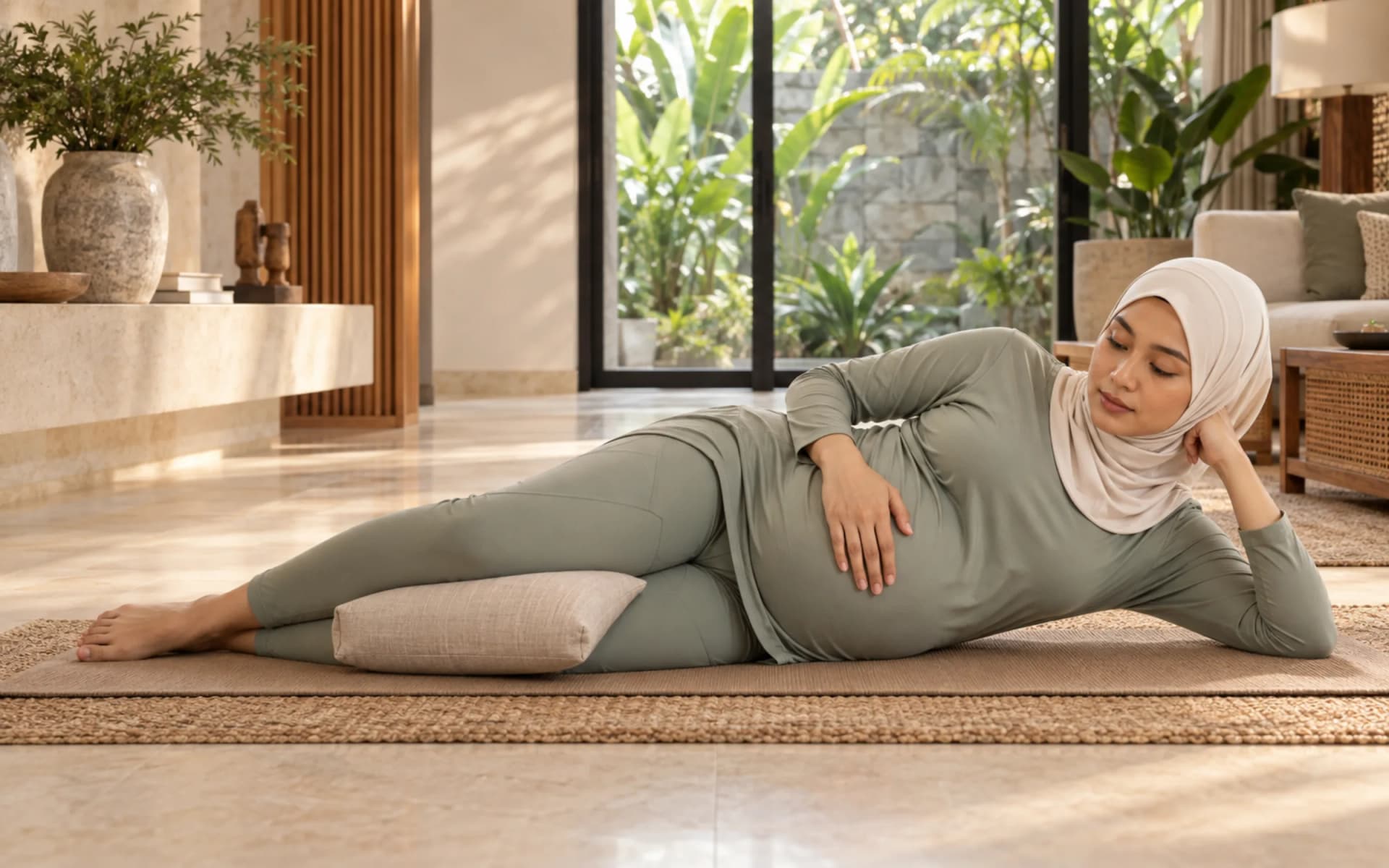
Your back hurts, you cannot sleep, and someone has suggested yoga.
It is worth doing, and it is worth knowing what it will and will not deliver, because the claims made for prenatal yoga have run well ahead of the evidence.
What it does
- Strengthens your pelvic floor and trains your breathing
- Genuinely relaxes you
- Reduces stress, during and afterwards
- Improves circulation
- Improves how you sleep
- Eases back pain, abdominal cramps and pelvic pain
What it does not
- It has not been shown to prevent preterm birth or low birth weight. ACOG supports regular activity in pregnancy, and not that far
- It will not prevent pre-eclampsia. That is monitored through routine antenatal care, and prevention in high-risk Mamas is a doctor's decision
- There is no evidence it speeds up dilation, strengthens contractions, or moves your baby into your pelvis sooner
When you can start
Plenty of prenatal classes begin in the second trimester, and that is about comfort rather than a rule.
ACOG says Mamas with healthy pregnancies can exercise from the first trimester, yoga included, aiming for around 150 minutes of moderate activity a week.
Nausea and exhaustion mean most of us postpone it ourselves, which is entirely reasonable.
Speak to a doctor first if you have a history of preterm birth, bleeding, placenta praevia, a weak cervix, pre-eclampsia, severe anaemia, heart or lung conditions, or you are carrying twins.
The safety limits
- After the first trimester, do not lie flat on your back for long. Your uterus presses on large blood vessels and it will make you dizzy
- No lying face down, no deep twists, no overstretching. Relaxin has loosened your joints and injury comes easier now
- No hot yoga, and no hot rooms. Overheating carries risk for your baby
- No inversions, and no balance poses without something to hold
- Drink enough, and keep the effort at a level where you could still talk
Stop and ring your midwife if you have bleeding, fluid leaking, regular contractions, chest pain, breathlessness before you started, severe dizziness, headache, calf pain or swelling, or reduced movements.
Seven poses
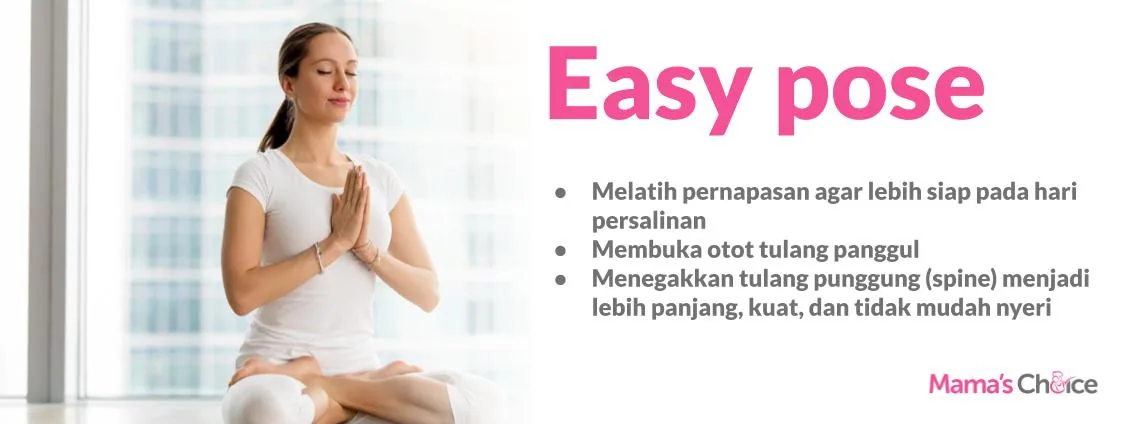
Easy Pose (Sukhasana). Sit cross-legged, back straight, shoulders down. Breathe steadily for as long as is comfortable. Strengthens the spine, opens the pelvis, settles the breath.
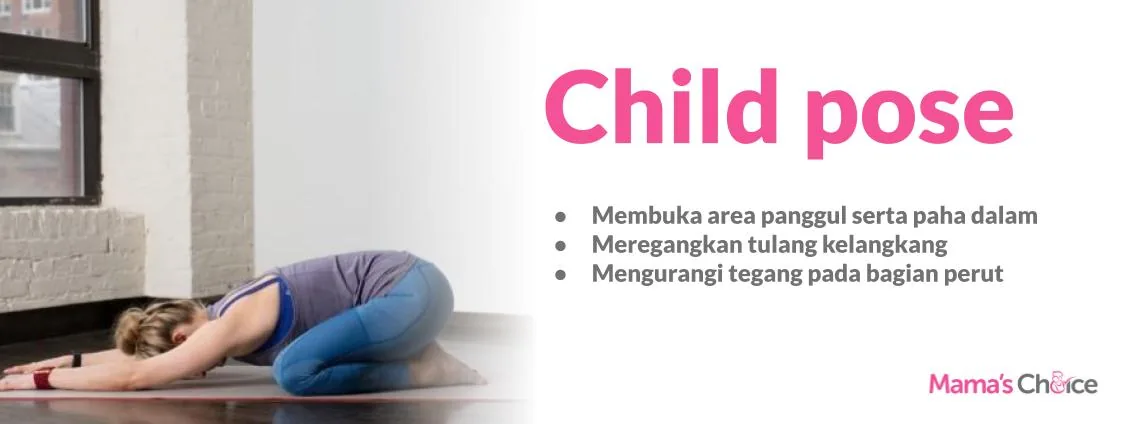
Child's Pose (Balasana). Kneel, fold forward, arms stretched in front. Widen your knees to make room for the bump. Opens the pelvis and inner thighs, releases tension across the belly.
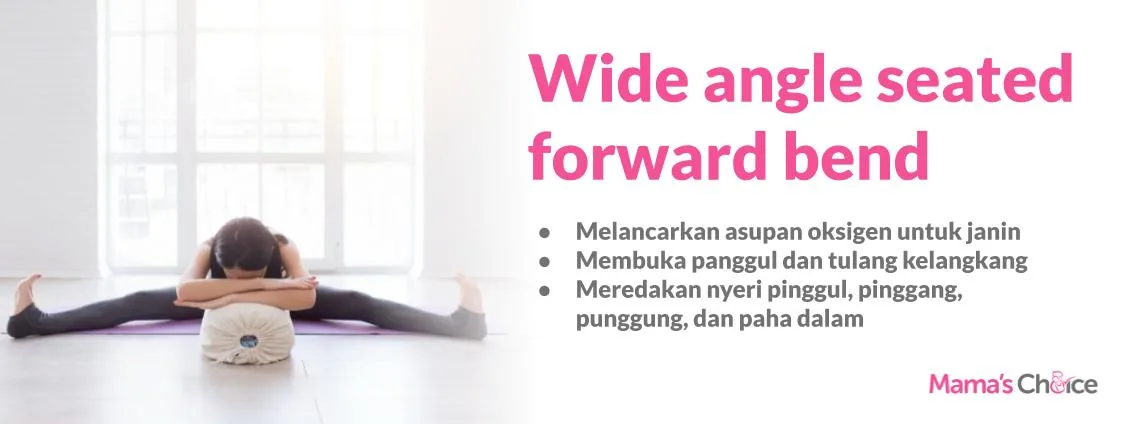
Wide Angle Seated Forward Bend (Upavistha Konasana). Legs open as wide as is comfortable and straight. Cushion in front of the bump, fold gently towards it. Eases hip and lower back pain.
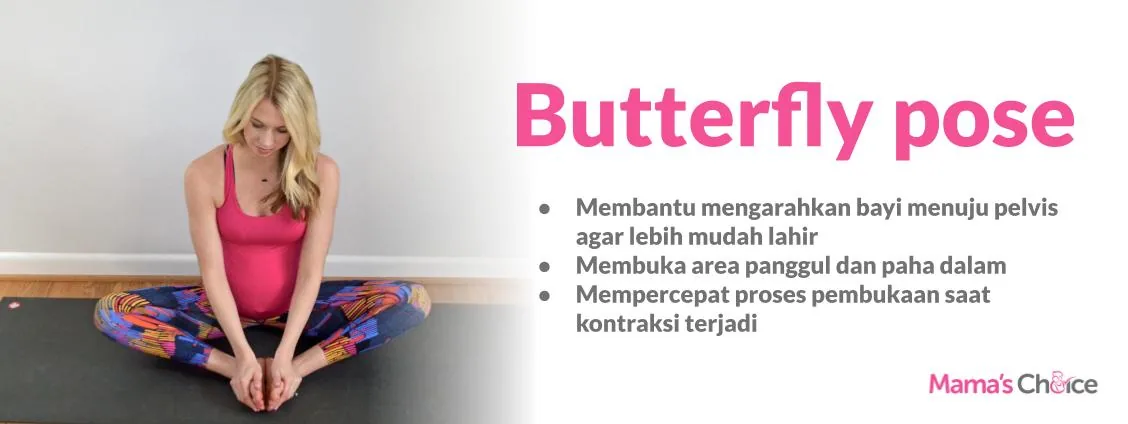
Butterfly Pose (Baddha Konasana). Soles of your feet together, hold them, let your knees fall out. Opens the pelvis and inner thighs, relaxes everything.
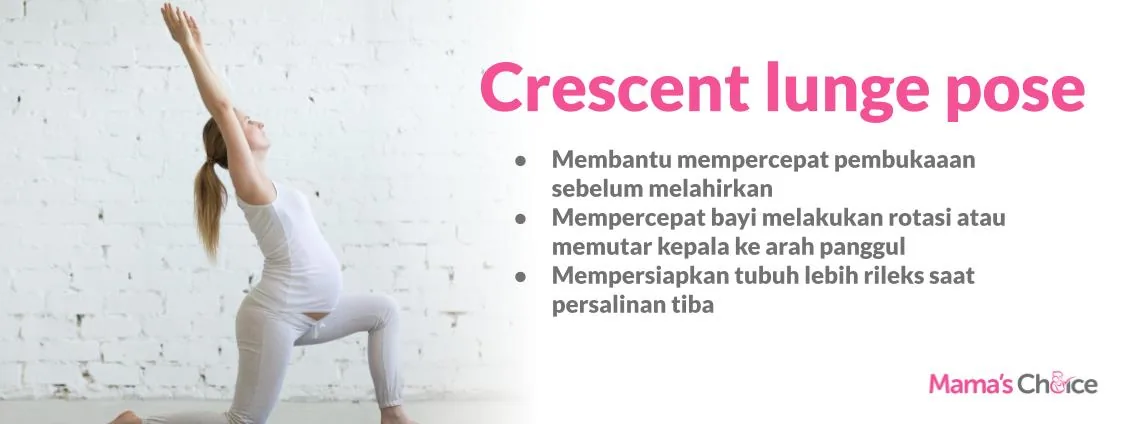
Crescent Lunge (Anjaneyasana). One leg forward and bent, the other stretched back. Once steady, arms overhead. Then the other side. Creates space for your baby to move.
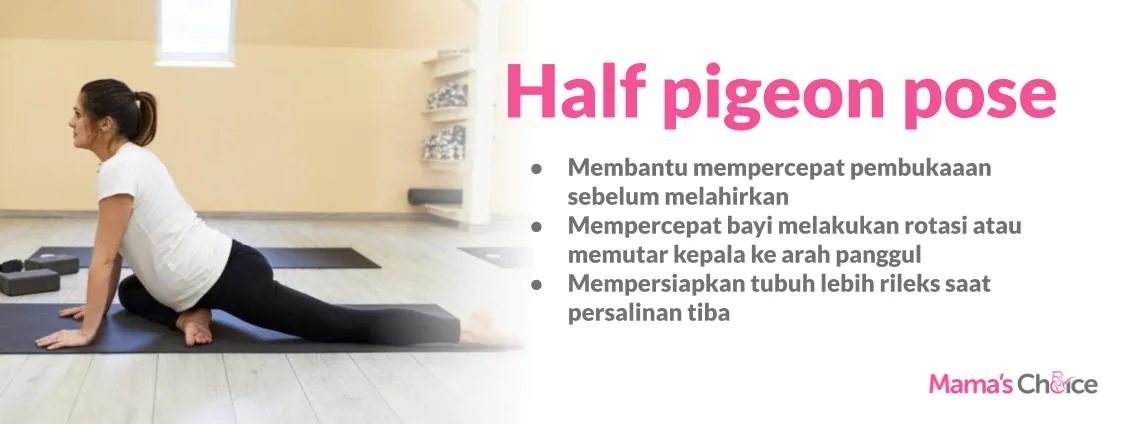
Half Pigeon (Ardha Kapotasana). One leg folded in, thigh and shin on the mat, the other extended behind you. Then swap. Same benefits as the lunge.
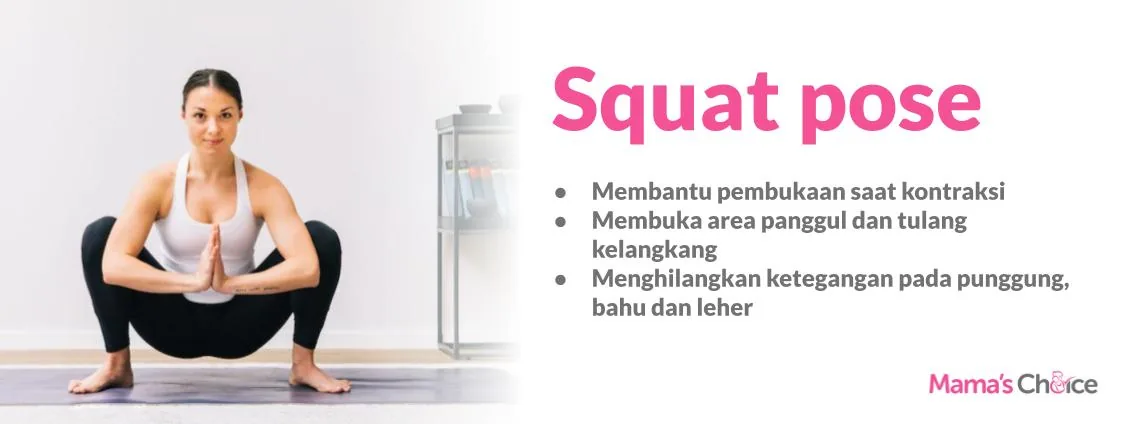
Squat Pose (Malasana). Squat with your back upright, palms together at your chest for balance. Lean on a wall if balance is difficult. Opens the pelvis and releases the back, shoulders and neck.
Making the session work
- Somewhere quiet, without interruptions
- A mat or a comfortable surface
- At least five minutes per pose
- Attention on the breathing, which is the part that carries into labour
Mornings often feel easiest. The best time is whichever one you actually have.
One practical thing
You will sweat more than you expect, and pregnancy has already darkened some areas of your skin.
Mama's Choice Dry Serum Deodorant has niacinamide and lemon extract, without aluminium, alcohol or parabens.

Sources
Share this article
This article is for information only and is not a substitute for diagnosis or medical advice. Please discuss your own situation with your midwife or doctor.