DHA and Baby Brain Development
What DHA does in a developing brain, what the evidence supports, and where the claim that it makes children smarter runs ahead of the research.

It is on the front of the formula, the milk powder, the prenatal vitamin and the biscuits, usually next to a picture of a brain.
DHA does something real. What it is sold as doing is considerably bigger than what the evidence supports, and the gap is worth knowing before you pay for it.
What it is
Docosahexaenoic acid, a long-chain omega-3.
Your body can make some from ALA, the shorter omega-3 in plants, but not much. The conversion is inefficient enough that what you eat still matters, which is why oily fish, eggs and red meat keep coming up.
It sits in cell membranes throughout the body, and has a role in signalling between nerve cells, in blood lipids, and in how eyes work.
What it does in a brain
The numbers get quoted a lot, so precisely:
DHA can be around 90% of the long-chain omega-3 in the brain. DHA and arachidonic acid together make up roughly 25% of total brain fatty acids. Both are structural parts of brain membranes, and both have roles in development and nervous system function.
Most of the accumulation in your baby's brain happens in the third trimester, and carries on at a high rate until about the end of her second year.
Will it make her cleverer
This is the part stretched furthest, and the honest answer is that nobody knows.
DHA genuinely matters to brain development. Whether supplementing it improves a child's cognitive ability is a separate question, and the evidence is inconsistent. Some studies find a benefit. Others do not.
You will see one study of 82 infants quoted, which found maternal DHA levels accounted for 33% of the variation in problem-solving at 12 months. That is an association in a small sample. An association is not proof that adding DHA produces the outcome.
So meeting your DHA needs makes sense as part of eating well. It is not a route to a cleverer child, and anything sold on that promise is selling more than it has.
Where the case is stronger
Premature babies. Here the argument is about a shortfall rather than an enhancement, which is a much firmer footing.
A baby born very early misses part of the third trimester, which is exactly when most brain DHA accumulates. She gets less than a baby who stayed to term.
That is a real gap, and a neonatal team will already be thinking about it. Talk to them rather than acting on it alone.
Getting it into your milk
What is in your milk reflects what you eat. Fish, eggs and red meat all raise it.
Oily fish is the most concentrated source. While pregnant and feeding, choose the lower-mercury ones: salmon, sardines, anchovies. Avoid shark, swordfish and king mackerel.
Mama's Choice Almond Milk Powder has DHA in it alongside fenugreek, katuk leaf, almond and dates.
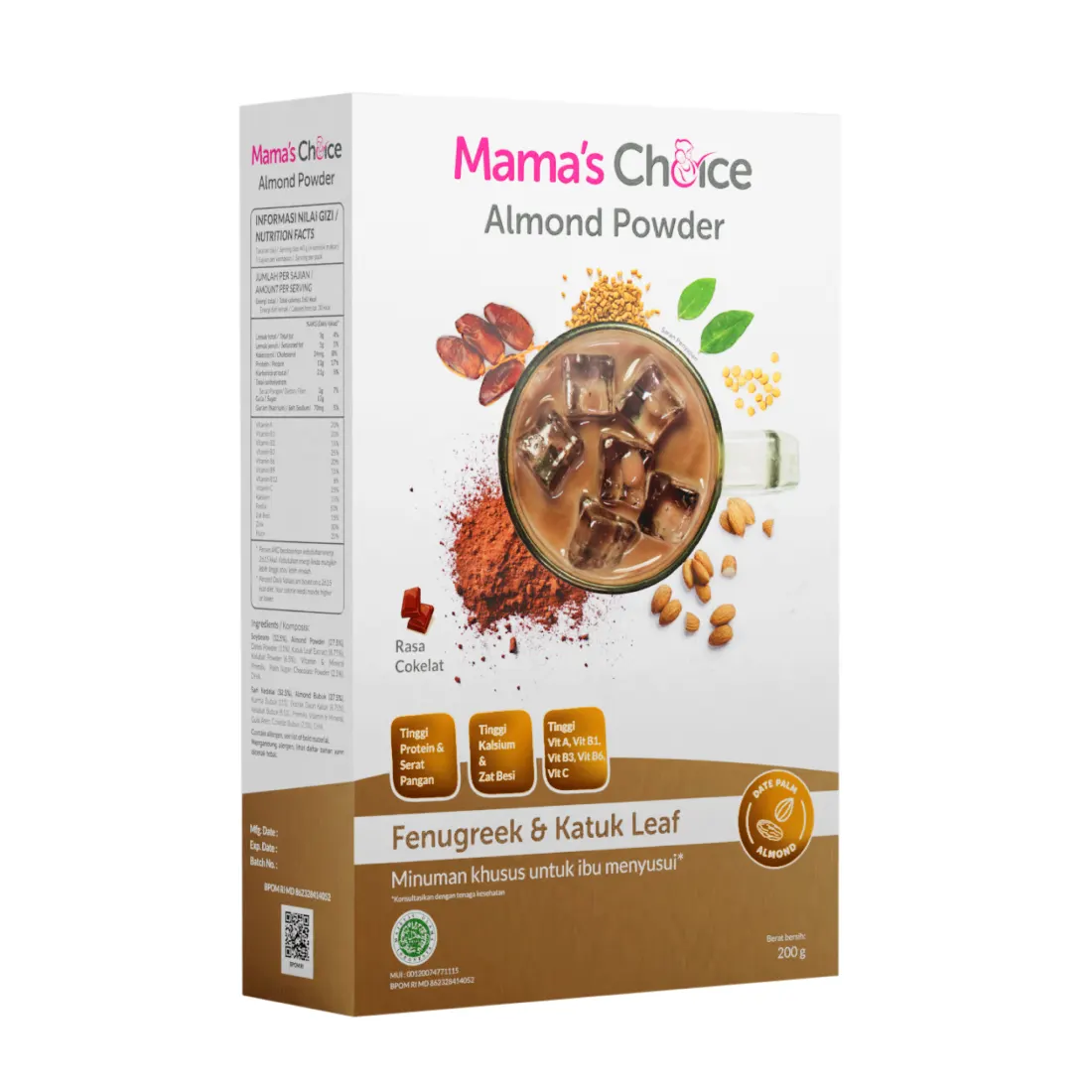
The claim that 7 in 10 Mamas felt their supply increased comes from an internal home panel test. It records what participants reported feeling, not measured volume.
A supplement fills a gap in a diet. It does not replace one.
How much
Around 200 to 300mg a day in pregnancy and breastfeeding, which is roughly two portions of oily fish a week.
If you do not eat fish, or you have a medical condition or take medication, ask a doctor before adding a supplement rather than working it out from a label.
What matters more than this
DHA is one nutrient among many, and it is not the one that decides how your child turns out.
Being talked to, being read to, responsive care, sleep and a varied diet all have far better evidence behind them than any single fatty acid.
Worth getting right. Not worth worrying about at the expense of everything on that list.
Sources
Share this article
This article is for information only and is not a substitute for diagnosis or medical advice. Please discuss your own situation with your midwife or doctor.