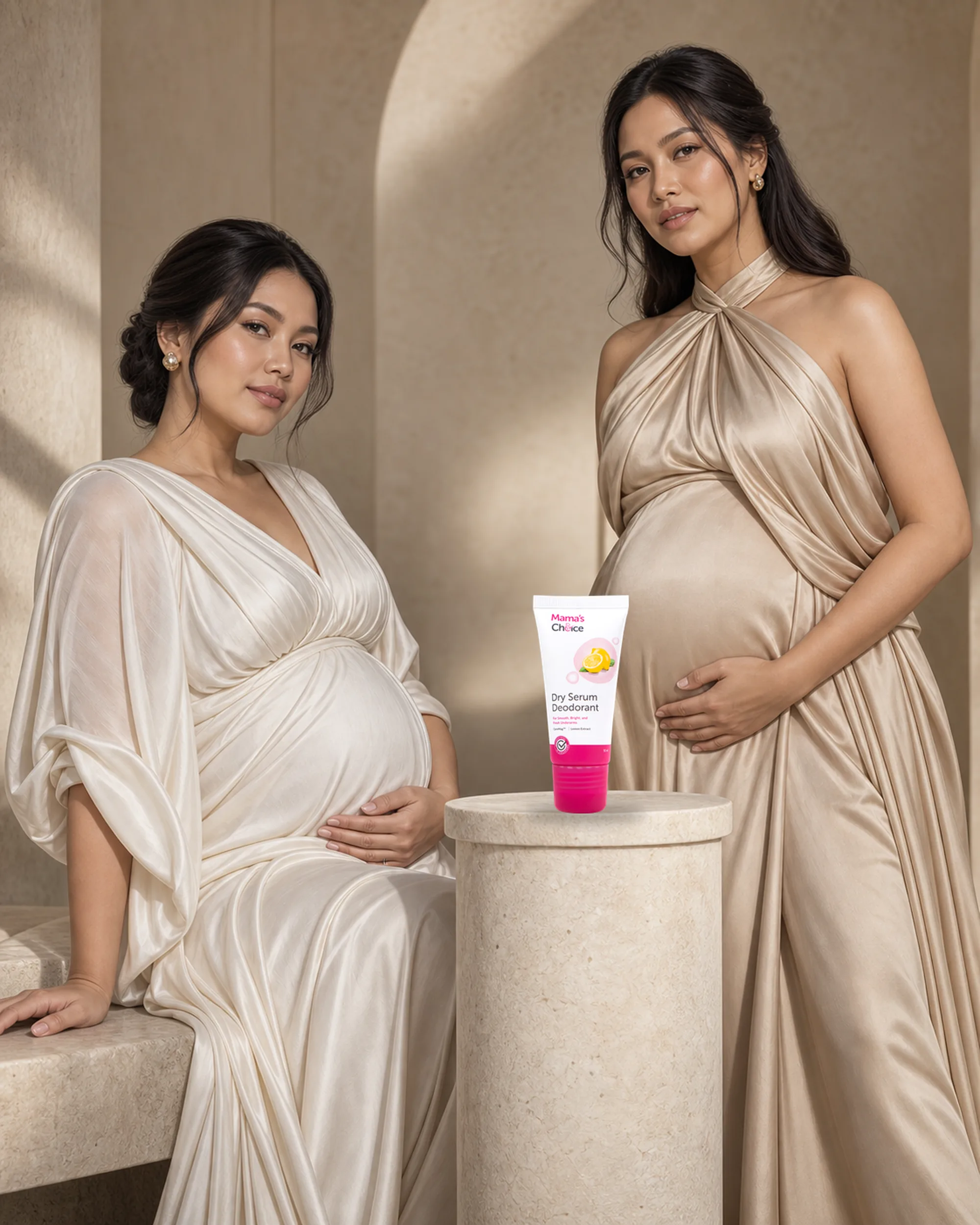
What a Deodorant Can and Cannot Do in Pregnancy
Why body odour changes in pregnancy, what a deodorant addresses, and what to do when it stops seeming to work.

You have showered, applied it, and an hour later you can smell yourself again.
Before you buy a different one, it is worth knowing what a deodorant is actually doing, because in pregnancy your body odour changes for two separate reasons and a deodorant only addresses one of them.
Where the smell comes from
Sweat itself is close to odourless.
You have two types of sweat gland. Eccrine glands are all over you and produce watery salty sweat that cools you down. Apocrine glands sit under your arms and around your groin, producing a thicker sweat with proteins and fats in it.
Skin bacteria break down that second kind, and what they produce is what you can smell.
So two levers: less sweat sitting on your skin, and fewer bacteria working on it. A deodorant pulls the second one.
Why it changed in pregnancy
More sweat. Your glands are more active, so there is more for bacteria to work with.
A sharper nose. Plenty of Mamas do not smell any different at all. They have simply become far more aware of themselves, which is genuinely disorienting and almost never mentioned.
Your diet. Red meat, seafood and onions are linked to stronger odour in some people.
Deodorant against antiperspirant
A deodorant controls odour, by going after the bacteria.
An antiperspirant reduces how much you sweat, which generally needs aluminium salts to temporarily block the ducts.
An aluminium-free product is a deodorant. It helps with smell and it will not make you sweat less, and anything claiming both without aluminium is describing something it does not do.
On aluminium itself: Cancer Research UK and other bodies state there is no good evidence linking deodorant or antiperspirant use to breast cancer. Avoiding it in pregnancy is a reasonable preference, and it is not a response to a demonstrated risk.
When yours seems to have stopped working
The most common complaint, and the cause is usually not the product.
Your clothes. Synthetics hold sweat residue and bacteria long after washing. Odour returning within an hour of a shower is often the shirt rather than you.
Applying over old product. Putting more on top of a day's residue does very little. Wash the area first.
Your hair. Thicker underarm hair holds sweat against your skin for longer.
Applying to damp skin, which dilutes it before it does anything.
Your changed sense of smell. Worth considering before you buy a fourth product.
Choosing one
- Fragrance-free, which sidesteps phthalates and suits a sharper nose
- Alcohol-free, which stings less on freshly shaved skin
- A short ingredient list
- A texture you will use every single day
Mama's Choice Dry Serum Deodorant is a fast-absorbing serum with Dead Sea minerals, niacinamide and lemon extract, without aluminium, alcohol or parabens.
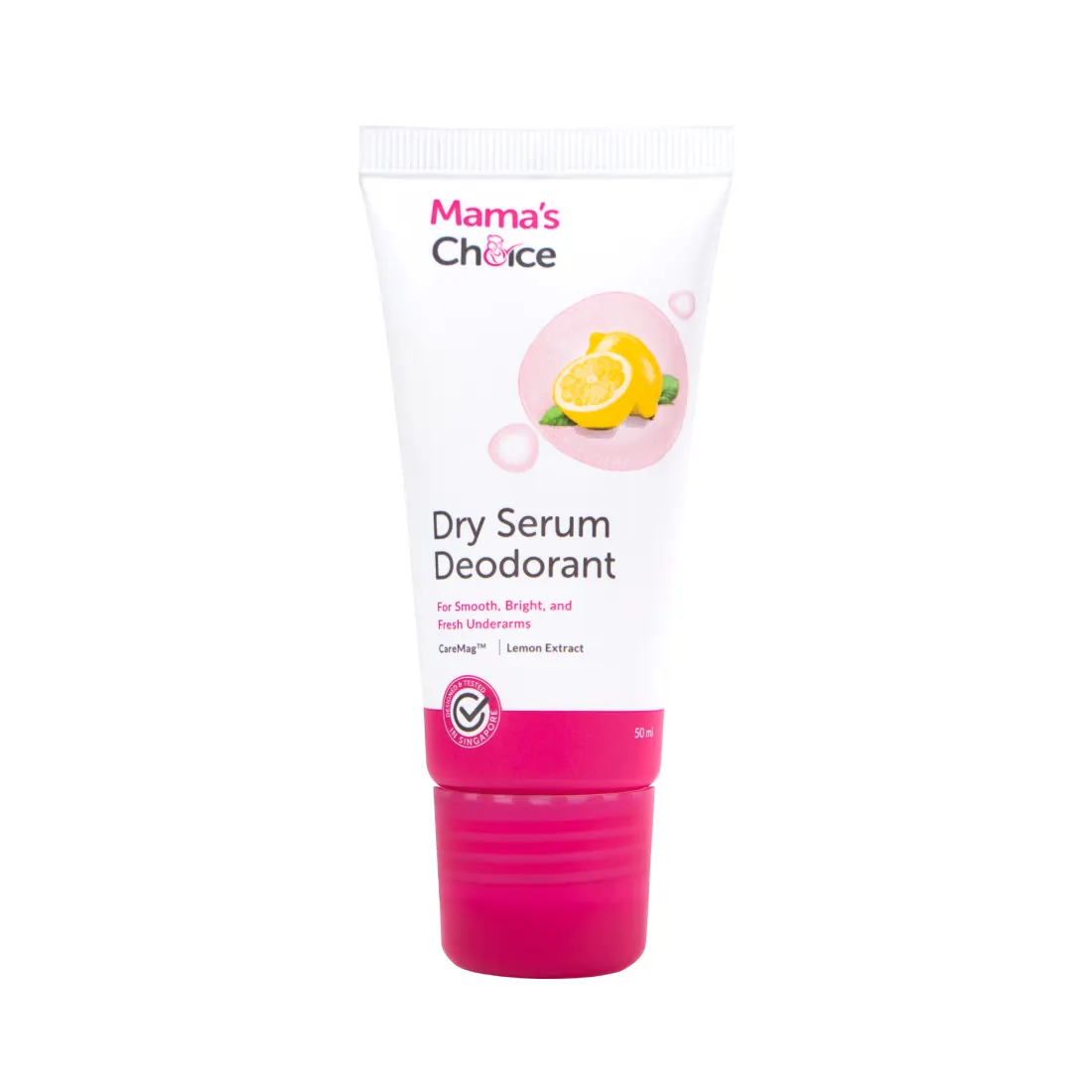
Niacinamide is in there for tone, because your underarms have probably darkened from the same hormonal pigment change that draws the line down your belly.
The habits alongside it
- Wash twice a day and dry thoroughly, particularly under your arms
- Change clothes daily, and wash exercise clothes after one wear
- Cotton or linen over close-woven synthetics
- Trim underarm hair
- Drink when you are thirsty
That last one is worth being accurate about: sweating is triggered by your core temperature rising, not by how much you drink. Drink because you are thirsty, not because you think it will help here.
Darker underarms
Common now, from the same hormonal pigment change as melasma and the line on your belly.
It fades after the birth. What sets it back is harsh hair removal, so a blunt razor or plucking will undo more than any product will fix.
When to raise it with a doctor
- Sweating heavy enough to disrupt your day
- Underarm skin that stays red, sore or rashy
- A sudden change in odour with other symptoms
- Fever, fatigue or unexplained weight loss
Sweating usually goes back to normal in the weeks after the birth, as your hormones settle.
Sources
Share this article
This article is for information only and is not a substitute for diagnosis or medical advice. Please discuss your own situation with your midwife or doctor.