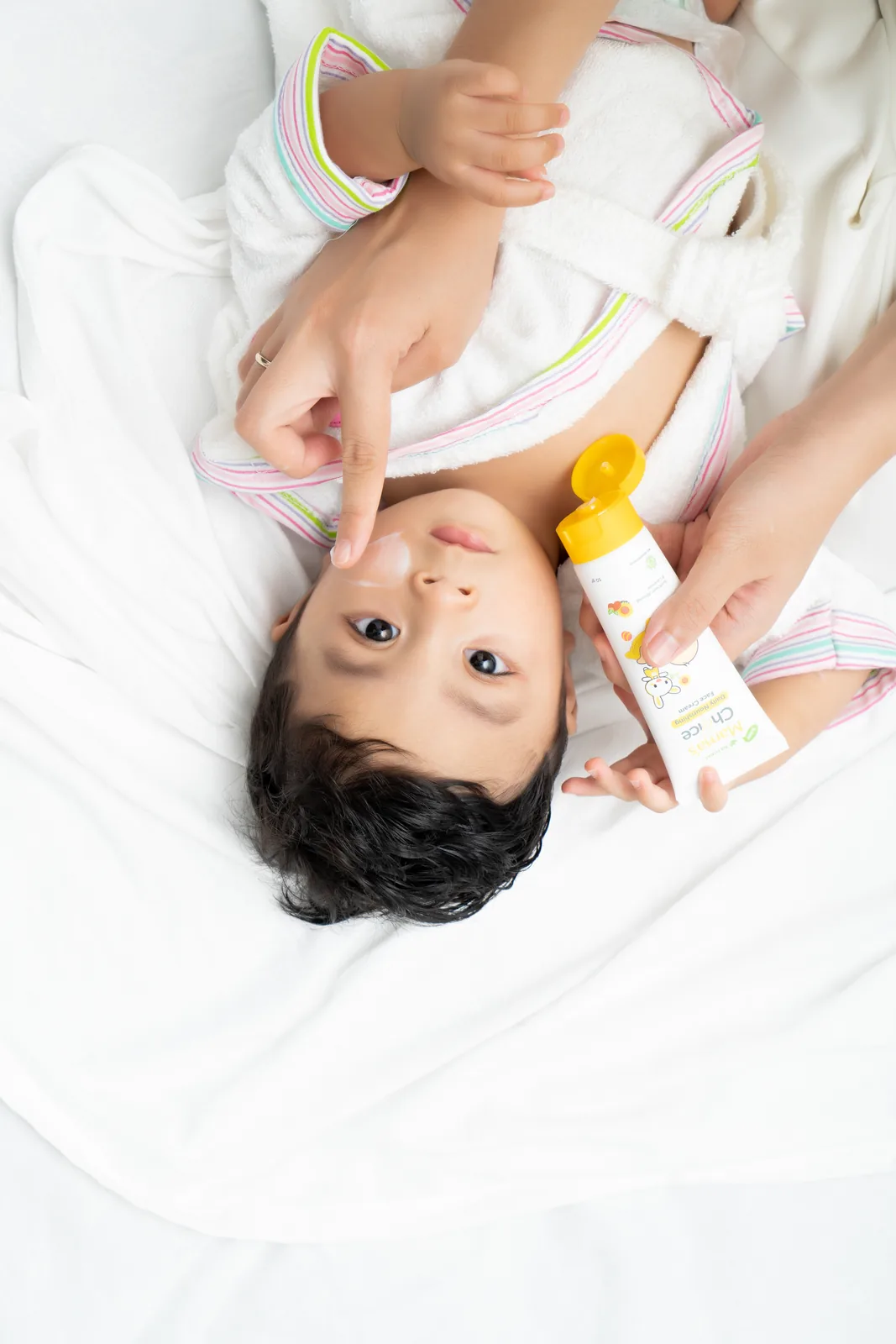
Sunscreen for Babies: When It Is Safe and How to Choose
Babies under six months should be protected by shade and clothing first. When sunscreen becomes appropriate, what to look for, and how to apply it properly.
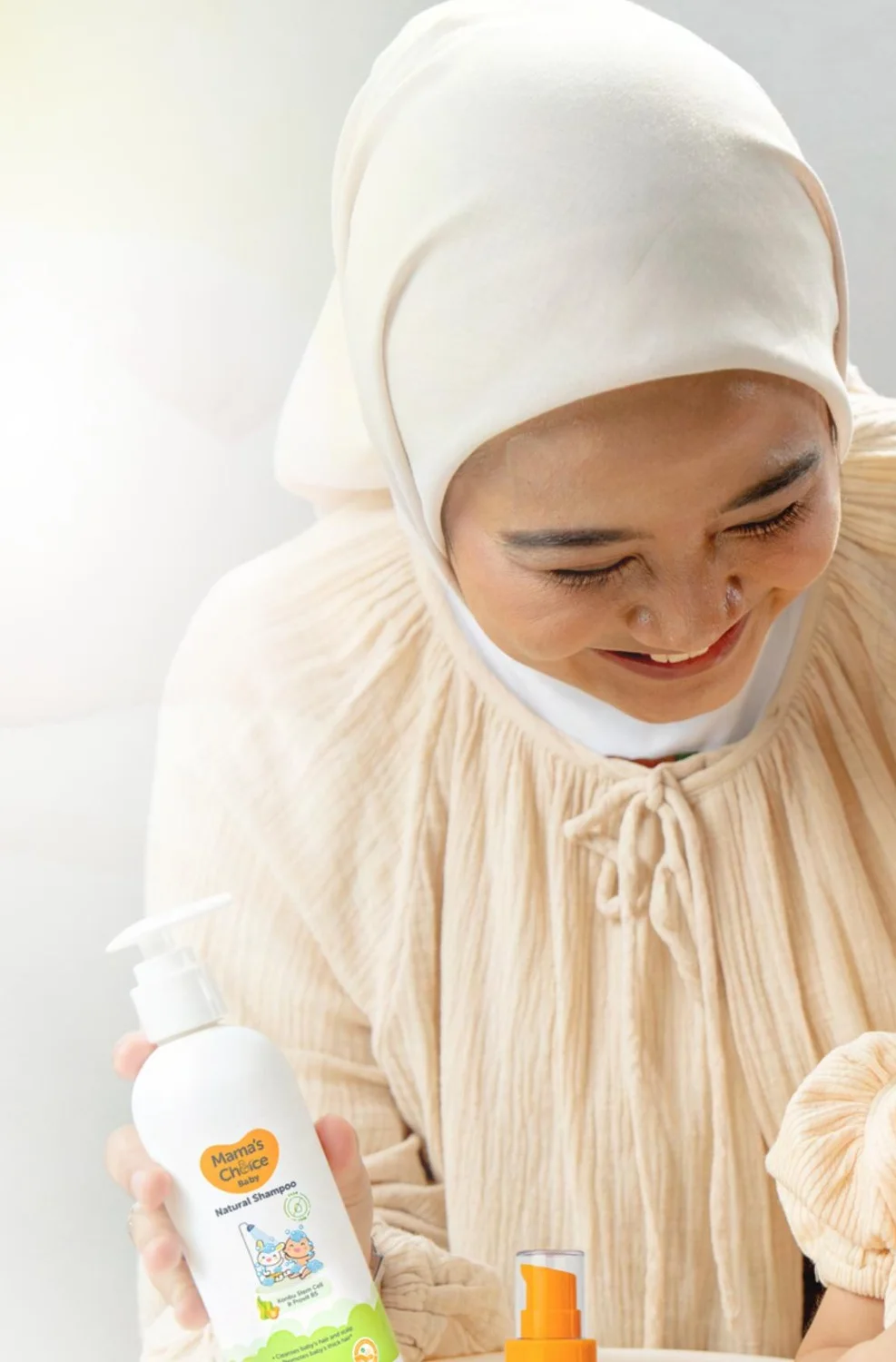
Before you buy any: under six months, sunscreen is not the answer.
We sit on the equator, UV is high all year rather than seasonally, and her skin is far more vulnerable to it than yours. But for the youngest babies the protection is shade, clothing and timing, not something in a bottle.
Why her skin is different
It is thinner. Her outermost layer is far thinner than yours, so UV goes deeper.
Less melanin. Melanin is the skin's own UV protection, and she makes much less of it.
More surface area for her weight. Anything applied is absorbed in greater proportion, and heat reaches her faster.
She cannot tell you or move. She cannot say she is too hot, and she cannot take herself into the shade.
Under six months
Avoid the strongest hours, roughly 10am to 4pm here. Go out early morning or late afternoon.
Find shade, remembering that shade reduces exposure rather than removing it. UV reflects off sand, water and concrete.
Covering clothing. Long sleeves in something light and breathable like cotton. A tighter weave protects better.
A wide-brimmed hat, which shades her ears and neck too.
A pram hood, and check which direction the sun is actually coming from.
From six months
Choose a mineral sunscreen. Zinc oxide and titanium dioxide both work on the surface by reflecting UV, and absorption is minimal. This is the type recommended for babies.
Chemical sunscreen is absorbed and converts UV into heat. Lighter texture, and it irritates thin skin more often.
On the label, look for:
- SPF 30 or higher, which describes protection against UVB, the burning one
- Broad spectrum, or a PA rating, for UVA, linked to ageing and longer-term damage. SPF alone is not enough
- Fragrance-free and alcohol-free
- A BPOM registration
Applying it properly
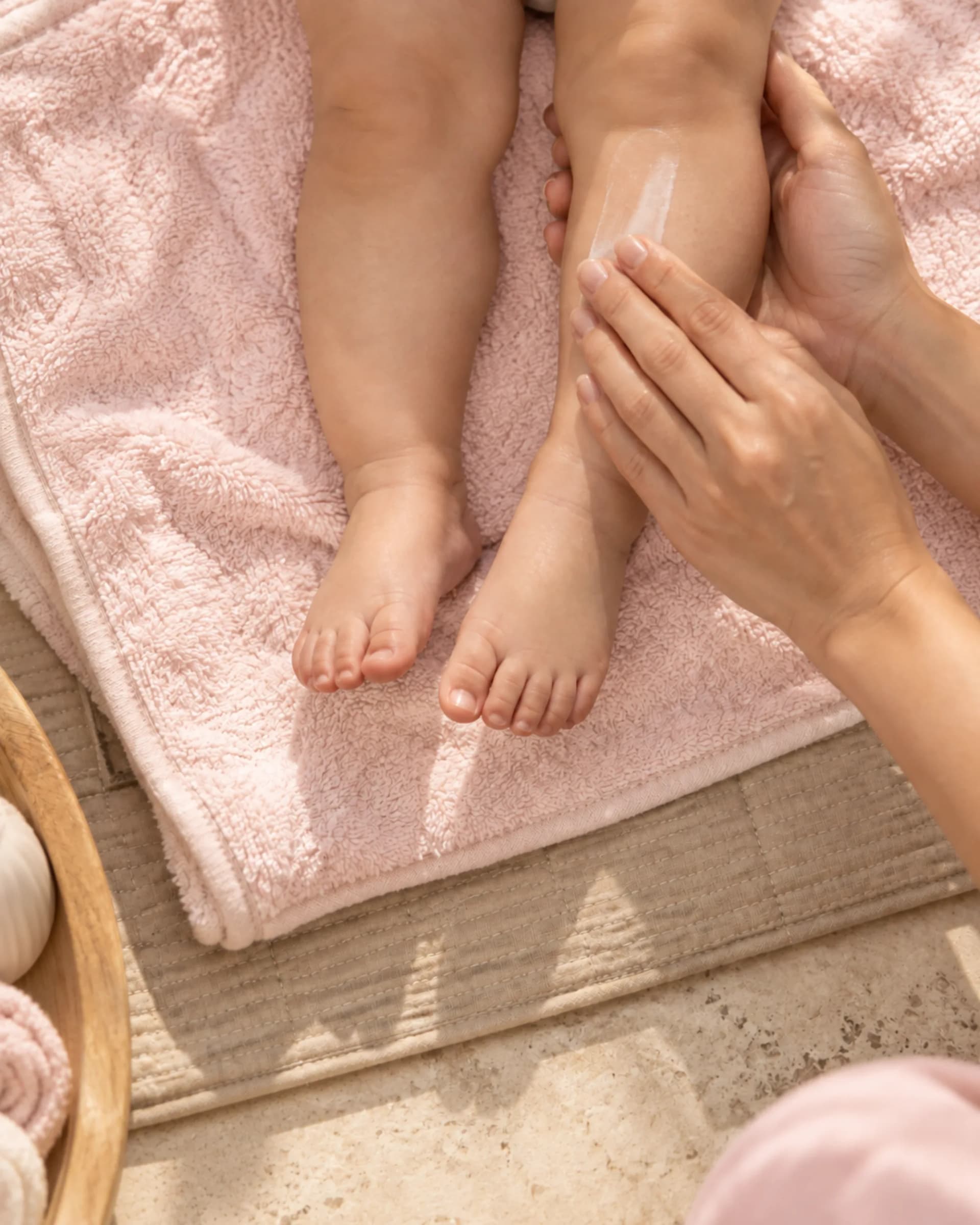
Patch test first. A little on her inner arm, wait 24 hours, particularly if her skin is sensitive.
Apply 15 to 30 minutes before you go out.
Use more than feels necessary. The most common mistake by a distance. Most people apply well below the tested amount, so the real protection is lower than the number on the bottle.
Reapply every two hours, and straight after sweating, swimming or towelling.
Do not miss the bits everyone misses: ears, back of the neck, tops of the feet, hairline.
Stay clear of her eyes and mouth.
Wash it off at bath time with a gentle baby wash.
One made for her skin
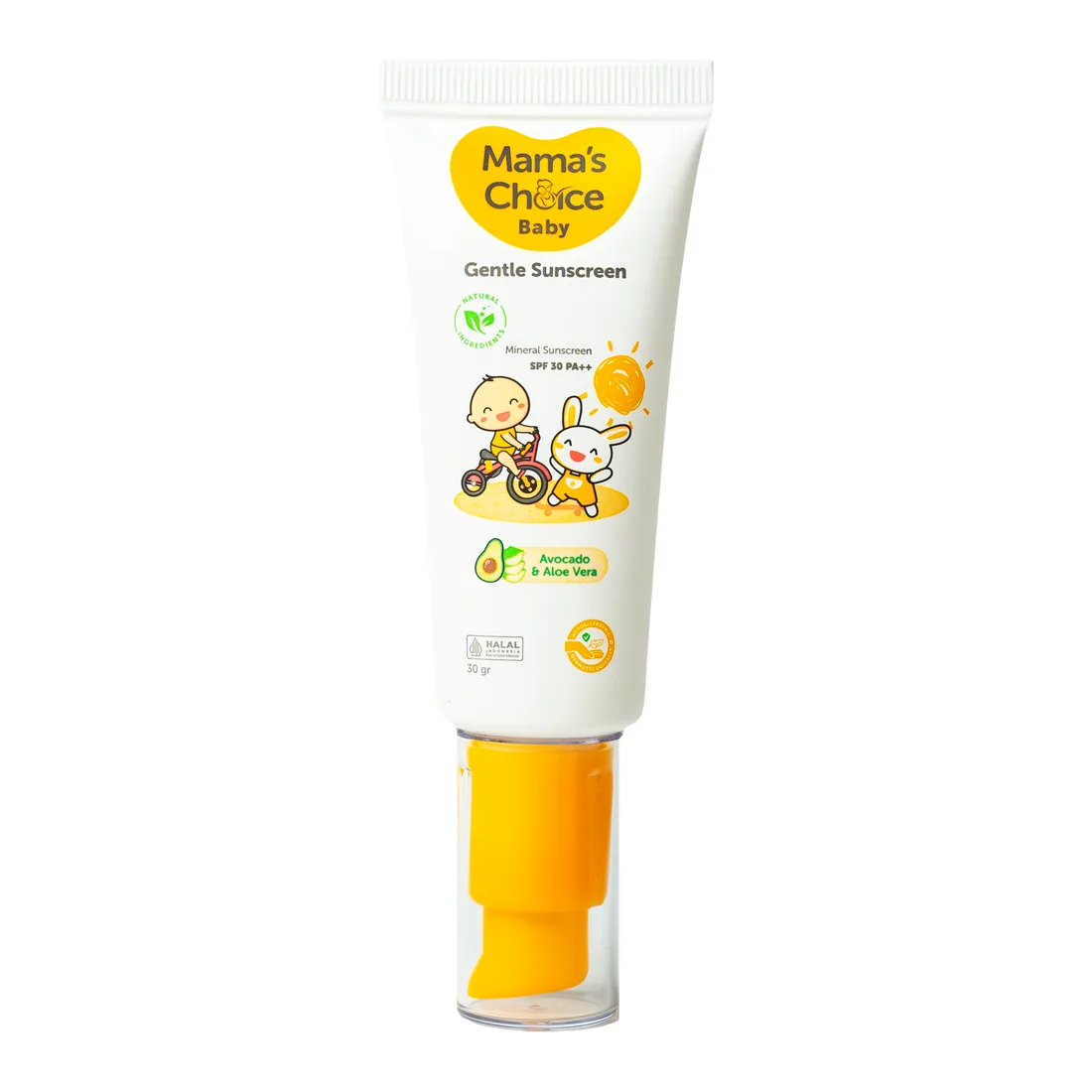
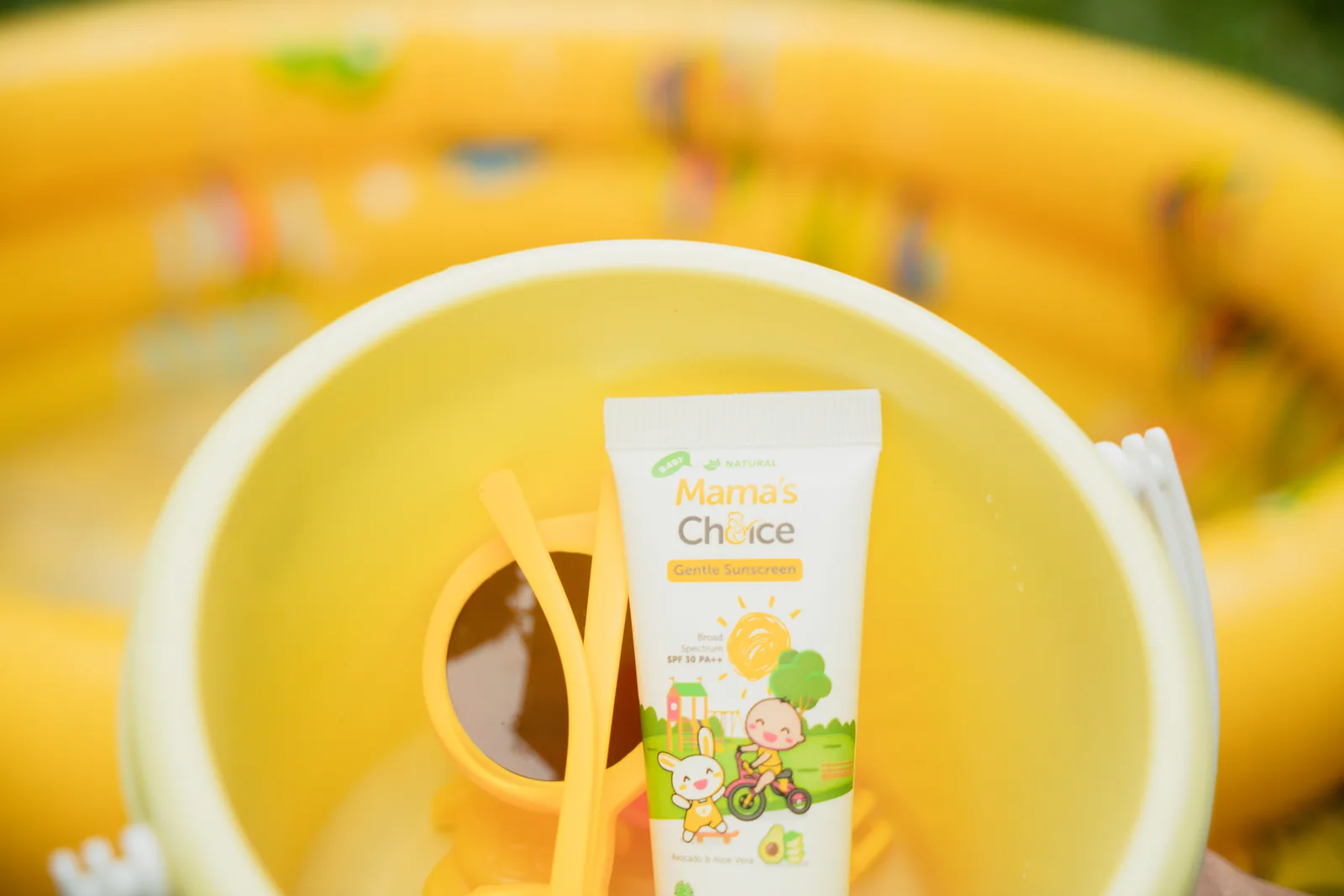
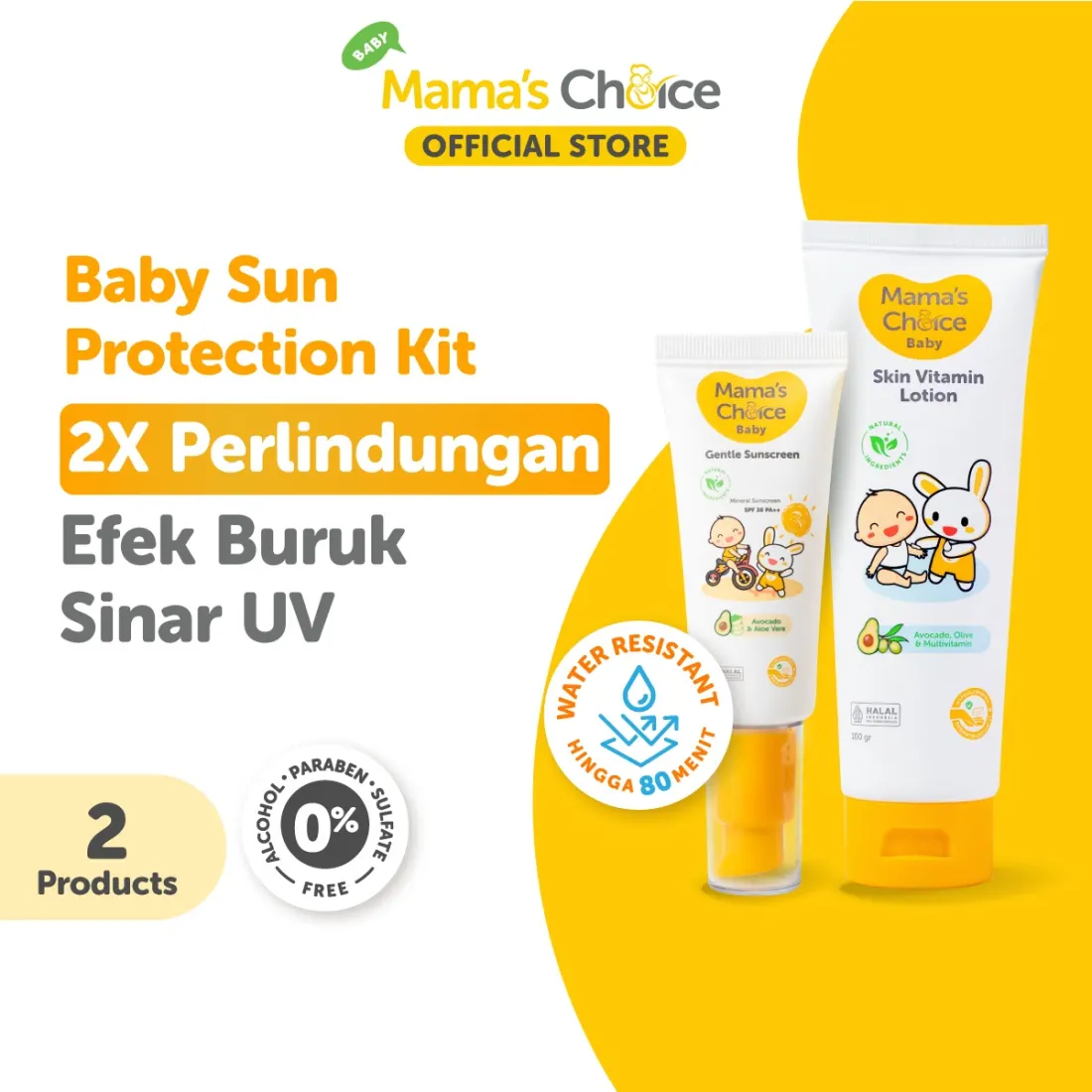
Mama's Choice Baby Gentle Sunscreen uses a mineral filter at SPF 30++ broad spectrum, with avocado, aloe vera and coconut, tested water resistant for 80 minutes.
Do not use your own sunscreen on her.
Afterwards
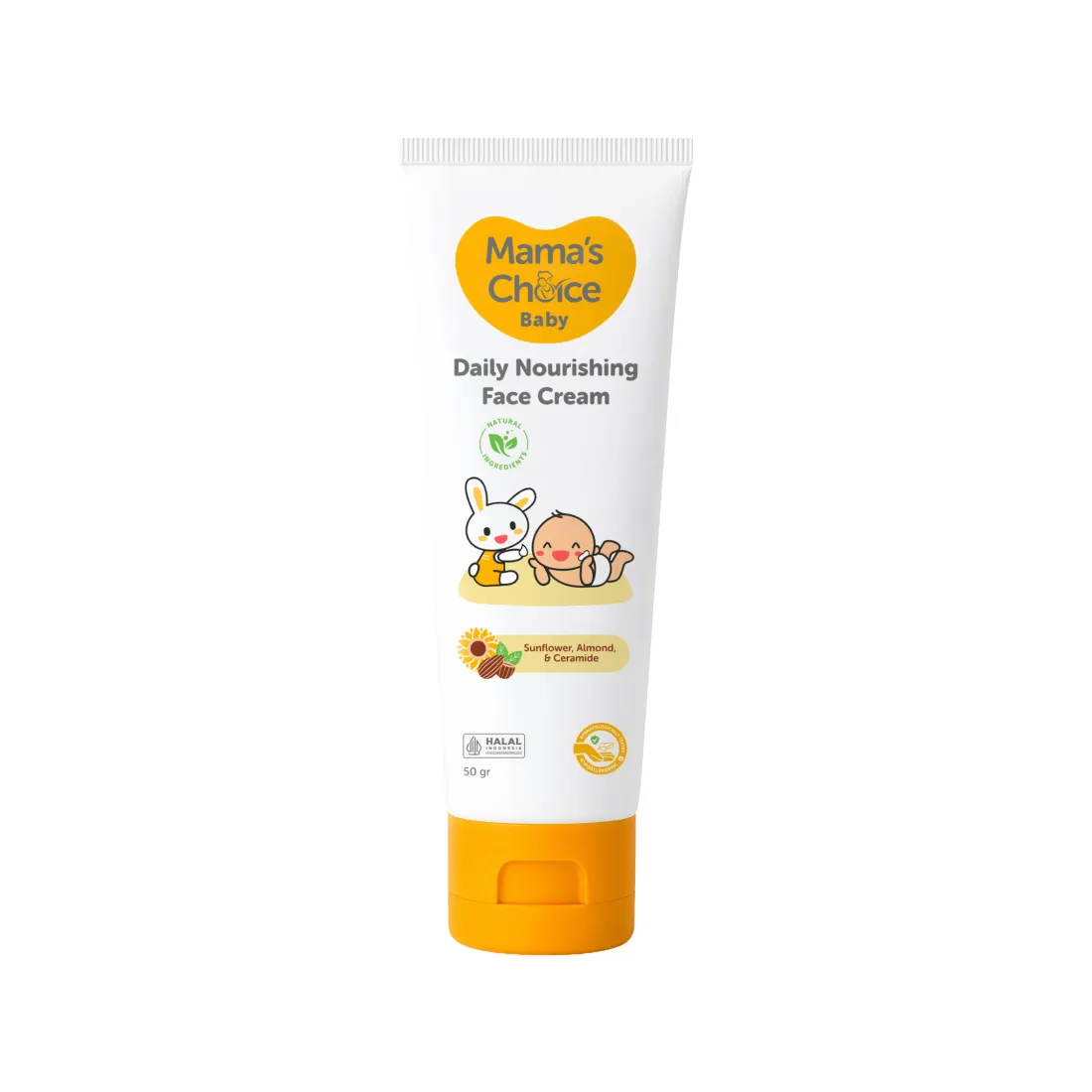
Into shade, more milk or fluids than usual, and a light moisturiser on skin that feels dry.
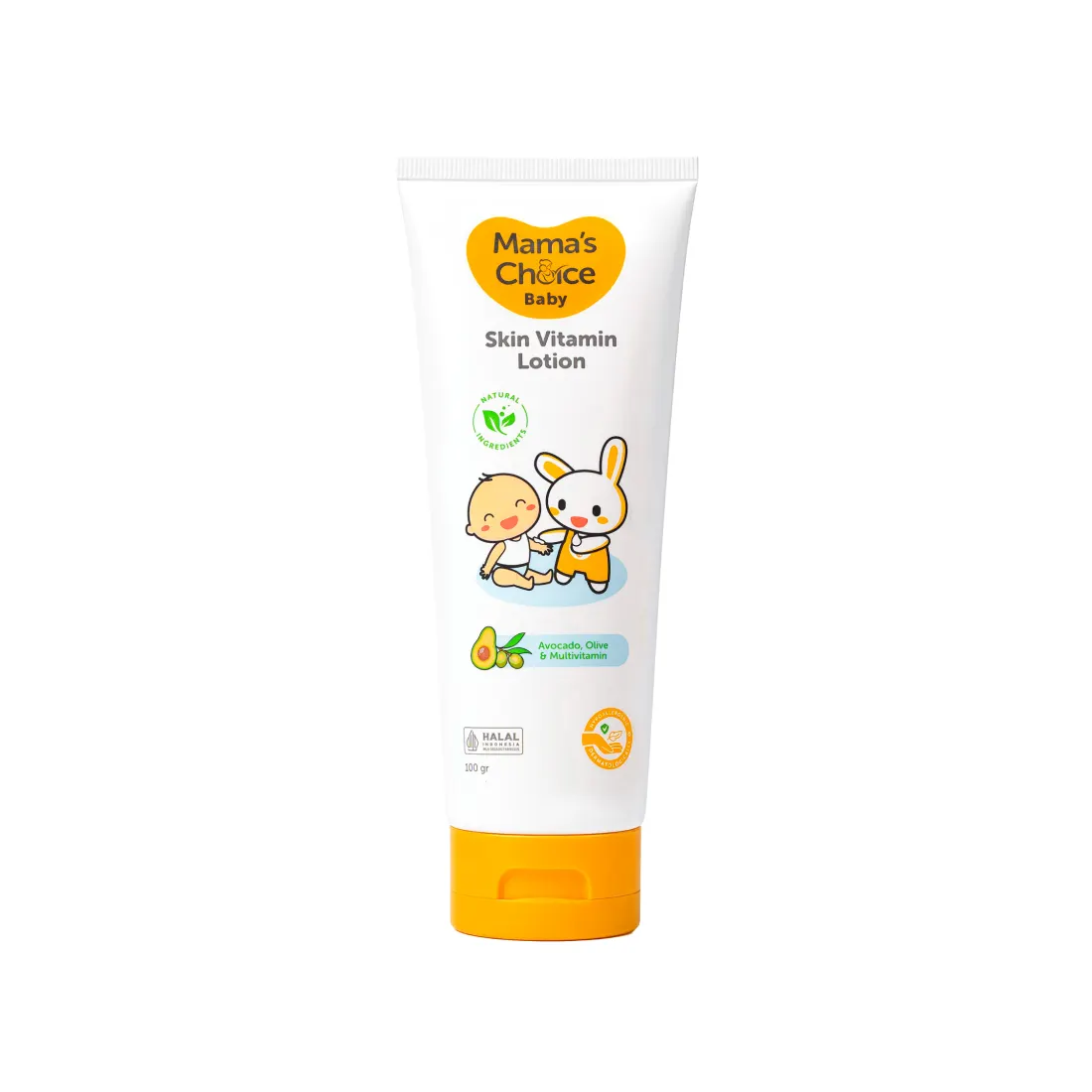
Mama's Choice Baby Skin Vitamin Lotion is made for sensitive baby skin, with avocado, olive and multivitamins.
For skin that is actually burnt, a moisturiser is not the treatment. That needs a doctor.
What about vitamin D
Sun is a source of it, which is the usual argument for putting a baby out deliberately.
Do not sun a baby for vitamin D. Her skin burns too easily for the trade to be worth it, and if vitamin D is the concern the answer is supplementation discussed with a paediatrician.
Ordinary life outdoors, in shade and clothing, involves plenty of light exposure without anybody seeking it out.
When to see a doctor
- A baby under one year with sunburn of any degree
- Blisters
- A large area burnt
- Sunburn with fever, lethargy, vomiting or difficulty rousing
- A baby who seems to be in real pain
On the way: shade, a cool compress rather than ice, milk or fluids more often, and no oil, butter or toothpaste on burnt skin.
Frequently asked questions
- What age can a baby wear sunscreen?
- Generally from six months. Below that, health guidance recommends protection through shade and clothing. If a small area of skin cannot be covered, a mineral sunscreen can be applied thinly to that area after checking with a paediatrician.
- Why is mineral sunscreen recommended for babies?
- Zinc oxide and titanium dioxide work on the surface of the skin by reflecting UV, so absorption into the skin is minimal. Chemical filters are absorbed into the skin and more often irritate a baby's thinner skin.
- Do babies need sun protection on cloudy days?
- Yes. Most UV still passes through cloud, and in tropical regions the intensity is high all year round.
- What should I do if my baby gets sunburnt?
- Move them into shade, apply a cool damp cloth, offer milk or fluids more often, and use a light moisturiser. Contact a health professional straight away if blisters or fever appear or the baby seems lethargic, particularly under one year old.
Sources
Share this article
This article is for information only and is not a substitute for diagnosis or medical advice. Please discuss your own situation with your midwife or doctor.