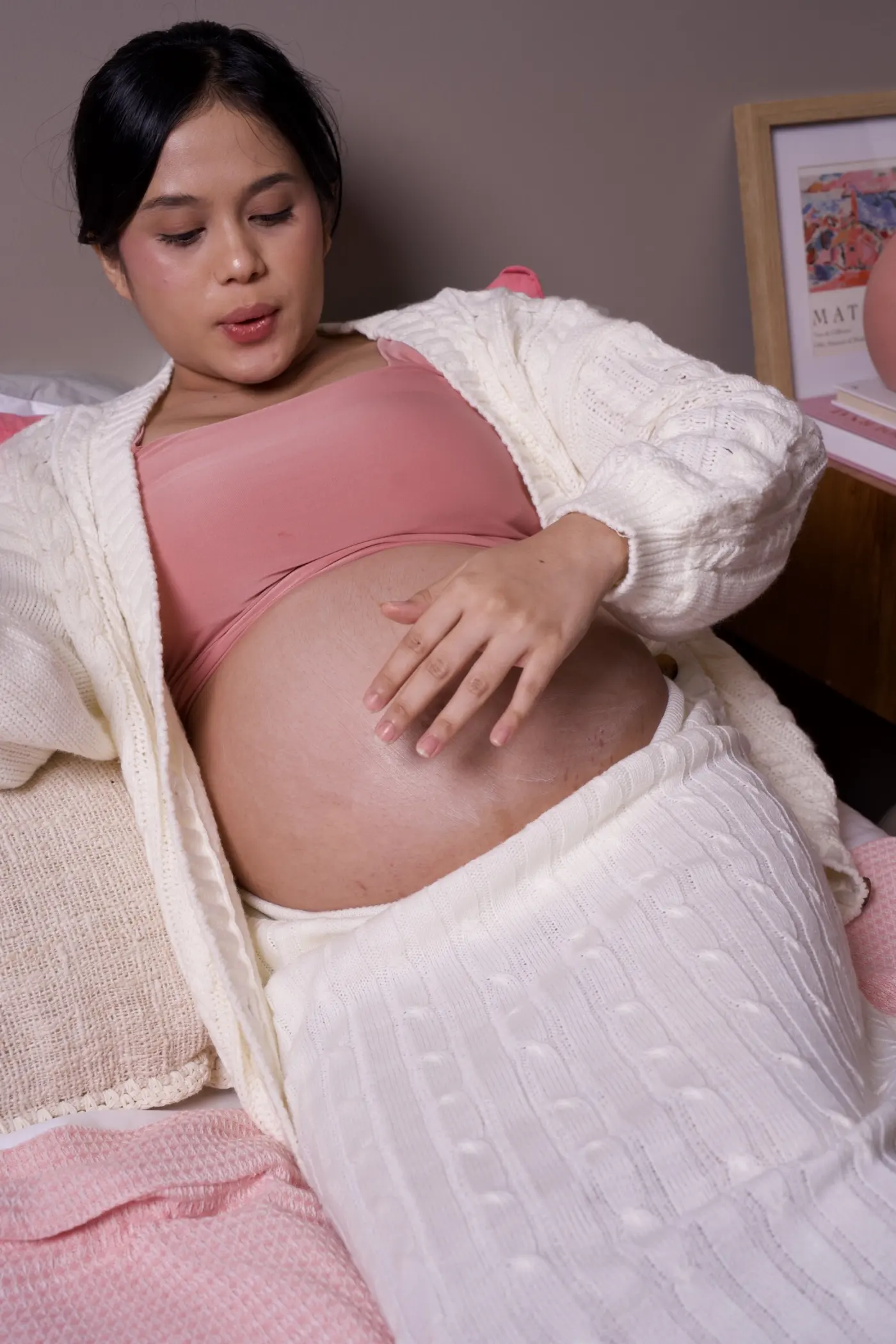
Striae Gravidarum: Types, Causes and What Helps
Striae gravidarum is the medical name for pregnancy stretch marks. What the different colours mean, why they form, and what care can realistically do.

Your skin looked thin and slightly pink for a week or two, and it itched. Then the lines appeared.
Striae gravidarum is the medical name for the stretch marks of pregnancy. Studies put the share of pregnant women who get them somewhere between 55% and 90%.
Why they form
Partly collagen. When your body grows quickly, skin without enough collagen support cannot stretch fast enough to keep up, and the fibres in the middle layer tear.
The same marks turn up outside pregnancy after:
- Rapid growth in adolescence
- Weight gained or lost quickly
- Some medical conditions, such as Marfan and Cushing's syndrome
- Long-term use of creams containing corticosteroids
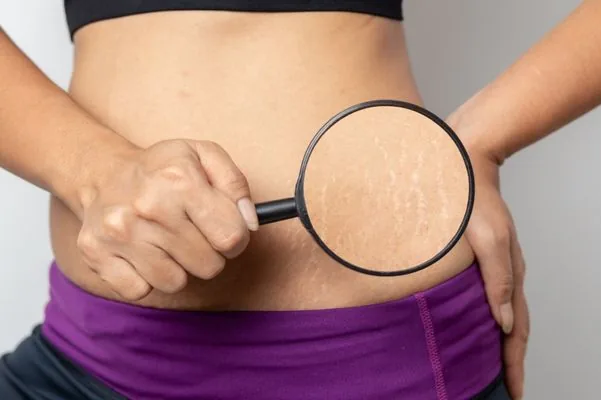
They come earlier than you were told
One study found 43% of women developed striae gravidarum before 24 weeks, so the belief that they only arrive at the end does not hold.
Before the lines show, the skin looks thin or slightly pink, and it usually itches.
Scratching is the thing to avoid. It damages skin already under strain and makes the marks more visible than they needed to be.
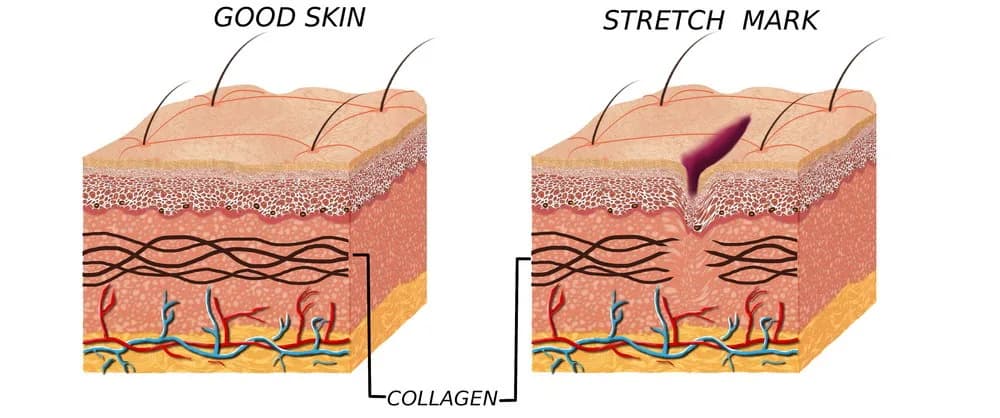
What the colour tells you
Striae rubra. Pink to red, the acute stage, the earliest physical sign of skin that has been stretched. There is still blood supply underneath, which is why marks here respond better to care.
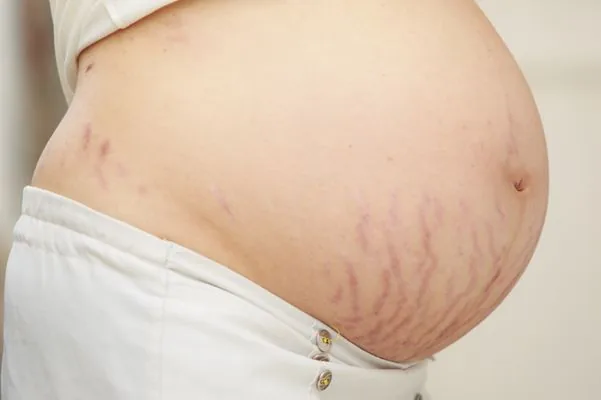
Striae alba. Silvery white. The mark has matured into settled scar tissue and is much harder to soften.
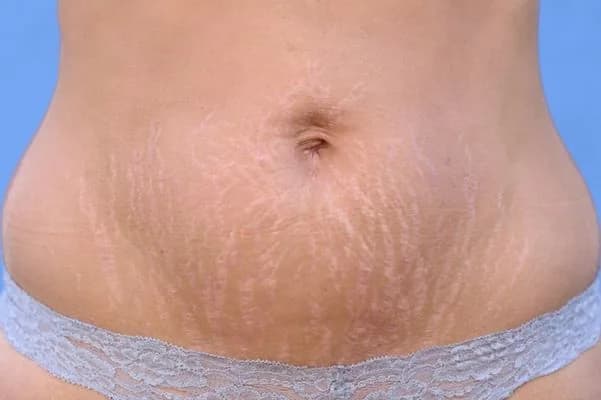
On deeper skin tones marks can look grey or dark brown (striae nigra) or blue-purple (striae caerulea). That follows your skin tone rather than how bad they are.
Are they dangerous
No. They do not hurt and they cause no medical problems at all.
What happens on its own is that the colour fades, usually over six to twelve months after the birth, from red towards silvery white.
That cannot be stopped. What can be worked on is how noticeable the result is.
What care can and cannot do
Honestly, first: no moisturiser has been shown to prevent stretch marks.
What one gives you is comfort. Less dryness, less itching, while your skin stretches. Whether they appear at all is decided mostly by genetics, how fast you stretch, and hormones.
Worth doing anyway:
- Keep your skin moisturised, especially just after a shower while it is damp
- Do not scratch an itchy belly
- Drink enough and eat properly
- Cream or serum twice a day, consistently
Consistency, not price, separates a routine that helps from one that does not.
Where they usually appear
| Area | When it usually starts |
|---|---|
| Stomach | Second and third trimesters |
| Breasts | As they grow, and again when milk comes in |
| Hips and thighs | Alongside weight gain |
| Upper arms | Less common, usually with rapid gain |
Different areas can be different colours at the same time, because they did not start stretching together.
Ours
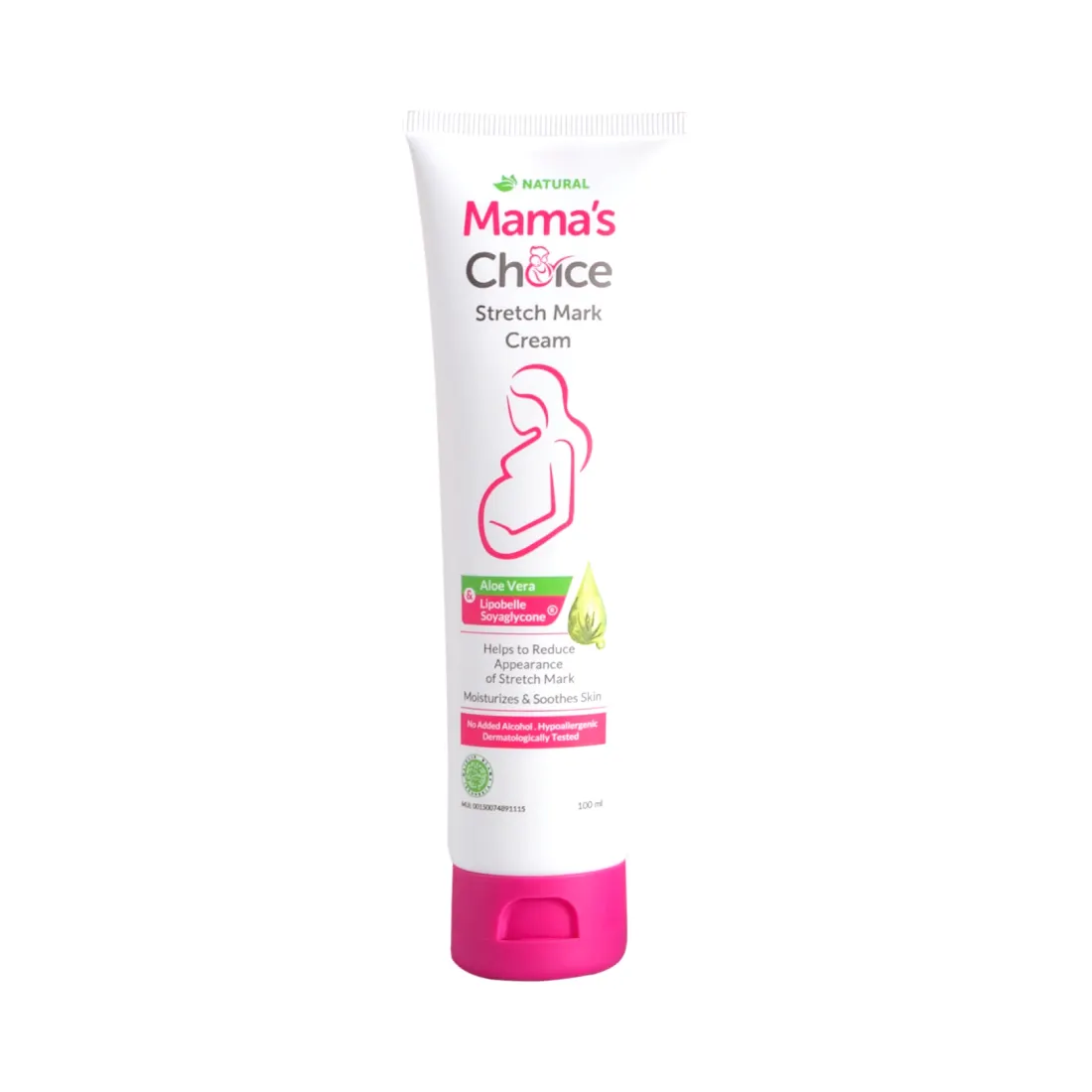
Mama's Choice Stretch Mark Cream is water-based, light and non-sticky, with Lypobelle Soyaglicone, aloe vera and shea butter.
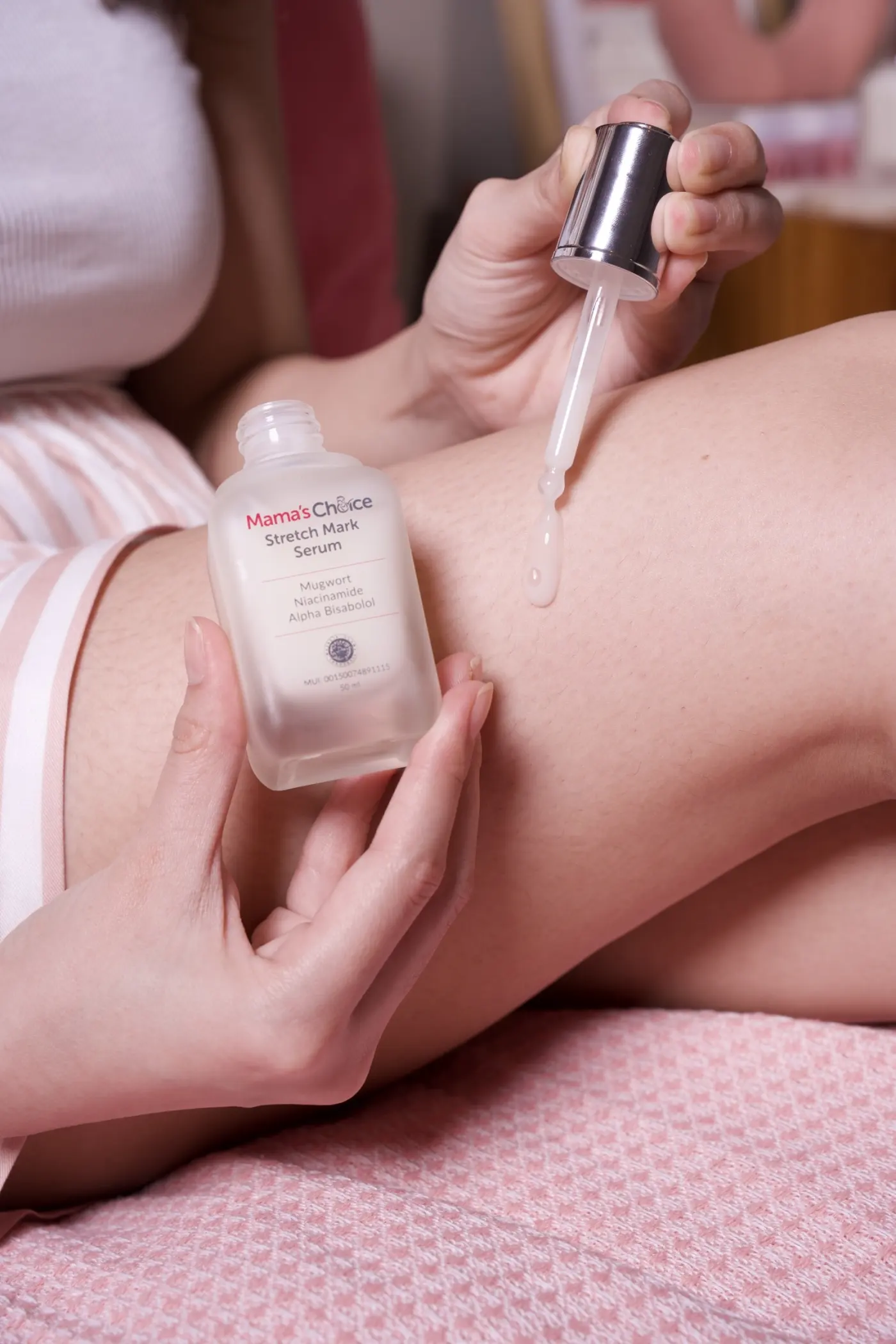
Mama's Choice Stretch Mark Serum is lighter and absorbs faster, with alpha bisabolol, mugwort and niacinamide.
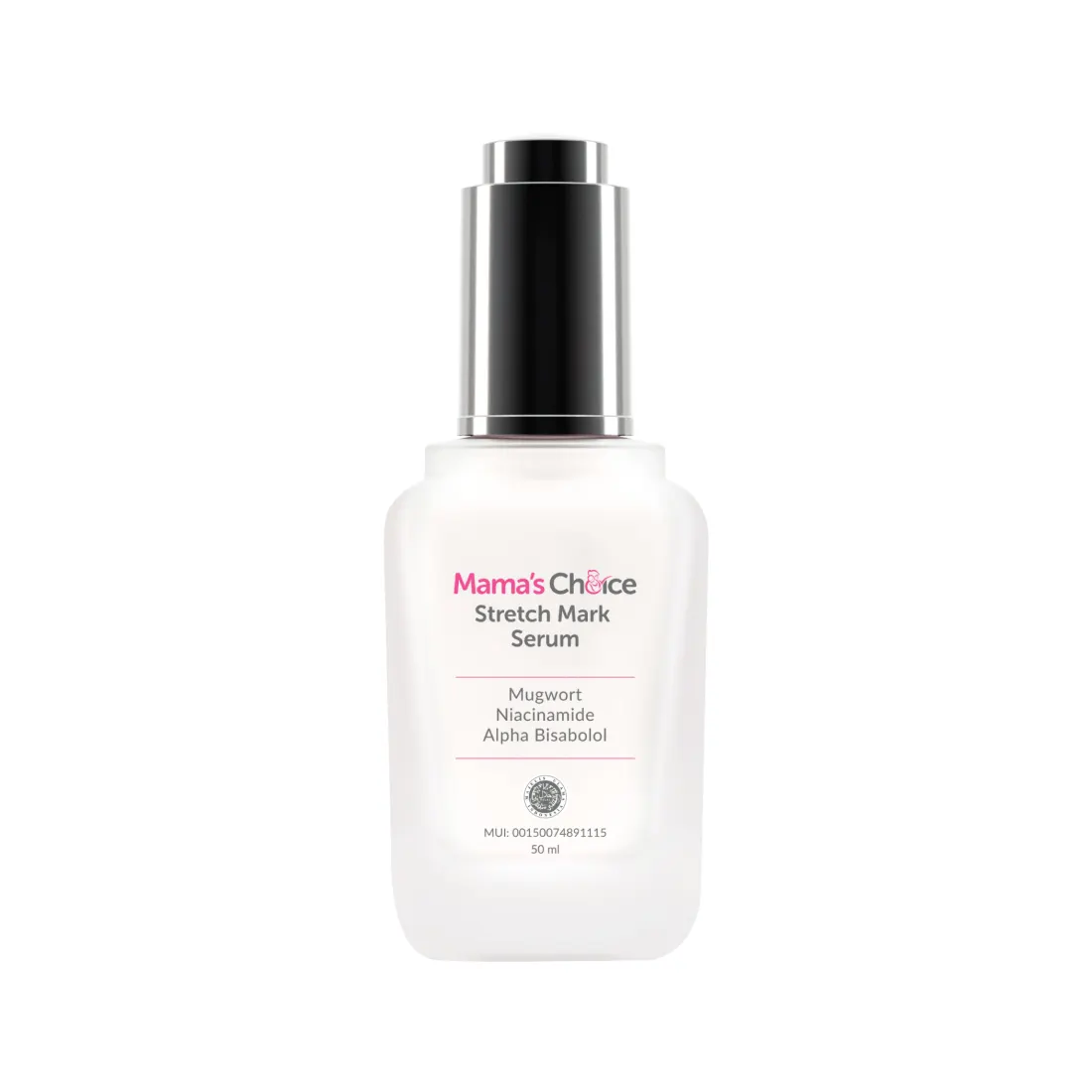
Both made for use through pregnancy and breastfeeding. Massage in circles so it spreads evenly.
After the birth
Red marks fade towards white on their own, and loose skin on your stomach gradually tightens.
At that point your options widen, because the pregnancy restrictions are gone. Laser and microdermabrasion are used in dermatology practice and are worth discussing with a dermatologist.
Worth knowing before you book a course: they improve appearance rather than removing the marks.
Reading the numbers on this page
Different studies, not comparable with each other.
- Prevalence survey (n=1,515): how many Mamas get stretch marks. It measures no product at all.
- Spincontrol Thailand 2023 (n=22): up to 65% reduction in appearance over 28 days, with Cream and Serum used together. Both at once, no comparison group, so it cannot be split between them.
- Consumer satisfaction surveys: the share of Mamas who felt a change. Impressions, not measurements.
"72%" and "75% in 30 days" appear on different pages with no shared measurement point. Until the original sources surface, read both as user impressions rather than clinical results.
Sources
- Farahnik et al. (2016) — Striae gravidarum: risk factors, prevention, and management
- Medical News Today — Stretch marks: causes and treatments
- Mama's Choice — Spincontrol Thailand clinical test 2023, n=22
Share this article
This article is for information only and is not a substitute for diagnosis or medical advice. Please discuss your own situation with your midwife or doctor.