Postpartum Hair Regrowth: What Helps It Along
Shedding after birth peaks around month four and ends on its own. What genuinely helps regrowth, what does nothing, and when to get it checked.

Hair on the pillow. Hair on the bathroom floor. A handful in your hand every time you wash it.
In a theAsianparent survey of 518 breastfeeding Mamas, 96% reported hair loss, from a media brand in the same group as Mama's Choice but run independently.
So it is close to universal. It also ends on its own, and there is a specific sign that it has turned, which nobody tells you about.
Why it happens
Through pregnancy, high oestrogen held your hair in its growing phase. Hairs that would normally have shed across nine months stayed put, which is why it looked thickest then.
After the birth, oestrogen dropped sharply. All those delayed hairs entered the resting phase at roughly the same time, and now they are shedding together.
It can carry on for up to a year, peaking at around 4 months. If your hair is long you will find it more dramatic, because each shed hair is more visible, not because more are falling.
Breastfeeding is not causing it
Common belief, and wrong.
The trigger is the oestrogen drop after birth, which happens whether or not you feed. Weaning early does not stop the shedding, and stopping sooner than you planned costs you something and buys nothing.
What genuinely helps
Eat well enough. A varied diet with antioxidants, iron, vitamin D and biotin supports hair health. Green vegetables, eggs, pulses, fish.
Iron matters most. Your stores ran low after the birth, particularly if you bled heavily, and low iron is one of the few nutritional causes of shedding actually worth checking with a blood test.

Give the heat a rest. Dryers and straighteners damage the cuticle and make hair break more easily. Air dry where you can, lower the setting where you cannot. Do not rub it dry with a towel or drag a brush through it.
Keep washing it. Hair that has shed is already detached at the root, and washing only carries it down sooner. Skipping washes builds oil and makes the eventual wash look far more alarming than it was ever going to.
Condition the lengths. Much of what looks like loss from the root is breakage along the shaft. Conditioner smooths the cuticle, reduces tangles, and cuts the breakage that comes from combing them out. Conditioner on the lengths, shampoo on the scalp. That order does more than the brand.
Loosen how you tie it. Tight ponytails and daily buns pull on a hairline that is already fragile. A looser style, or a shorter cut for this stretch, takes the tension off.
What does nothing at all
Shampoos promising to stop the shedding. It happens at the root, driven by hormones. No topical product changes that cycle.
Not washing it. Covered above, and it makes things worse.
Weaning. Also covered, and it costs you more than it gives.
What products can genuinely do is cut the extra loss from breakage, so new growth gets a chance to grow long.
What to use
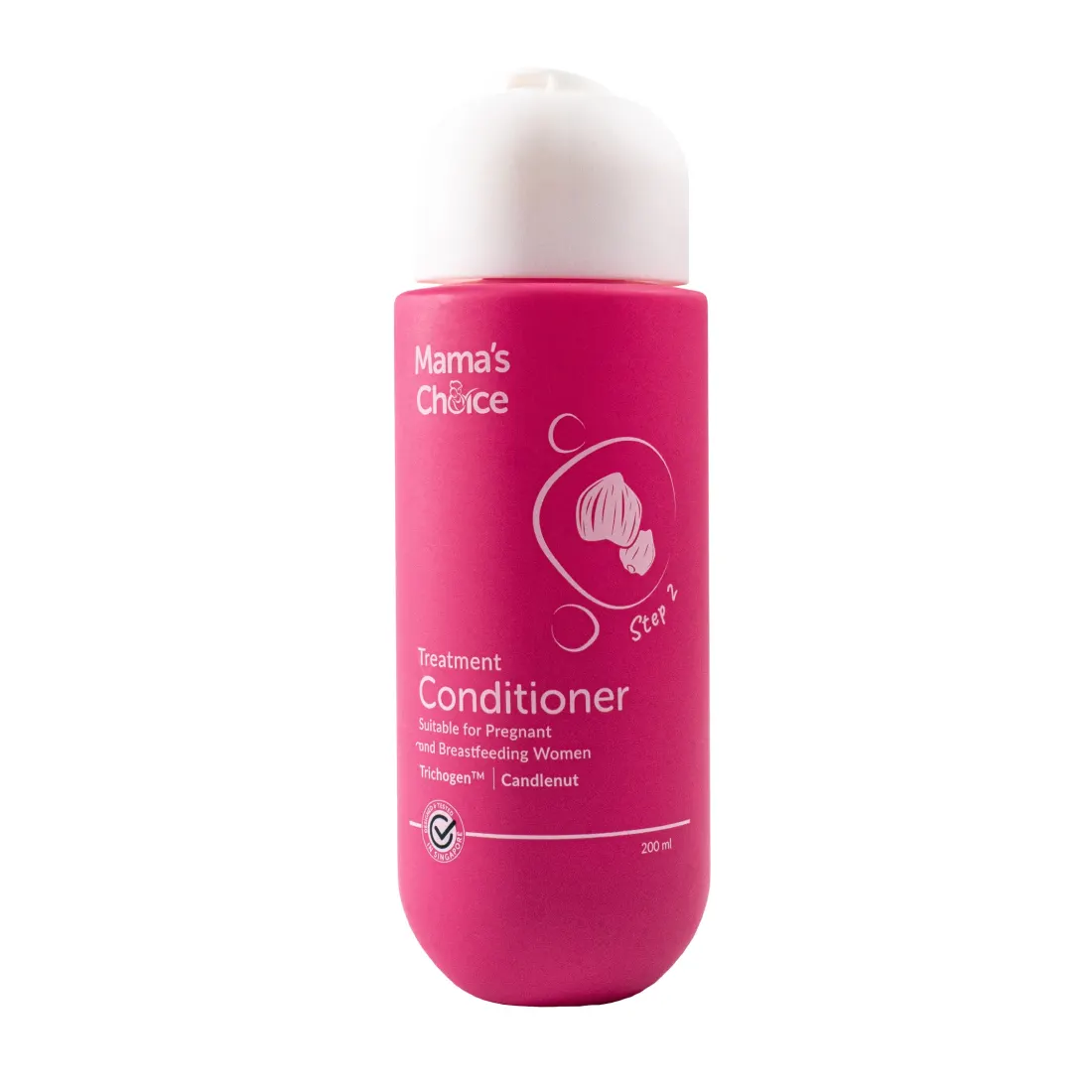
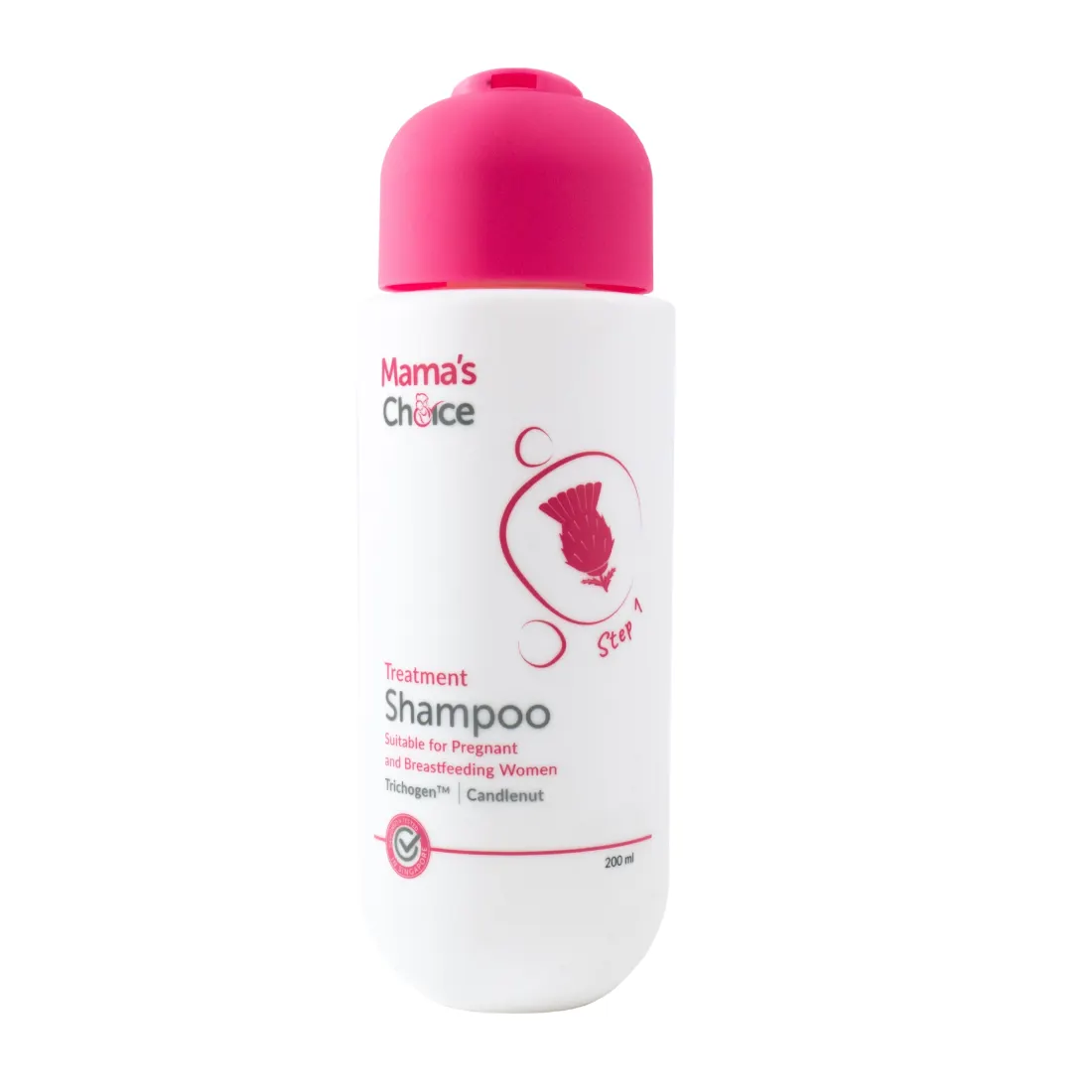
Treatment Shampoo and Treatment Conditioner are made for pregnancy and breastfeeding, with kiwi, candlenut and green pea, without SLS, silicones, parabens or synthetic fragrance.
The sign it has turned
Around month six, you will find short fine hairs standing straight up along your hairline, refusing to lie flat.
They look scruffy and everyone assumes they are breakage. They are the opposite: new hair growing in.
Most Mamas have density back close to normal somewhere between months six and twelve.
When to see a doctor
- Still shedding heavily after twelve months
- Round bald patches rather than even thinning
- A scalp that is red, scaly or sore
- Shedding with heavy fatigue, palpitations or unexplained weight change
That last one can be a postpartum thyroid problem, which is common and easily treated. Thyroid problems and anaemia are both settled with one blood test.
Otherwise, this is one of the very few things in the postnatal period that genuinely resolves itself.
Sources
- American Academy of Dermatology — Hair loss in new moms
- theAsianparent survey on postpartum hair loss (n=518)
Share this article
This article is for information only and is not a substitute for diagnosis or medical advice. Please discuss your own situation with your midwife or doctor.