Melasma in Pregnancy: Why It Appears and How to Fade It
Hormones prime the pigment cells and sunlight switches them on. Why the mask of pregnancy appears, what darkens it, and which brightening ingredients are safe.
Brown patches, symmetrical, across your cheeks or forehead or upper lip. The everyday name describes it well: the mask of pregnancy.
Around half of pregnant women get it. It is harmless. It is also stubborn, and what you do now decides how easily it fades later.
Why it appeared
Several things pushing the same way.
Hormones. Oestrogen and progesterone drive your melanocytes, the pigment-producing cells, to work harder.
Sunlight. The trigger. Melanocytes already primed by hormones react far more strongly to sun than they otherwise would.
Your genes. Skin that darkens easily is more prone to it.
Worth holding onto: hormones set the stage, sunlight turns on the lights. You cannot change the hormones. You have almost complete control over the sunlight.
Why it is harder than ordinary dark spots
Melasma sits deeper and behaves differently from the mark left by a spot. It comes back readily, it darkens fast after even a short exposure, and it responds slowly.
It also tends to be symmetrical, which is one way to tell it from post-inflammatory marks, which follow the pattern of whatever caused them.
Sun protection first
Everything else on this page depends on this.
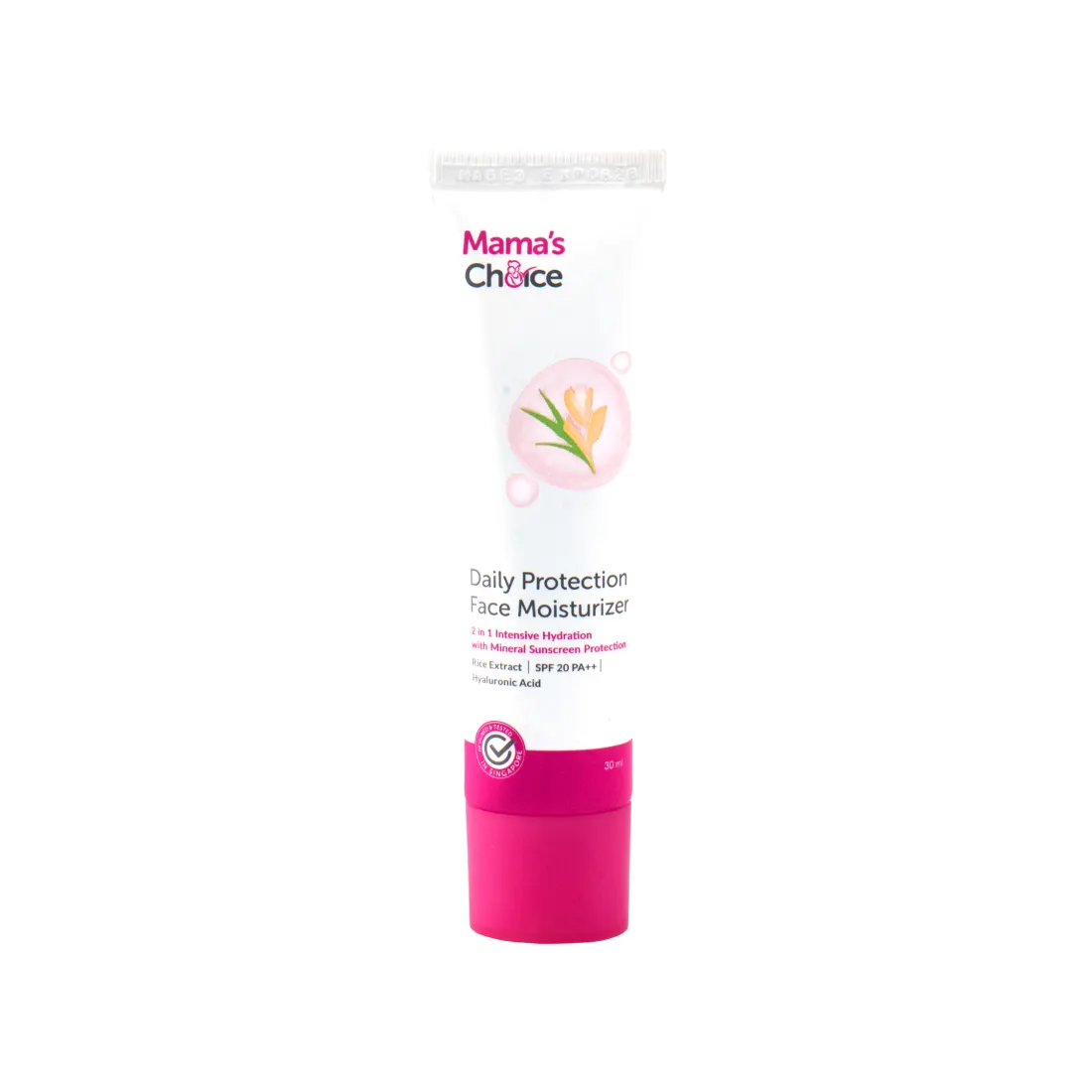
A mineral sunscreen using zinc oxide and titanium dioxide sits on the surface and reflects UV, and those filters are widely chosen in pregnancy. Reapply through the day if you are out.
Melasma also responds to visible light, which is why shade and a wide-brimmed hat genuinely add to the effect rather than being extra.
Skipping this and relying on a brightening serum is the most common mistake there is, and the reason so many Mamas conclude nothing works.
What you can use now
Niacinamide interrupts the transfer of pigment to skin cells, and is well tolerated.
Stable vitamin C, such as ethyl ascorbic acid. Antioxidant, and it helps even out tone.
Azelaic acid, generally considered safe in pregnancy and useful for pigmentation and pregnancy acne at the same time.
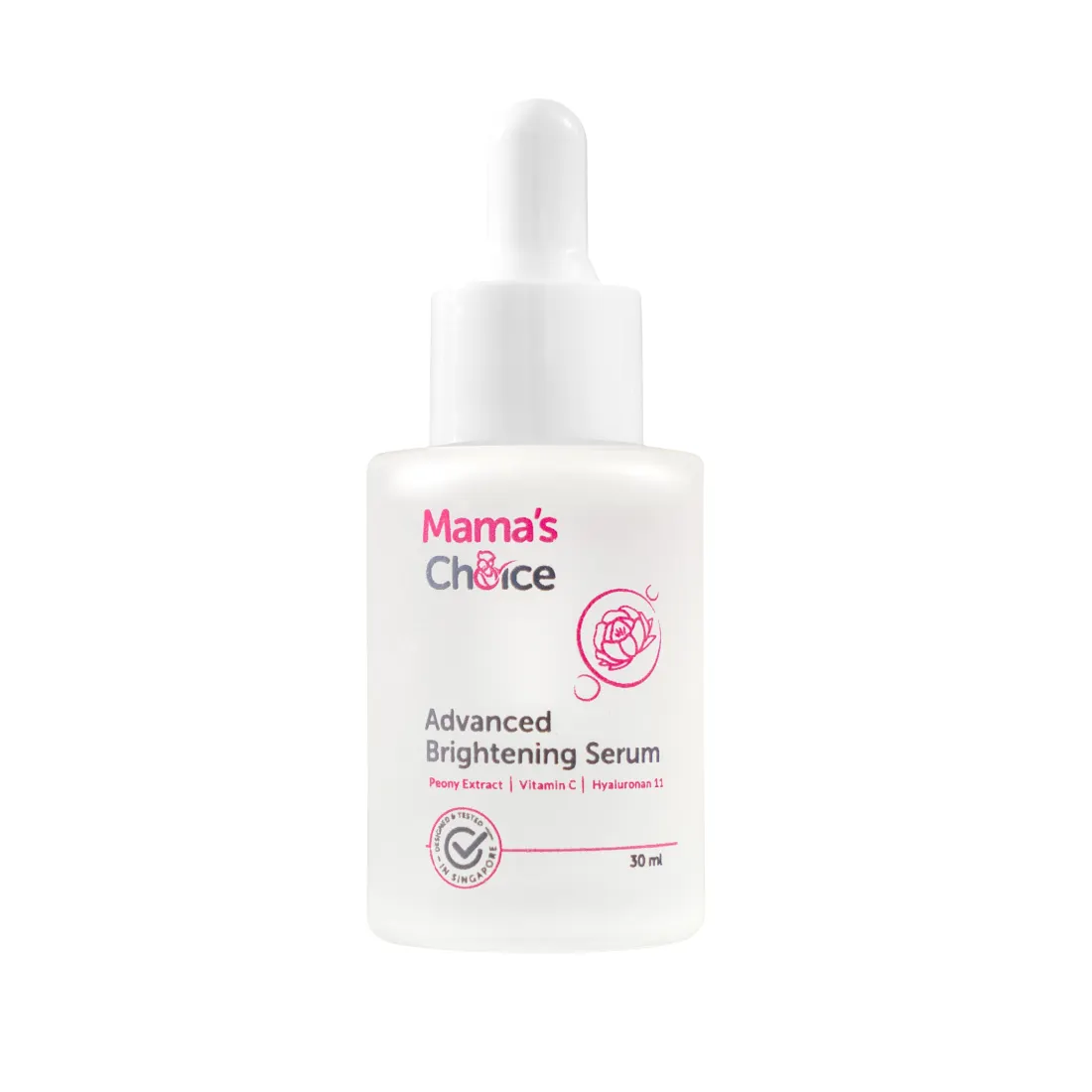
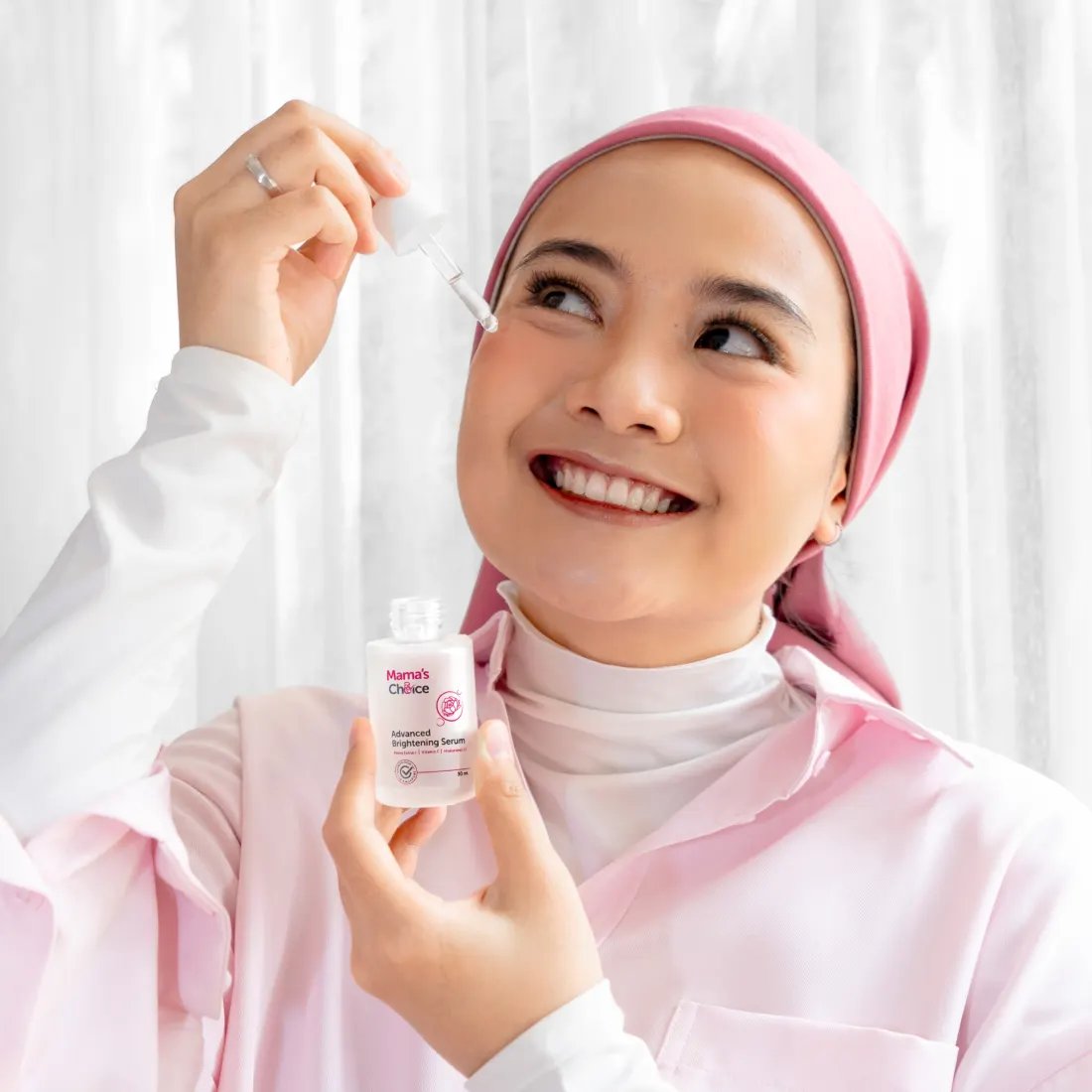
Botanical brighteners such as peony extract, the lead active in Advanced Brightening Serum.
From our 2022 consumer home use test of 30 Mamas using that serum:
- 93% agreed it helped skin look brighter
- 90% agreed it helped skin feel more moisturised
- 83% agreed it helped texture feel smoother
- 80% agreed it helped tone look more even
What to avoid
Hydroquinone and retinoids are both effective for pigmentation and both generally avoided in pregnancy. If a product does not list its actives clearly, treat that as an answer in itself.
Scrubbing and strong peels. Melasma reacts badly to inflammation, and irritation frequently makes it darker rather than lighter. This is the trap: it looks like a pigment problem, so people attack it, and attacking it makes it worse.
How long
Slower than you want. Meaningful improvement usually takes three months of consistent care, and melasma that has been there a long time takes longer.
Plenty of Mamas find it fades within a few months of giving birth as hormones settle. Some find it persists, which is when a dermatologist can offer what was not available during pregnancy.
Where it usually turns up
Knowing the map helps, because it tells you what to protect.
Cheeks, across the bone, symmetrically. The most common site.
Forehead, often in a band above the eyebrows.
Upper lip, which is the one Mamas mind most, because it reads as a shadow.
Jawline and neck, less often, and more common later in life than in a first pregnancy.
Every one of those is somewhere sunlight lands on a face that is not wearing a hat. That is not coincidence.
What makes it worse without you noticing
Driving. UVA comes straight through car windows, and the side you drive on darkens first.
Sitting by a window. Same mechanism, all day, with no sense of being outdoors at all.
Heat. Not only light. Cooking over a hob, hot yoga, a very hot shower on your face. Heat alone can provoke melasma in some people, which is why it can worsen in a month you barely went outside.
Waxing your upper lip. The inflammation afterwards pigments, on exactly the patch you were trying to improve.
Your phone screen, in theory, through visible light. The evidence for that one is much weaker than the confident articles suggest, and tinted mineral sunscreen covers it either way.
When to see a doctor
- A mole changing shape, size or colour, or bleeding
- Darkening alongside severe itching, particularly on your palms and soles, which can signal a liver condition of pregnancy
- Patches appearing suddenly and dramatically
Otherwise, what is happening to your face is an ordinary response to being pregnant, most of it fades, and the sunscreen you put on this morning is the single thing that most changes how much.
Frequently asked questions
- Does melasma go away after giving birth?
- For many Mamas it fades over several months once hormones settle, but for some it persists. How carefully skin is protected from the sun during pregnancy strongly influences the outcome.
- Which brightening ingredients are safe during pregnancy?
- Niacinamide, stable forms of vitamin C and azelaic acid are generally considered safe. Hydroquinone and retinoids are the ones to avoid. Check with your healthcare provider if you are unsure.
- Does sunscreen really make a difference to melasma?
- A large one. UV is the main trigger that darkens melasma. Without daily sun protection, any brightening ingredient is working against the tide.
- Can I treat melasma while breastfeeding?
- Gentle brightening ingredients are generally continued while breastfeeding, but it is worth confirming any active with your doctor, particularly anything applied near where your baby's skin touches yours.
Sources
- Mama's Choice — consumer home use test 2022 (n=30)
- American Academy of Dermatology — skin changes during pregnancy
Share this article
This article is for information only and is not a substitute for diagnosis or medical advice. Please discuss your own situation with your midwife or doctor.