Hair Loss After Birth: When It Peaks and When It Stops
Postpartum shedding peaks around the third or fourth month and ends on its own. The timeline, what counts as normal, and the myths worth dropping.

You wash your hair and what comes away in your hand does not look like shedding. It looks like something is wrong.
Nothing is wrong. This happens to most Mamas at about three months, it has a name, and it stops.
Why it happens all at once
Through pregnancy, high oestrogen keeps your hair in its growing phase. The hairs that would have fallen out across those nine months never did. They stayed.
Then you give birth, oestrogen drops, and all of them let go at roughly the same time.
So the handful in the shower is nine months of ordinary shedding, arriving all at once. Doctors call it postpartum telogen effluvium, which is a long name for a queue clearing.
When it peaks and when it stops
| When | What you will notice |
|---|---|
| Months 1 to 2 | Usually nothing |
| Months 3 to 4 | The worst of it |
| Months 5 to 6 | Easing, short new hairs at the front |
| Months 6 to 12 | Density back close to where it was |
At the peak you might lose up to 300 hairs a day, against 50 to 100 normally. That sounds alarming written down. It is still the normal pattern.
A note on that figure: the 100 to 300 range is a rough guide and everybody's normal differs. What tells you more is the comparison against your own usual, not against a number on a page.
Breastfeeding is not doing this
This one is worth being blunt about, because Mamas wean over it.
The shedding is triggered by oestrogen falling after birth. That happens to everyone who gives birth, whether they breastfeed or not.
Stopping will not stop the shedding. If someone has told you otherwise, they were wrong, and weaning before you meant to would cost you something and buy you nothing.
What actually helps
Nothing speeds up a hormonal cycle. You cannot shorten this.
What you can do is stop losing the hair you would otherwise have kept, because a fair amount of what ends up in the brush snapped rather than fell.
Comb from the ends upwards, with a wide-toothed comb, and not while your hair is soaking wet. Wet hair stretches and breaks.
Condition the lengths. Breakage halfway down a strand looks exactly like loss from the root, and it is the part you can prevent.
Loosen the ponytail. Every day, pulled tight, adds up on hair that is already fragile.
Eat for it. Iron stores run low after birth, especially if you bled heavily, and hair is the first thing the body stops spending on.
Cut it shorter if you want to. It changes nothing medically. It makes the phase easier to look at, which is not nothing.
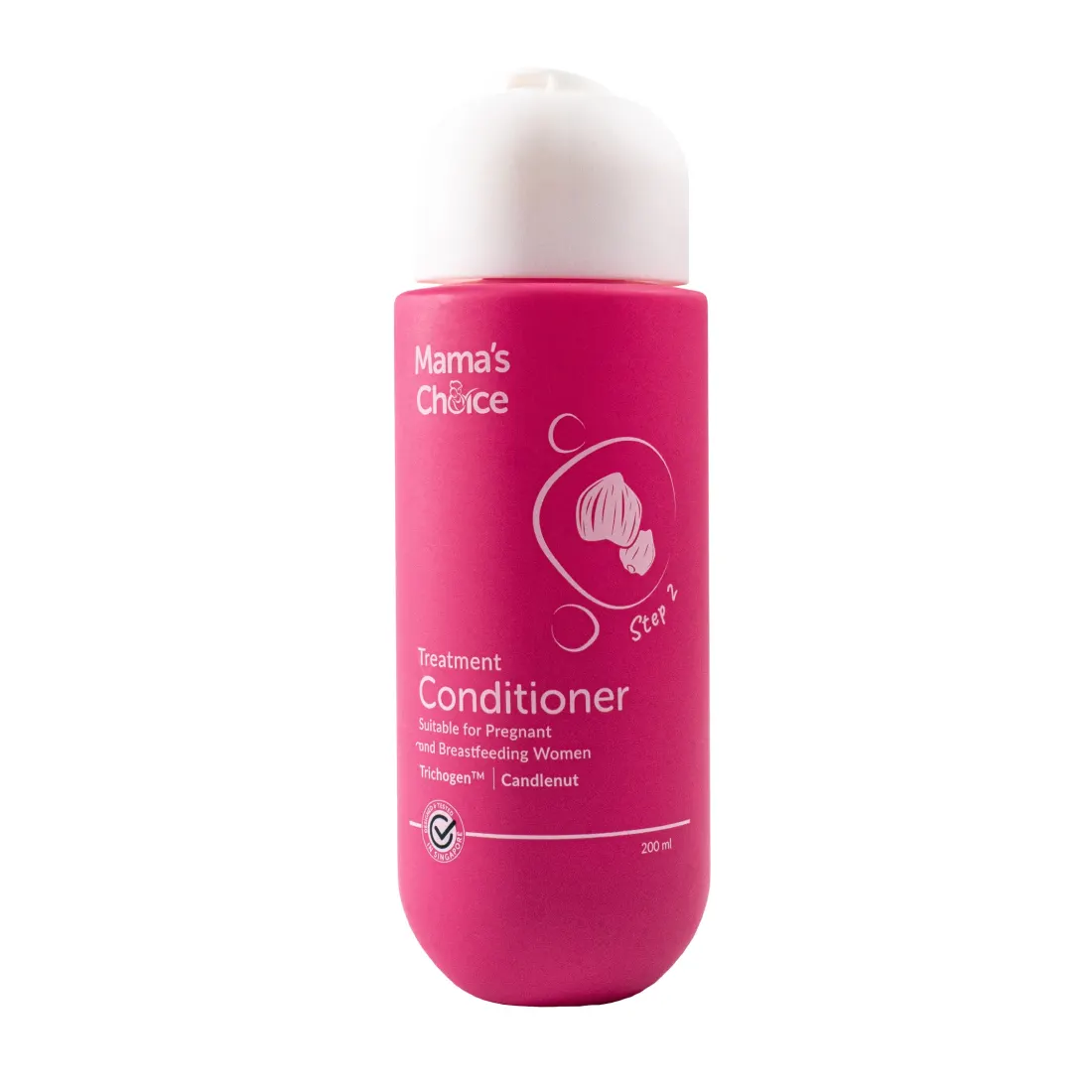
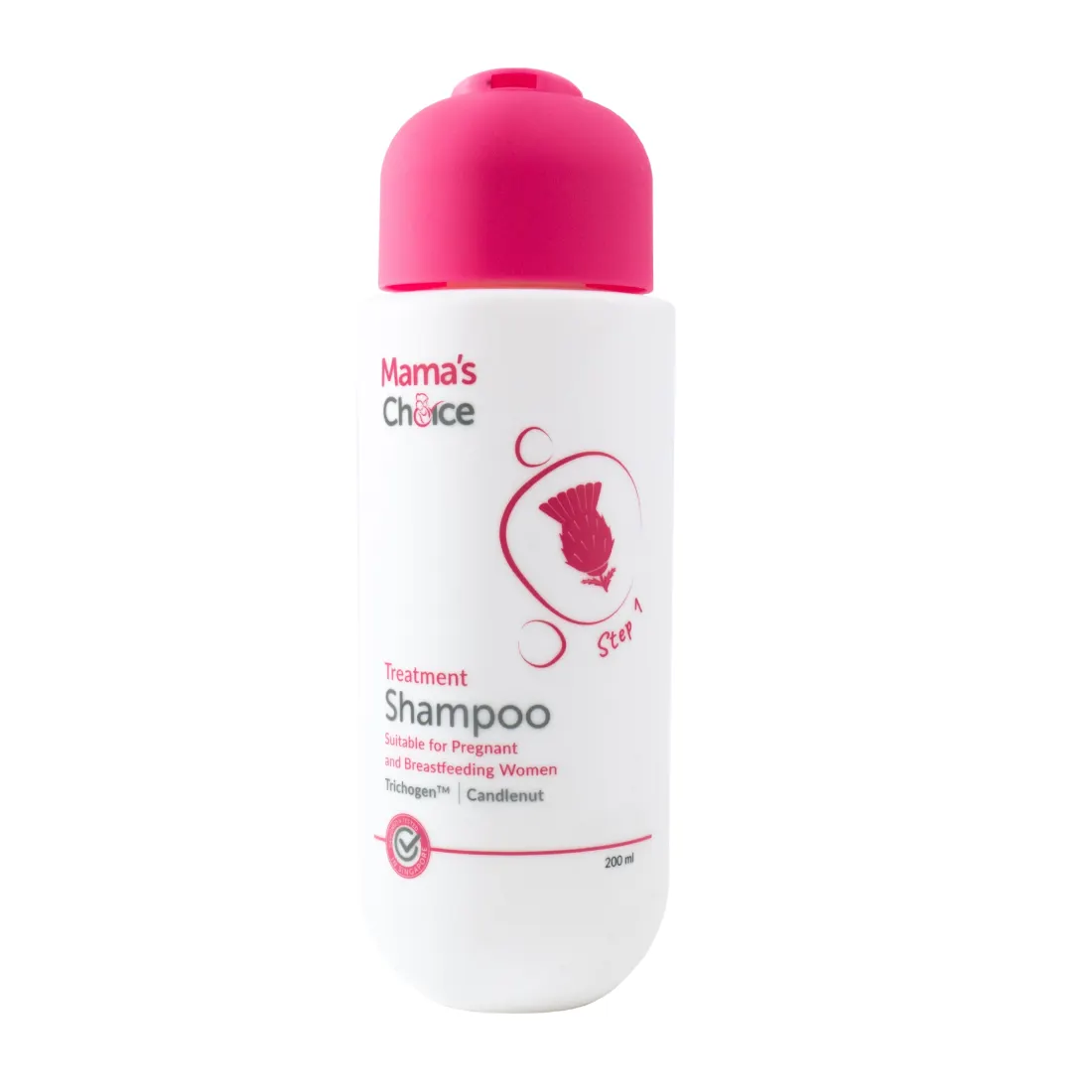
Treatment Shampoo and Treatment Conditioner are made for this stretch, without SLS, silicones, parabens or synthetic fragrance.
Skip these
Hair growth supplements, unless a blood test found an actual deficiency. Biotin can also skew thyroid blood tests, which matters here, because thyroid trouble after birth is common and you want that test read correctly.
Anything promising regrowth. Your hair is already coming back on its own schedule. Nothing has been shown to speed that up.
Waiting to wash it. The hair has already let go. Leaving it a week gives you a more frightening shower, not less loss.
The bit that looks like damage but isn't
Around month six you will find short, fine hairs standing straight up along your hairline, refusing to lie flat.
They look scruffy and everyone mistakes them for breakage. They are new growth. It is the first sign it has turned.
Your parting may look wider through all this. That is density, not bald patches, and it fills back in.
When to get it looked at
- Still shedding heavily after 12 months
- Round bald patches rather than even thinning
- A scalp that is red, scaly or sore
- Heavy fatigue, palpitations or weight change you cannot explain
That last one is worth taking seriously. Thyroid problems are common after birth, easy to test for and easy to treat, and they get missed because exhaustion is assumed to be the baby.
Frequently asked questions
- When does hair loss after birth stop?
- It peaks around the third to fourth month, then eases. Most Mamas have their density back close to normal somewhere between six and twelve months.
- Does breastfeeding cause hair loss?
- No. The shedding is triggered by the drop in oestrogen after birth, which happens whether or not you breastfeed. Stopping breastfeeding does not stop the shedding.
- How much shedding is still normal?
- At the peak, losing up to 300 hairs a day still falls within the normal pattern of postpartum telogen effluvium, against 50 to 100 in ordinary circumstances. What warrants checking is shedding that is still heavy after 12 months.
Sources
Share this article
This article is for information only and is not a substitute for diagnosis or medical advice. Please discuss your own situation with your midwife or doctor.