Fluoride-Free Toothpaste: When It Makes Sense
Fluoride is the most evidence-backed way to prevent cavities. An honest account of when a fluoride-free paste is a reasonable choice, and when it is not.
We make a fluoride-free toothpaste, so we will start with the least convenient thing we could say: fluoride is not dangerous, and the evidence that it prevents tooth decay is strong.
That does not make fluoride-free a mistake. It means the reason for choosing it has to be an honest one.
What fluoride does
It strengthens enamel and makes it more resistant to the acid produced by sugar and plaque bacteria. It also repairs very early enamel damage before it turns into a hole.
None of that is disputed. The ADA, AAPD, WHO and health ministries all put fluoride at the top of the evidence for preventing decay.
Where the fear came from
Concerns about fluoride and brain development come from research on fluoride swallowed in large amounts over long periods, mostly from drinking water that is naturally high in fluoride in some parts of the world.
The US National Toxicology Program's 2024 monograph limited its findings to drinking water above 1.5 mg/L, and said the data below that were insufficient. That is higher than WHO guidance, and far higher than anything you get from brushing.
Topical fluoride is a different thing. Toothpaste and mouthwash are spat out, so what is actually swallowed is very small. The ADA and ACOG say topical fluoride is safe and recommended during pregnancy, as long as you spit.
So "fluoride is a neurotoxin" is not a true statement about toothpaste. We used to say it. We do not any more.
When fluoride-free genuinely makes sense
A child who cannot spit yet. The strongest case. Under-threes often swallow some of their paste, and with a fluoride-free one you do not have to count it at all. The alternative, equally valid, is a fluoride paste in a rice-grain amount, supervised.
Already high fluoride exposure. If your drinking water is high in fluoride, or your dentist has your child on fluoride supplements, reducing other sources is a reasonable decision.
Because you prefer it. Some Mamas want a simpler formula while pregnant and feeding, and plenty find strong mint sets off nausea in the first trimester. That is a valid reason on its own, and it does not need dressing up as a danger.
When fluoride is the better call
If you or your child get cavities repeatedly. A fluoride-free paste does not give the same protection. Talk to a dentist, and expect the advice to be more fluoride rather than less.
Once your child can reliably spit. The main reason for choosing fluoride-free has just gone.
Amounts, if you use it
- Under 3: a grain of rice, brushed and supervised by an adult
- 3 to 6: pea-sized, still supervised
- From the first tooth: twice a day, whichever paste you use
Teach them to spit rather than rinse and swallow.
About fluorosis, the white flecking on enamel that gets cited: it comes from swallowing excess fluoride while teeth are forming, roughly up to age eight. It does not come from supervised brushing at the right amount. The rice-grain measure exists precisely so that whatever gets swallowed stays small.
What does not change either way
Brushing twice a day, cleaning between the teeth, cutting how often sugary things appear, and regular check-ups. Which toothpaste you use is one part of a much bigger picture.
If you go fluoride-free, tell your dentist. It lets them assess the real decay risk rather than guess at it.
Ours
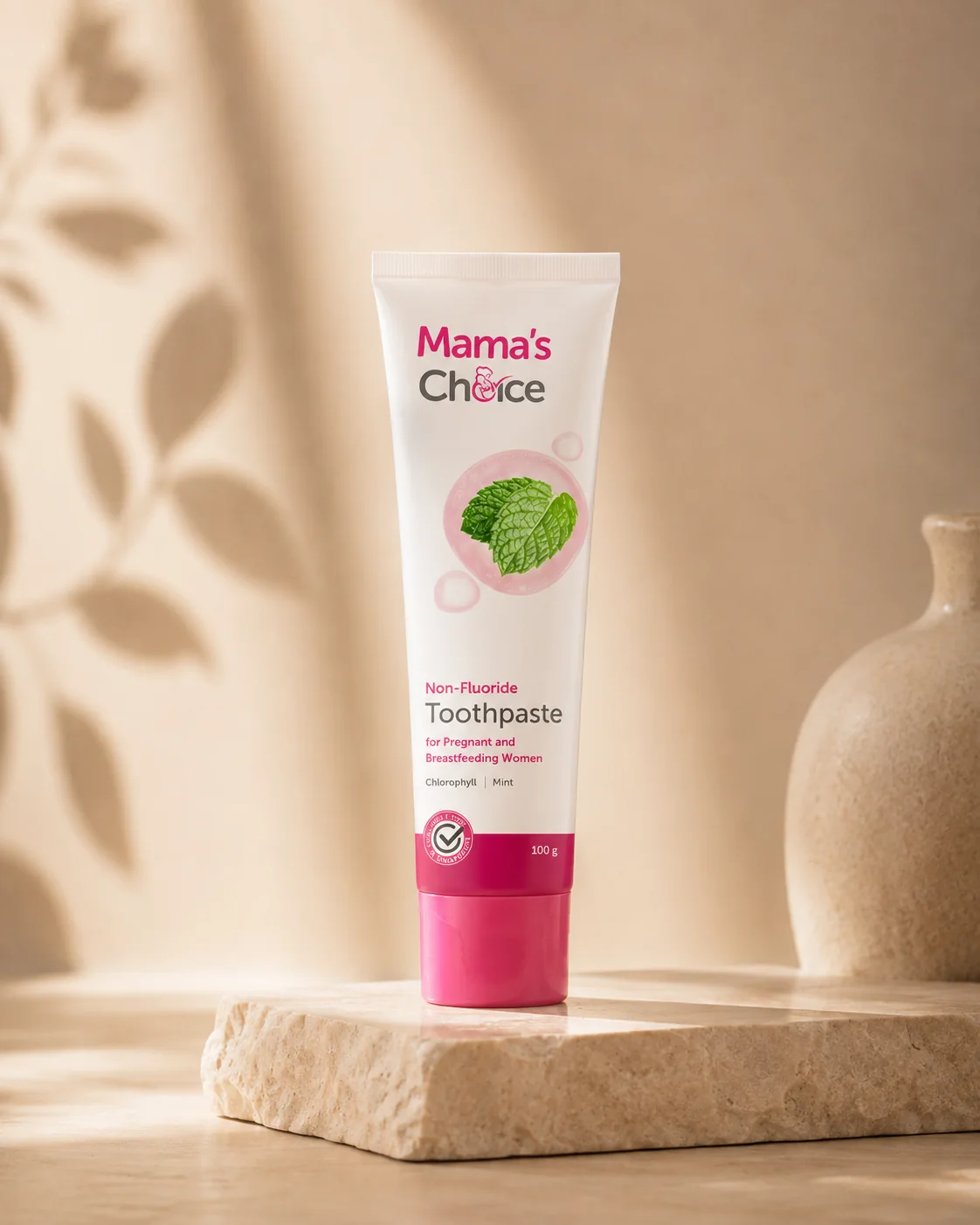
Natural Toothpaste is made without fluoride and without SLS, with a mild mint that suits you if brushing makes you gag.
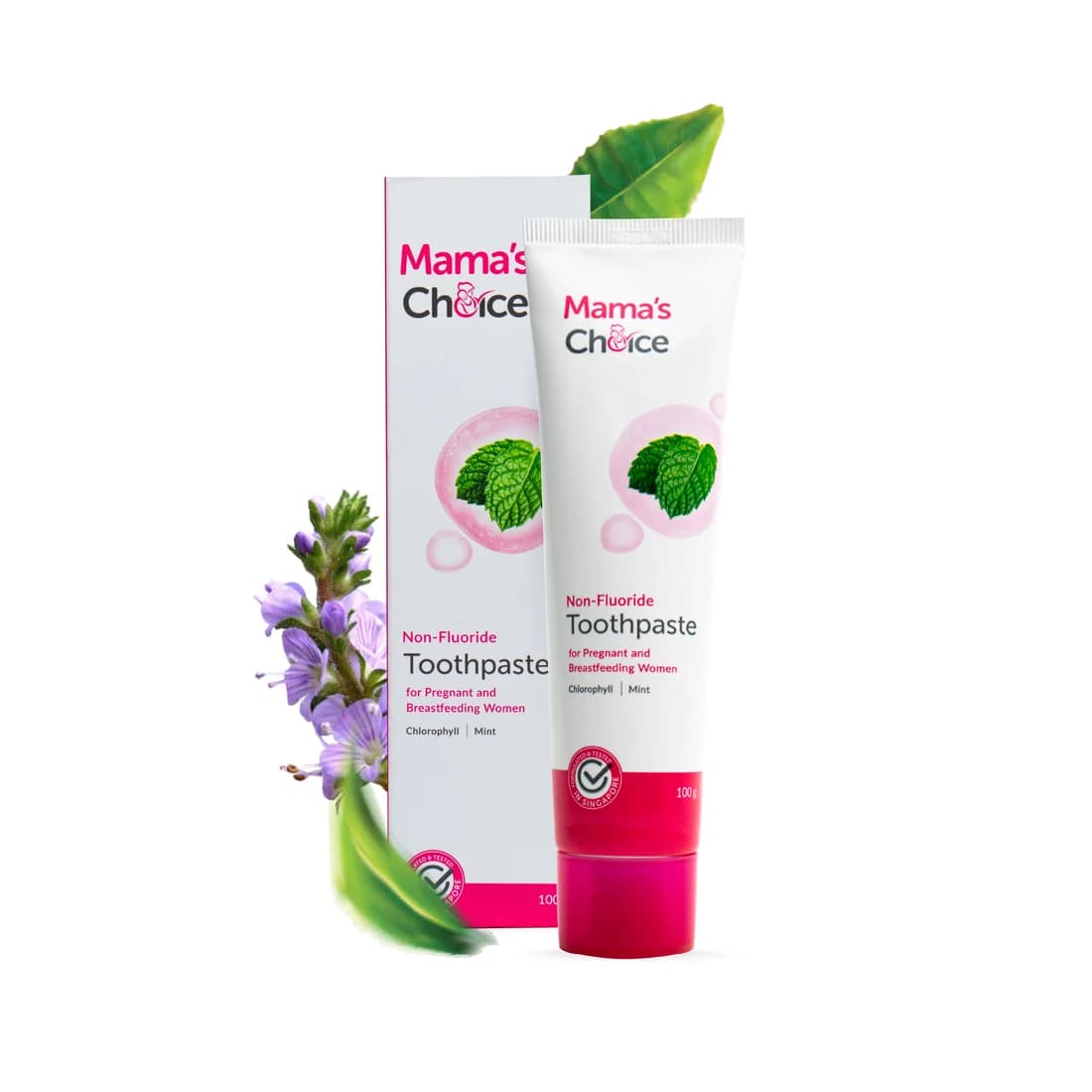
Baby & Kids Toothpaste is made for children who cannot spit yet, with xylitol, hydroxyapatite and calendula.
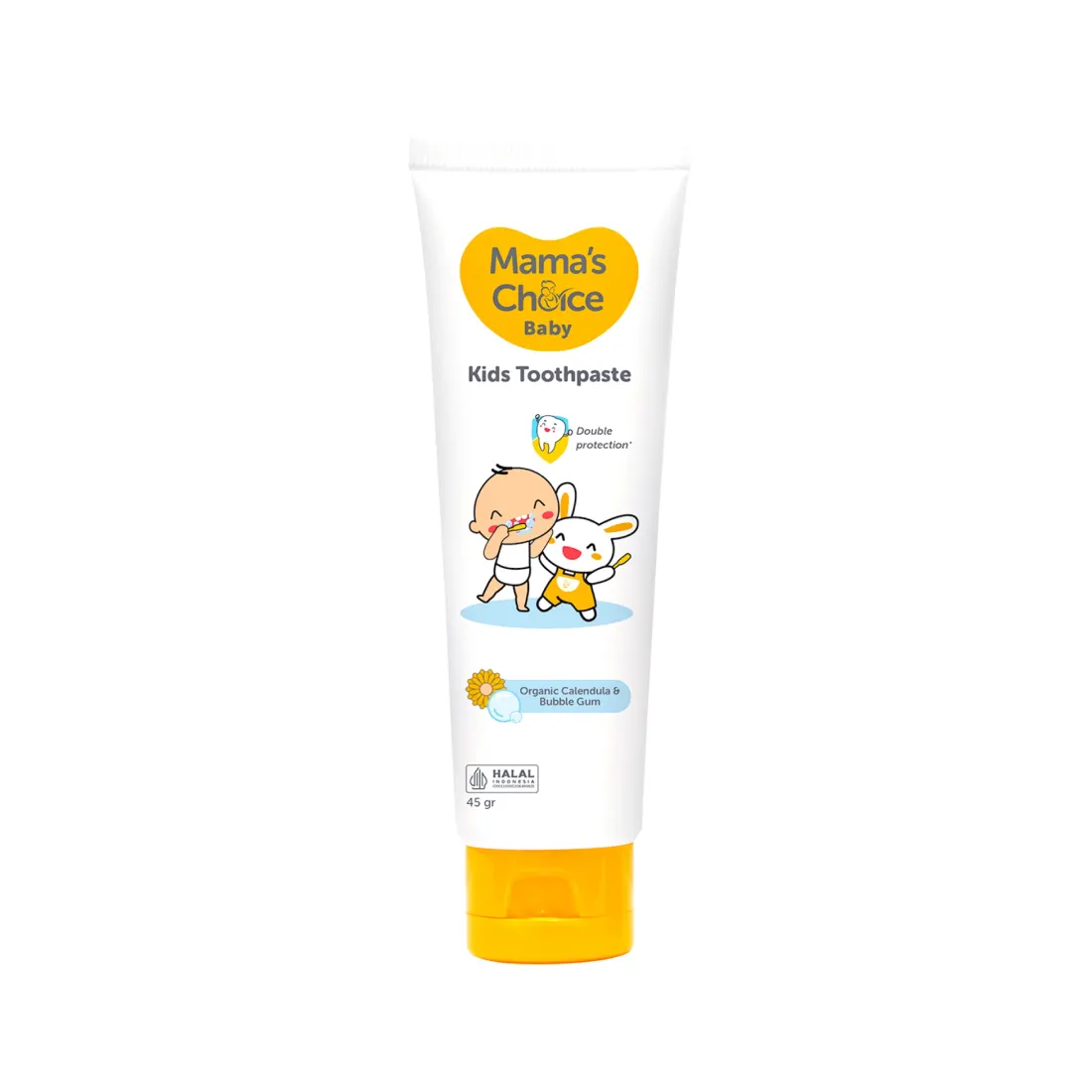
We went fluoride-free so a swallowed smear does not matter, and so brushing is bearable when you feel sick. That is the reason. It is not that fluoride is dangerous.
Sources
Share this article
This article is for information only and is not a substitute for diagnosis or medical advice. Please discuss your own situation with your midwife or doctor.