Exercise While Breastfeeding: What Is Safe and When to Start
Postnatal exercises that are safe while breastfeeding, when you can begin, and the truth about the myth that exercise sours breast milk.
Somebody has told you that exercising will sour your milk, or that you have to wait six weeks, or both.
Neither is true. Exercise is safe while breastfeeding, at every level of activity you are realistically going to manage right now.
What is worth knowing is when to start, what suits a body that has just given birth, and where that milk myth came from.
Two things matter more than which exercise
What kind of birth you had. After an uncomplicated vaginal delivery, gentle movement often starts within days. After a caesarean, or with complications, the timeline is different and belongs in a conversation with your doctor.
How you actually feel. Bleeding getting heavier after activity, pain, dizziness, leaking urine. All of those mean slow down rather than push through.
There is no rigid six-week rule. That number has attached itself to postnatal advice, but the guidance is to resume gradually once it is medically safe, and for plenty of Mamas that is earlier.
Five things to start with
Low impact. No equipment, no gym, no childcare required.
Pelvic tilt. Rebuilds abdominal strength and you can do it several times a day. Lie on your back, knees bent. Flatten your back to the floor, tighten your abdominals, lift your pelvis slightly. Hold 10 seconds. Repeat 10 to 20 times.
Kegels. These work the pelvic floor, the sling holding up your uterus, bladder and bowel. Done regularly they reduce incontinence, which is the thing nobody warned you about. Contract as though stopping the flow of urine, hold 10 seconds, release, rest 10 seconds. Up to 30 a day.
Diaphragmatic breathing. Possible in the first days. It calms your nervous system, slows your breath and rebuilds core stability. Lie down, one hand on your chest, one on your belly. In through the nose for 2 to 3 seconds, filling the belly rather than the chest. Out slowly. Two or three minutes.
Happy baby pose. Stretches and releases the pelvic muscles, useful if they ache. On your back, knees to chest, then open them slightly wider than your hips. Lift your heels, take hold of your feet, let the pelvic muscles go soft. Hold 90 seconds.
Walking. The most underrated of the lot. Ten to 15 minutes around the neighbourhood, with the pram or with company. Morning or late afternoon, to miss the worst of the heat.
What you get out of it
Energy. Counterintuitive when you are running on four hours, and regular movement raises your baseline rather than draining it.
Mood. One of the best-supported benefits there is, in a period when low mood is common.
Weight, gradually. Alongside eating properly. Breastfeeding uses energy already, and hard dieting while feeding is not the answer.
Time with her. A walk with the pram counts as both.
About that 150 minutes
The general recommendation is at least 150 minutes of moderate activity a week after birth.
Treat it as a destination, not a starting line. Building up gradually is the entire point, and ten minutes of walking a day counts.
Does it change your milk
No. This is the myth worth taking apart properly.
Exercise has not been shown to affect the production or composition of breast milk at recommended activity levels. Lactic acid does rise briefly after very intense exercise, and not to a degree that makes babies refuse the breast.
What helps in practice:
- Feed or express first, so you are lighter
- Wear a bra that actually supports
- Drink enough water
If supply is the real worry
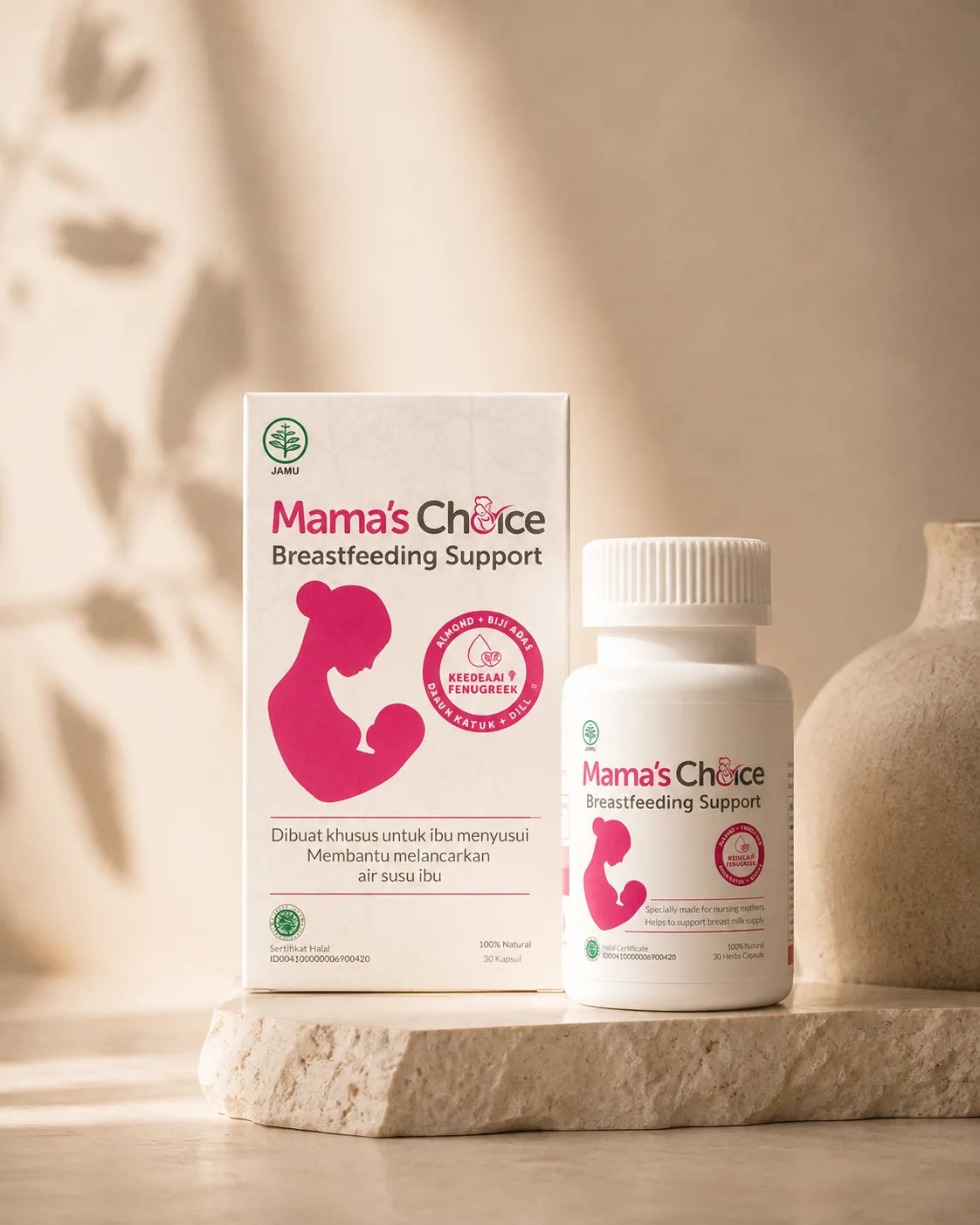
If that is what is behind the question, Mama's Choice Breastfeeding Support is a capsule with almond, fenugreek, katuk leaf and soy.

The claim that 2 in 3 Mamas found their milk thicker after first use, with volume up 36%, comes from the Mama's Choice Effectiveness Panel Test, August 2021. An internal panel test recording participant reports, not a controlled clinical trial.
Supplements are a small part of supply. Feeding or expressing often and effectively does far more, and a midwife or lactation consultant will get further with a supply problem than any capsule will.
Stop and ring someone if
- Bleeding gets heavier after activity
- Pain in your pelvis, back or abdomen
- Dizziness or breathlessness out of proportion to what you did
- A gap you can feel down the middle of your abdomen
That last one may be diastasis recti, and it needs assessing before you do any abdominal work at all.
Sources
Share this article
This article is for information only and is not a substitute for diagnosis or medical advice. Please discuss your own situation with your midwife or doctor.