Going to the Dentist During Pregnancy
Dental treatment during pregnancy is safe and recommended. Which trimester suits which procedure, and what to say before anything starts.
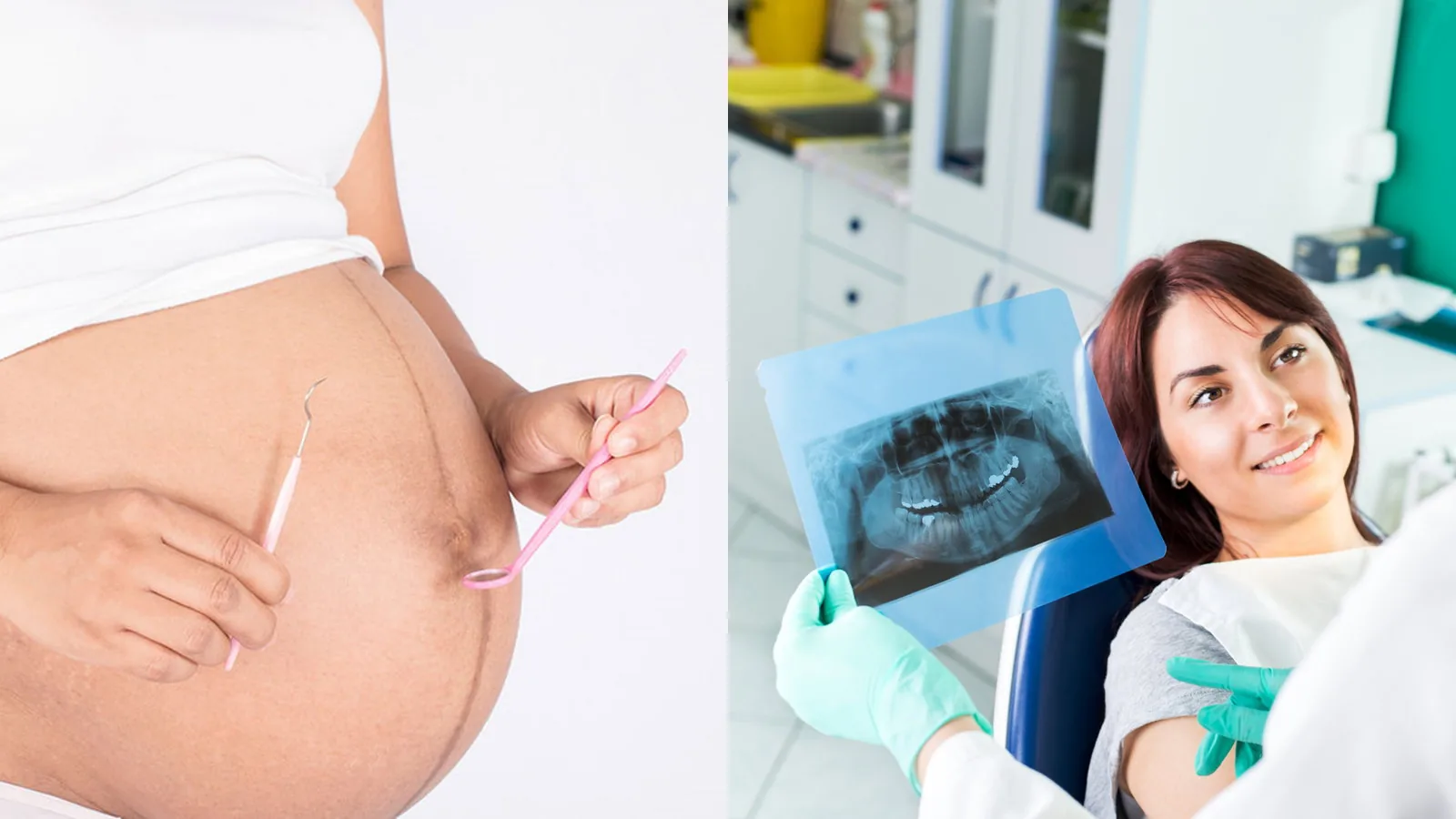
Yes, and you should. PDGI recommends a dental check as early as possible once a pregnancy is confirmed, not as an exception to be justified but as part of ordinary antenatal care.
The belief that dental treatment waits until after the birth causes more harm than it prevents.
What PDGI advises
- Dental care throughout the pregnancy, at minimum in the first and second trimesters
- Regular visits every 6 months, rather than only when something hurts
- A word with your obstetrician or midwife beforehand
- No over-the-counter painkillers for toothache or gum problems without a prescription
- Any surgical or restorative work done on a dentist's advice
Treatment can be given at any point in the pregnancy. Weeks 14 to 20 are usually the most comfortable window for planned work.
Fillings are safe
Filling a cavity is safe during pregnancy and does not need to wait until after the birth. PDGI, the ADA and ACOG all say so.
The risk runs the other way. Leaving decay and gum infection untreated through a pregnancy is associated with higher risk, including preterm birth, because the inflammation does not stay in the mouth.
What genuinely does wait is cosmetic work. Whitening can be scheduled for later without losing anything.
Which trimester
First. Check-ups and scaling are fine. Anything that can wait is often rescheduled for comfort rather than for safety, since nausea and tiredness make lying back for a long session unpleasant.
Second. The best window for fillings and root canal work. Nausea has usually settled and the bump is not yet large.
Third. Still safe. Lying flat for long becomes uncomfortable, so shorter sessions and a chair tilted to the left help.
What worries people most
Anaesthetic, x-rays and antibiotics come up in almost every conversation.
Local anaesthetic is generally safe in pregnancy. Enduring pain without it creates stress that serves no purpose.
Dental x-rays use a very small radiation dose aimed away from the uterus. With a protective apron they are considered safe when needed. In practice: postponed if not urgent, done if they decide the diagnosis.
Antibiotics vary. Some classes are safe in pregnancy and some are not, tetracyclines in particular. That is precisely why the pregnancy has to be mentioned before a prescription is written.
The single thing that most determines safety is whether the dentist knows you are pregnant and how far along.
Why teeth get worse in pregnancy
Your risk of sensitive and problematic teeth roughly doubles. Hormones drive most of it, alongside bacteria and calcium intake.
The common complaints are swollen and bleeding gums, toothache, excess saliva, and cavities.
Day to day, the things that help are unglamorous: watching what you eat and how often, brushing twice a day, and a mouthwash if nausea makes brushing difficult.
Do not delay these
Throbbing toothache, particularly the kind that wakes you at night.
A swollen gum with pus, or swelling in the cheek. Dental infection spreads, and an untreated one carries more risk to a pregnancy than the treatment does.
A broken tooth, or a lost filling with a sharp edge cutting the tongue.
Heavy bleeding from the gums that has not improved despite good oral hygiene.
The lump on the gum
Some Mamas find a small red lump on the gum that bleeds easily. It is called a pregnancy granuloma, and despite how it looks, it is benign.
It usually shrinks on its own after the birth. If it grows large enough to interfere with eating, a dentist can remove it.
About toothpaste
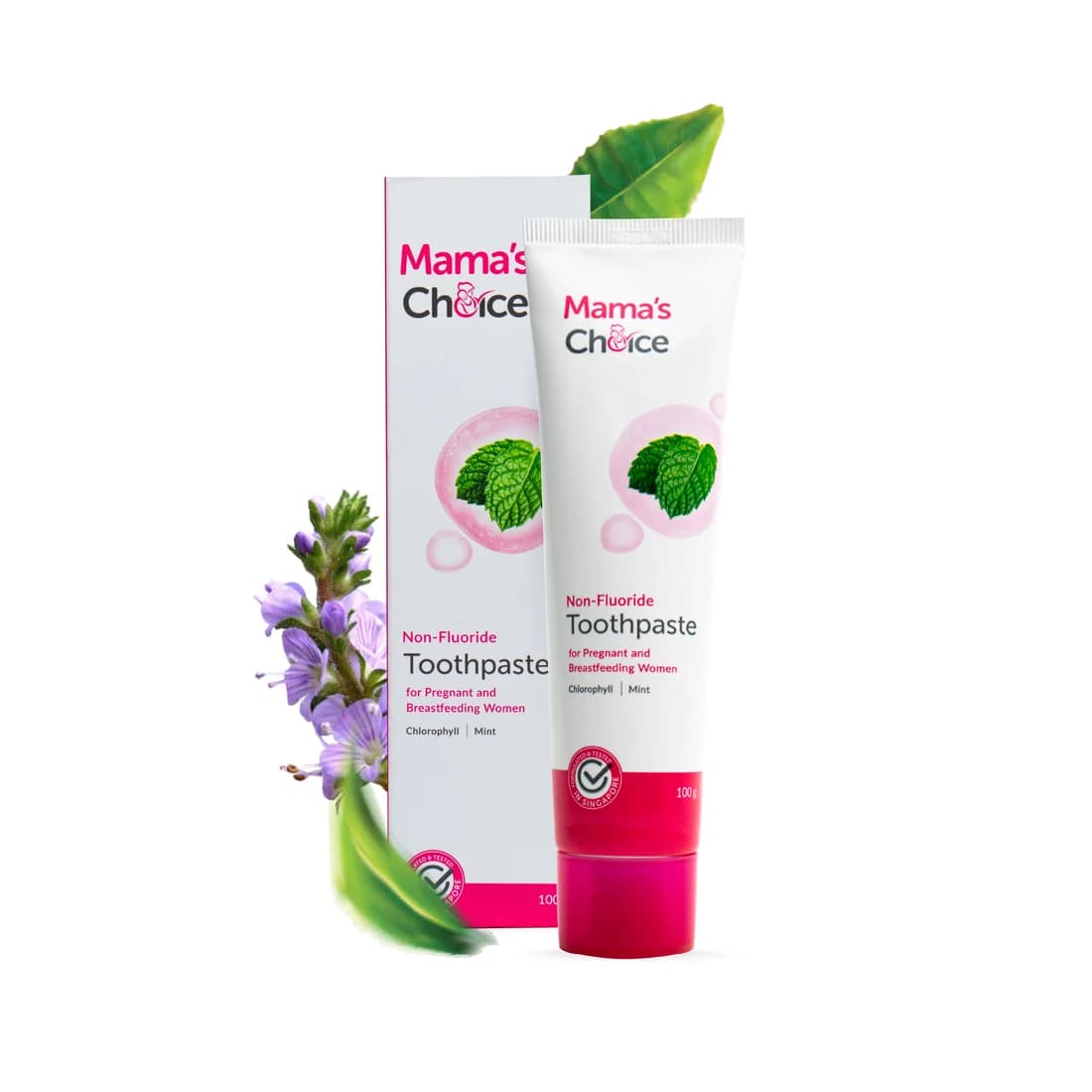
Mama's Choice Natural Toothpaste is made without fluoride, triclosan, SLS or artificial colouring, with mint, chlorophyll, siwak and allantoin. It is halal certified by MUI.
Worth stating plainly so nothing is misread: fluoride toothpaste does not harm a fetus when used as directed. ACOG and the ADA recommend it during pregnancy, provided it is spat out. Our fluoride-free formula is a comfort choice if brushing makes you gag, not a correction of a danger. The full account is in the ingredient dictionary.
The one thing you must do
Say you are pregnant, and how many weeks, before anything begins. Every adjustment a dentist makes for a pregnancy follows from knowing that, and none of them can be made afterwards.
Sources
Share this article
This article is for information only and is not a substitute for diagnosis or medical advice. Please discuss your own situation with your midwife or doctor.