Bleeding Gums in Pregnancy: Causes and What Helps
About half of pregnant women get it. Why gums bleed in pregnancy, what actually helps, and when to see a dentist rather than wait.
You spit, and there is blood in the sink. Again.
You are not brushing too hard. Bleeding gums in pregnancy are extremely common, they have a clear cause, and they settle after the birth.
Why it happens
Pregnancy hormones make your gum tissue carry more blood and react more strongly to plaque.
So the same amount of plaque that used to do nothing now leaves your gums swollen, red and quick to bleed. It happens often enough in pregnancy to have its own name in dentistry.
It usually starts in the second trimester, peaks near the third, and eases after you give birth.
What makes it worse
Nausea in the first trimester. Brushing gets rushed or skipped, plaque builds.
Acid after being sick. Stomach acid softens enamel for a while. Brushing straight afterwards scrubs it at its most vulnerable.
Grazing on sweet or sour things. It is how often, not how much. Snacking all day keeps your teeth under constant acid attack.
Stopping brushing because it bleeds. The most understandable response, and the one that does the most damage.
What actually helps
Keep brushing, more gently. Soft bristles, light pressure, small circles right at the gum line. Twice a day, two minutes.
Inflamed gums will bleed for the first few days. Clear the plaque consistently and the bleeding usually settles within one to two weeks. That is the part worth holding on for.
Get between your teeth. Floss or interdental brushes. Most gum inflammation starts where a brush cannot reach.
After being sick, wait. Rinse with water, or water with a little bicarbonate of soda, and give it about 30 minutes before you brush.
Snack less often, rather than less overall. Ten small sweet things do more damage than one bigger one.
Water after eating. It rinses away residue and acid for free.
About your toothpaste
SLS, the ingredient that makes toothpaste foam, is linked to mouth irritation and ulcers in some people. On gums that are already inflamed, you notice it.
Strong flavours can set off nausea in the first trimester.
Fluoride is worth a conversation with your dentist. It works, and some Mamas still prefer to skip it during pregnancy as a precaution.
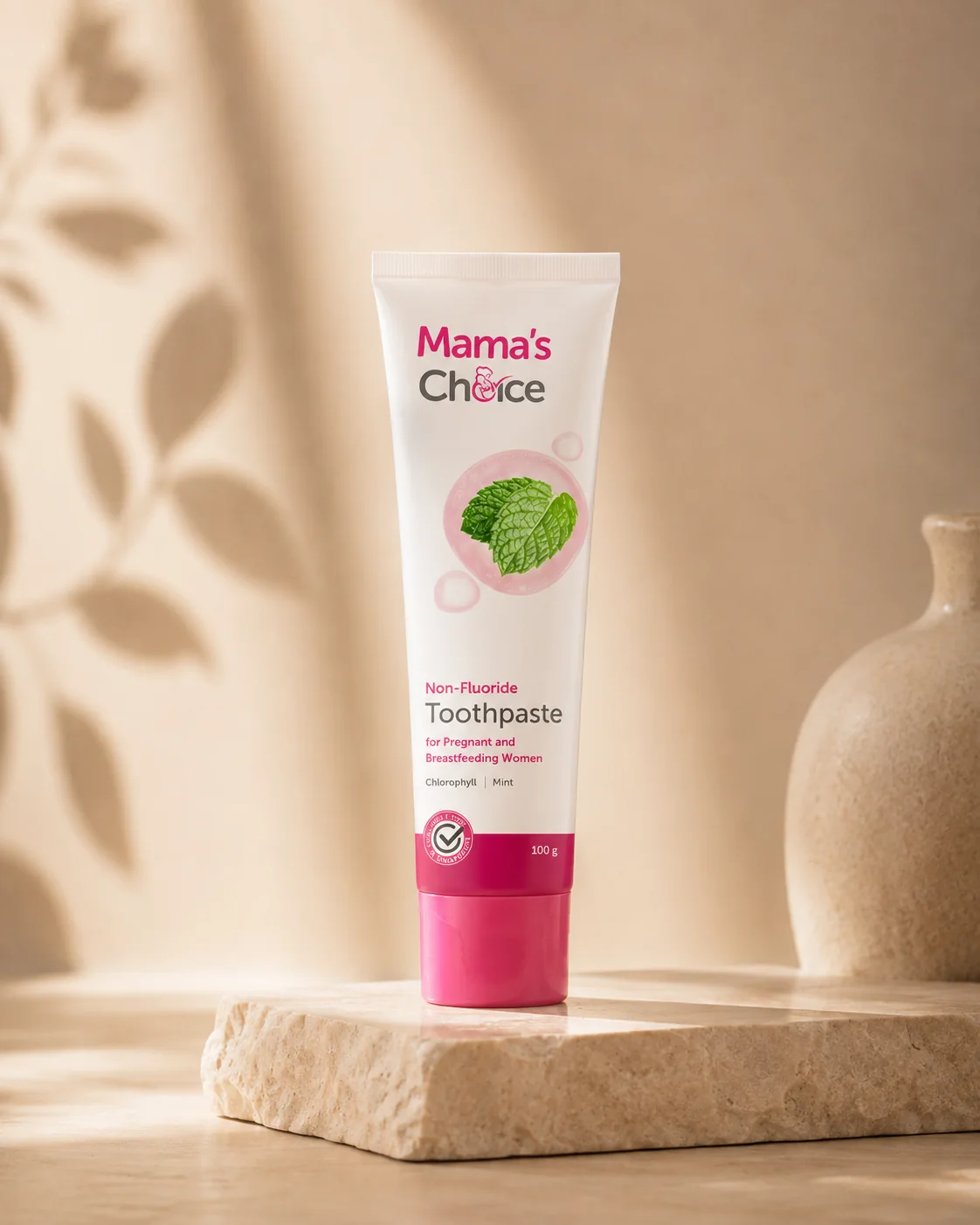
Natural Toothpaste is made without SLS and without fluoride, with a mild mint flavour.
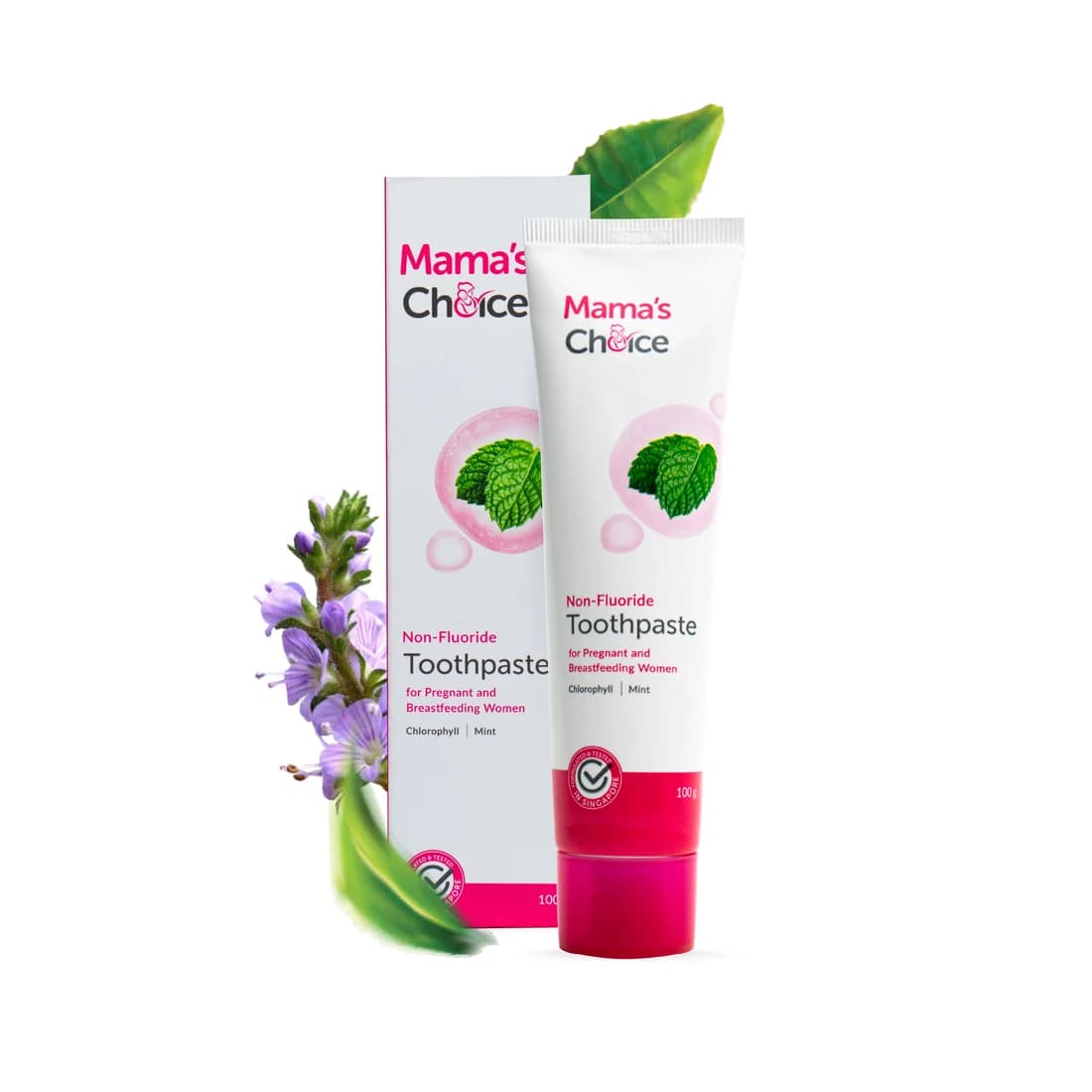
So this is not misread: fluoride toothpaste does not harm your baby when used as directed. ACOG and the ADA both recommend it during pregnancy, as long as you spit it out. Our formula is a comfort choice, not a correction to a danger. The full account is in our ingredient dictionary.
Why it is worth bothering with
Inflamed gums are not only uncomfortable. Left alone, the inflammation can spread to the tissue holding your teeth in, and at that stage the damage does not fully reverse.
There is a practical reason too. Once the baby is here, finding an hour for a dental appointment becomes remarkably hard. Pregnancy, especially the second trimester, is the easier window, and a dental check is now routinely recommended as part of antenatal care rather than something to leave until later.
Brushing when you feel sick
A real obstacle in the first trimester, and almost nobody talks about it.
Move the time. It does not have to be first thing. Brushing whenever the nausea is mildest beats not brushing.
Use a small-headed brush. A big head reaches the back of your palate and sets off the gag reflex.
Use less paste. Pea-sized is plenty. It is usually the foam that does it.
Lean forward, so foam does not pool at the back of your mouth.
Breathe through your nose, and go slowly.
On a day when you genuinely cannot, rinsing with water and flossing is still far better than nothing.
When to see a dentist
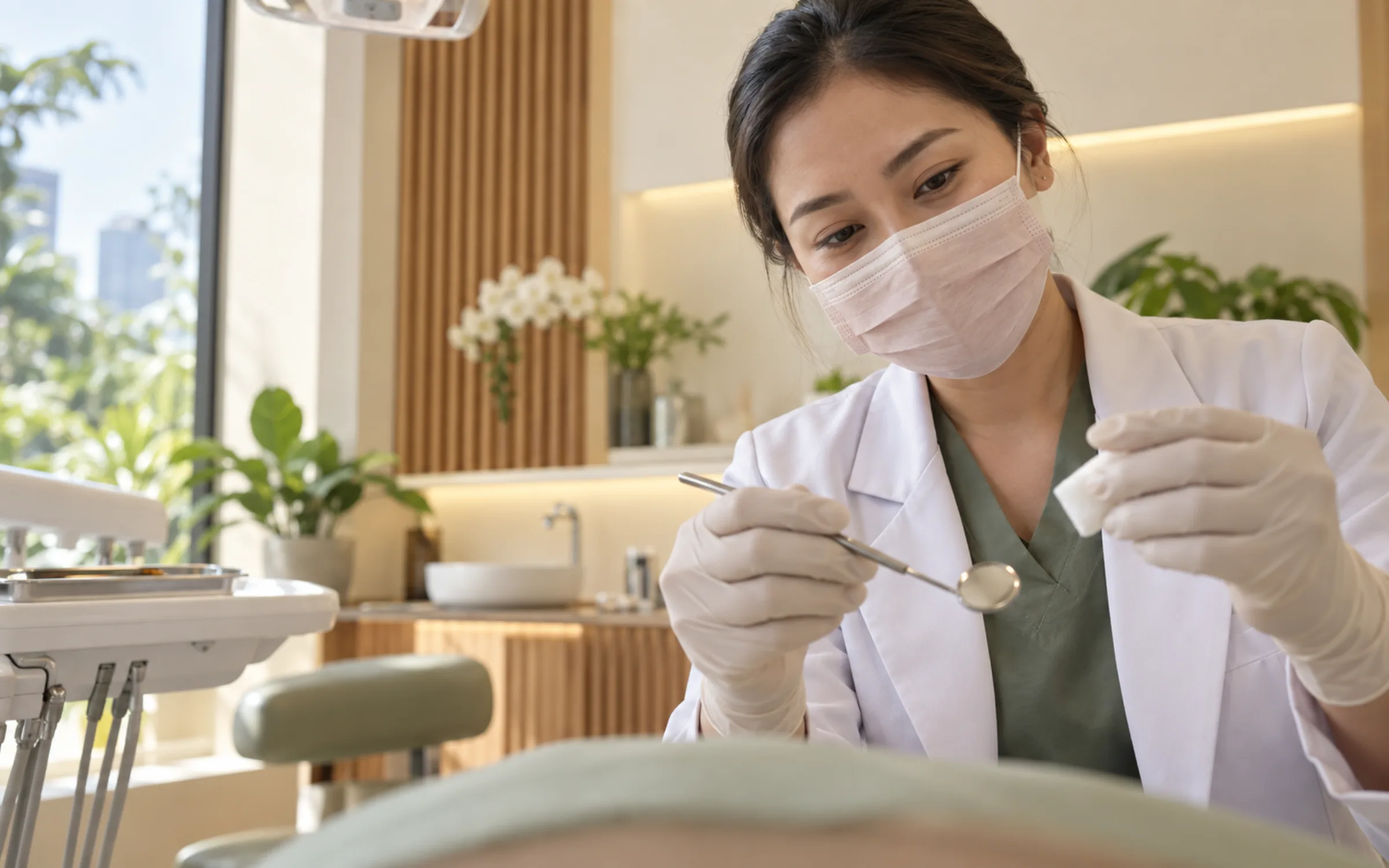
Do not wait until after the birth. Dental treatment in pregnancy is generally safe, and putting it off usually makes the problem bigger.
Go promptly if you have:
- Swollen gums no better after two weeks of brushing properly
- Toothache that will not go
- A lump on the gum. Some Mamas get one in pregnancy, usually harmless, still worth checking
- A tooth that feels loose
- Pus, or a swollen face
Tell them how many weeks you are. The second trimester is usually the most comfortable time for anything planned.
Frequently asked questions
- Why do gums bleed more easily in pregnancy?
- Hormonal changes increase blood flow to gum tissue and make it react more strongly to plaque. The same amount of plaque that caused no trouble before can now leave gums swollen and prone to bleeding. It is common, and it usually settles after birth.
- Should I keep brushing if my gums bleed?
- Yes, and it matters that you do. Stopping lets plaque build up and the inflammation worsen. What should change is the technique: a soft-bristled brush, light pressure, small circles at the gum line.
- Is it safe to see a dentist while pregnant?
- Safe, and recommended. Scaling and routine dental treatment can generally be done during pregnancy. Tell your dentist you are pregnant and how far along. The second trimester is often the most comfortable time.
- Why does brushing make me feel sick?
- The gag reflex is more sensitive in the first trimester. Try brushing at a different time of day, use a small-headed brush, and choose a mildly flavoured toothpaste. Do not brush straight after vomiting: rinse first and wait about 30 minutes.
Sources
Share this article
This article is for information only and is not a substitute for diagnosis or medical advice. Please discuss your own situation with your midwife or doctor.