How to Choose a Nursing Bra That Fits Through the Changes
Breast size changes several times while breastfeeding. When to buy, how to check the fit, what the wire question really turns on, and how many you need.

You bought one in the last weeks of pregnancy, and two months later it fits nothing at all.
You did not choose badly. Your breasts change size several times across breastfeeding, and no single bra follows all of it. Buying one for the whole of it was never going to work.
The four points where the size moves
Predictable, which helps.
During pregnancy. Breasts start growing in the first trimester, and your ribcage widens to make room for a rising uterus. Your band size often changes before your cup does.
When your milk comes in, day 3 to 5. The steepest change of the lot, and it lasts days rather than weeks.
Around weeks four to six. Supply settles to what your baby actually needs. Your breasts get smaller again and stop feeling full all the time. Normal, and not a sign your supply has dropped.
At weaning. Glandular tissue shrinks, and where you end up is often not where you started.
When to buy
For the early stage: around 36 to 38 weeks. By then your ribcage is close to its final measurement, and your breasts have not yet done the thing they do when milk arrives.
Buy on the loosest hook. Bras stretch with wear, and tighter hooks are where you go next. A bra bought on its tightest hook has nowhere left to go.
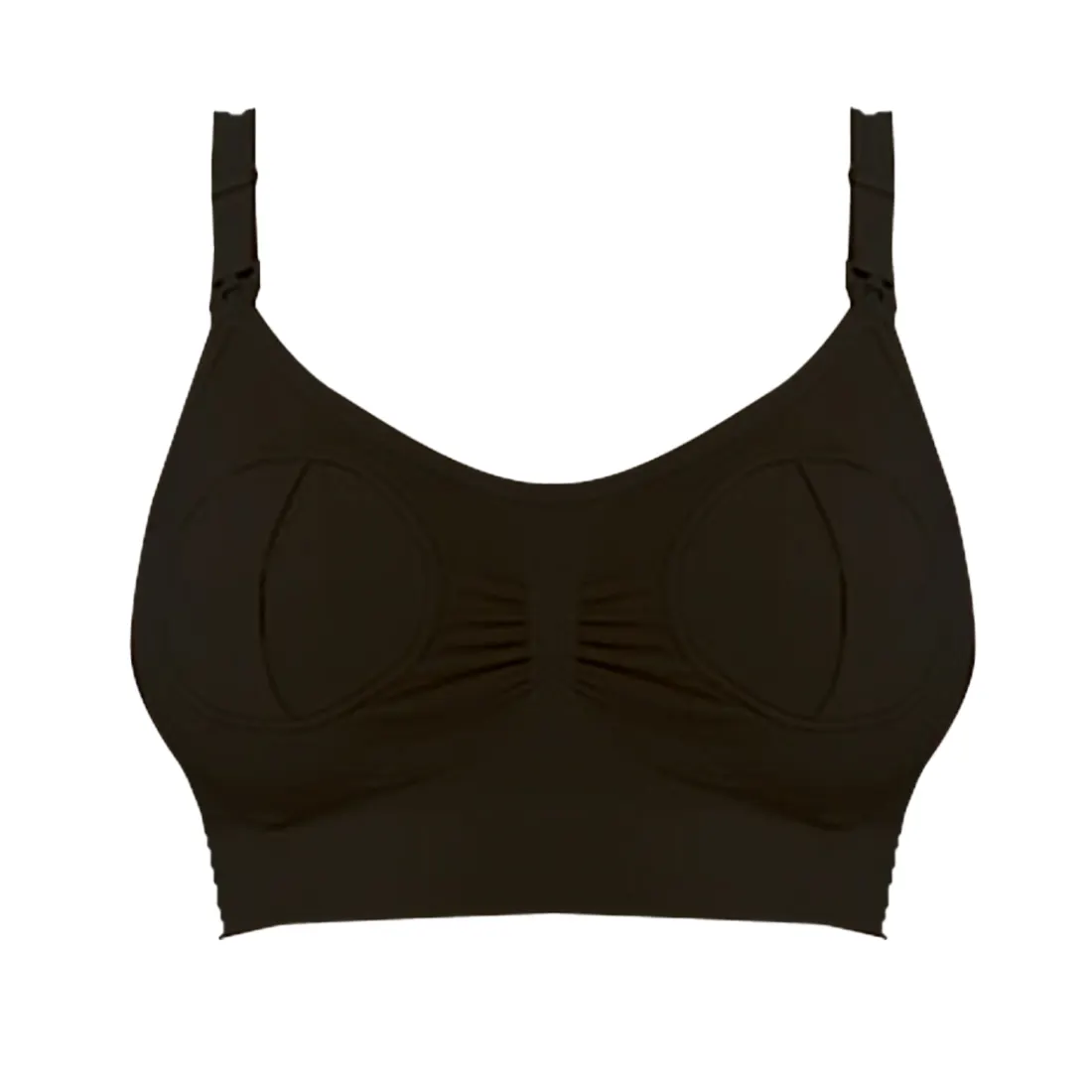
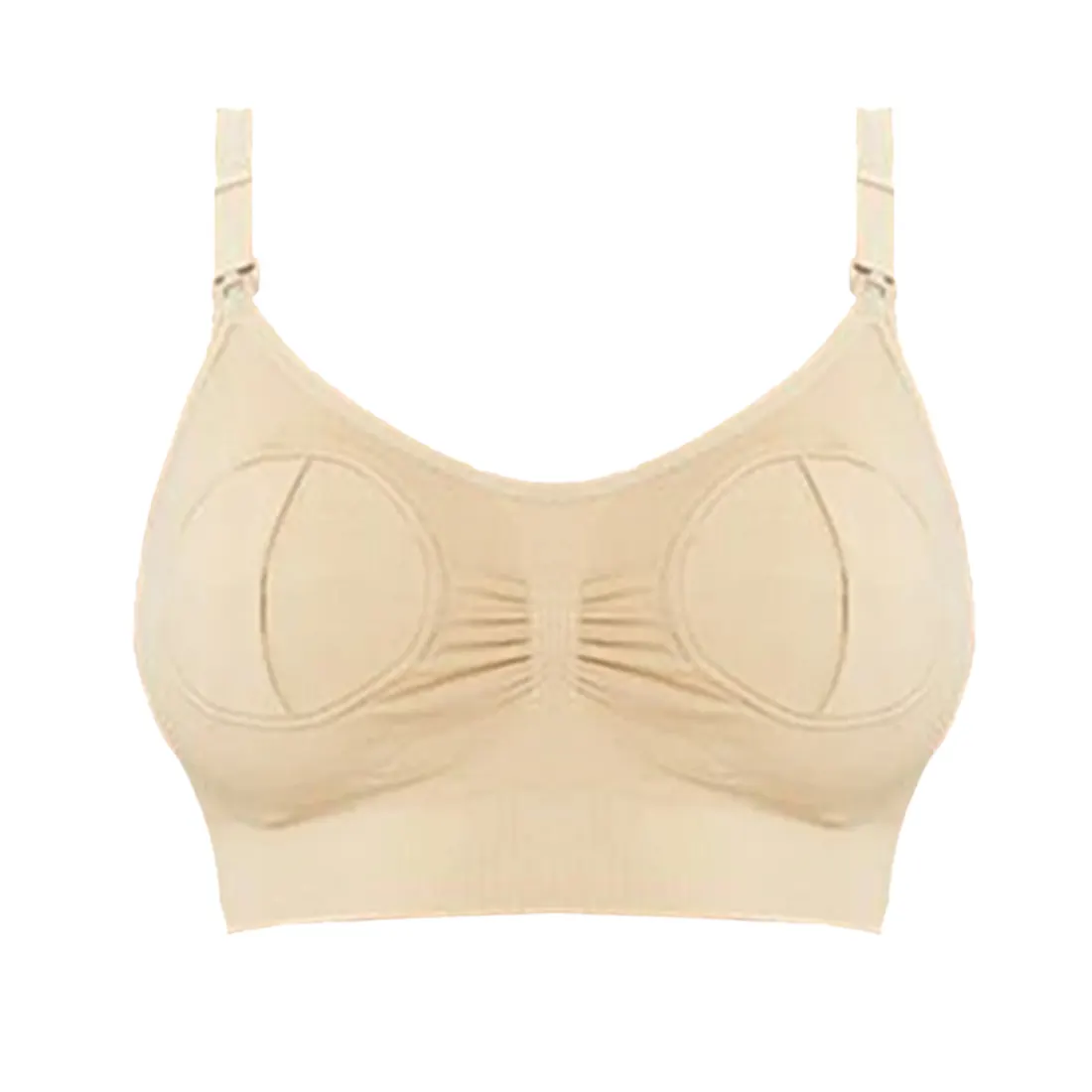
For the first weeks, one or two very stretchy wire-free bras in a soft fabric with cups that can expand. The very full stage is short and does not justify a perfectly fitted bra you wear for six days.
Measure again at week six, once supply has settled. That is when to buy something that will genuinely fit for months.
Checking the fit
The band does the work, not the straps. Firm, and level across your back. Riding up at the back means it is too loose.
The cup holds everything, with nothing spilling over the top or the side. A cup that is too small compresses tissue all day long.
Straps should not dig in. Marks on your shoulders mean the band is not doing its job.
Quick test: two fingers should slide under the band at the back, snugly.
The wire question
The problem is a wire in the wrong size, not wire itself. A wire pressing into breast tissue rather than sitting on your ribcage can restrict the duct underneath it.
Honestly though: a badly fitting bra is not the sole cause of blocked ducts or mastitis, and a well-fitting one is no guarantee against them. It removes one variable you can control, which is worth something and is not everything.
Because your size keeps moving, a wire that fits today can press in the wrong place next month. Plenty of Mamas go wire-free through the early months and revisit it once supply is settled.
The features that matter at 3am
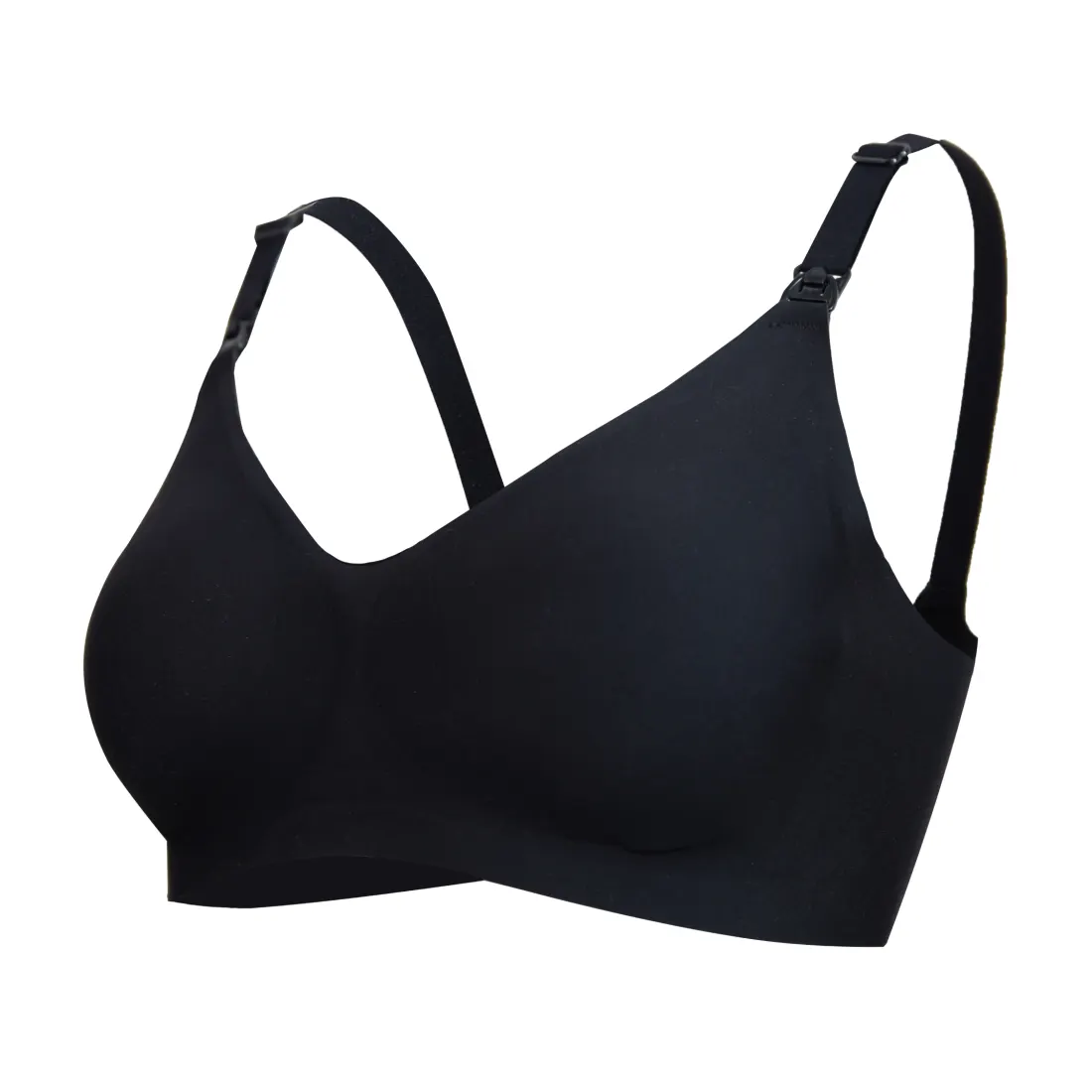
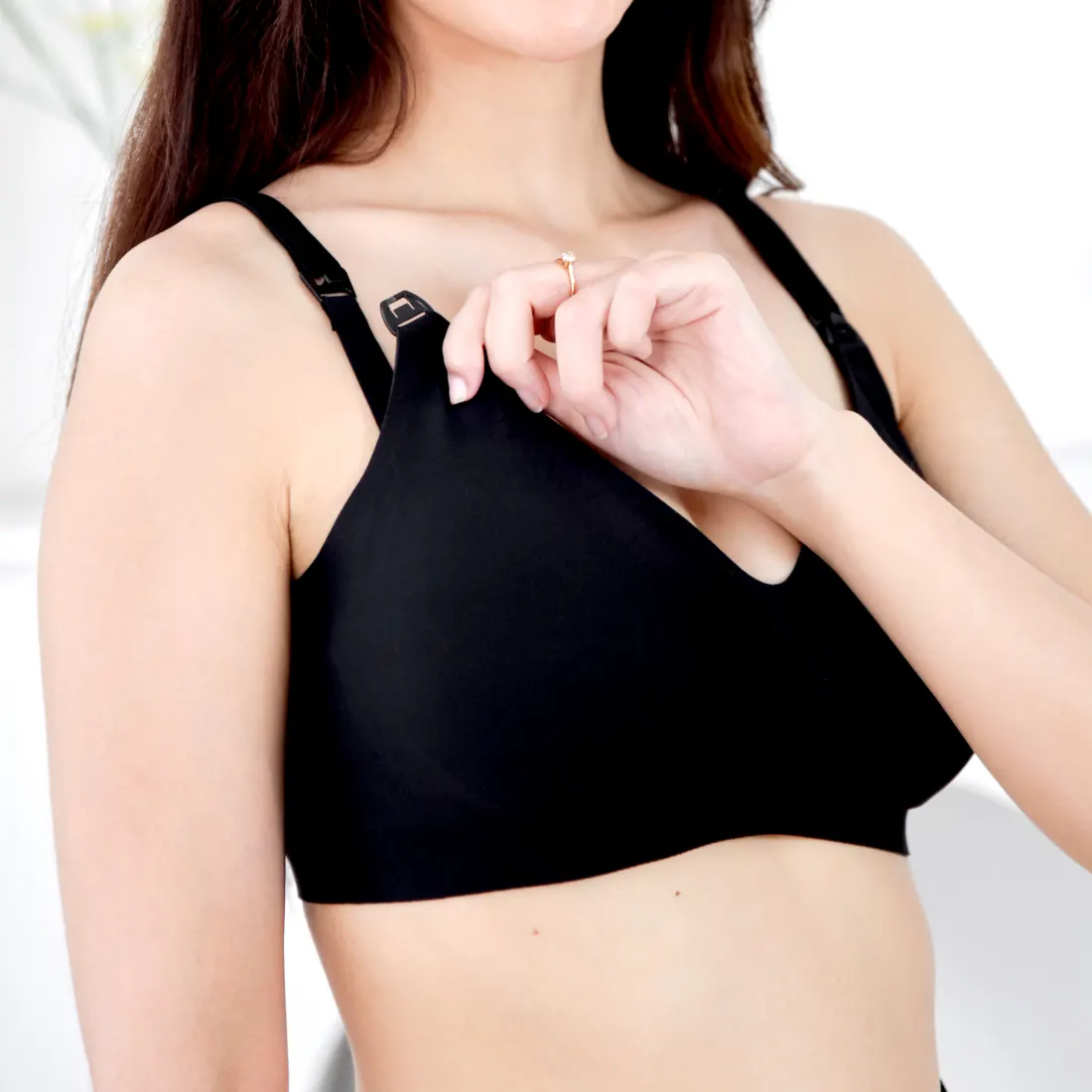
A clasp you can open one-handed. Your other hand has a baby in it.
A full cup opening, not a little window. Much easier to latch through in the early weeks.
Fabric that breathes. Skin under the breast stays damp easily, and trapped moisture means irritation and fungal rashes.
Smooth seams inside. Your skin is more sensitive now and you will feel a rough one.
Room for a breast pad. A cup that fits exactly has no space for one, and a folded pad presses on a single spot all day.
Different bras for different jobs
Everyday. Comfort over support, because this is the one you live in.
Sleep. Softer, clasp-free, useful for night feeds or if you wear pads in bed.
Pumping. Holds the flanges so you do not have to. If you pump several times a day, that is real time back. Seamless Hands-Free Pumping Bra is made for it.
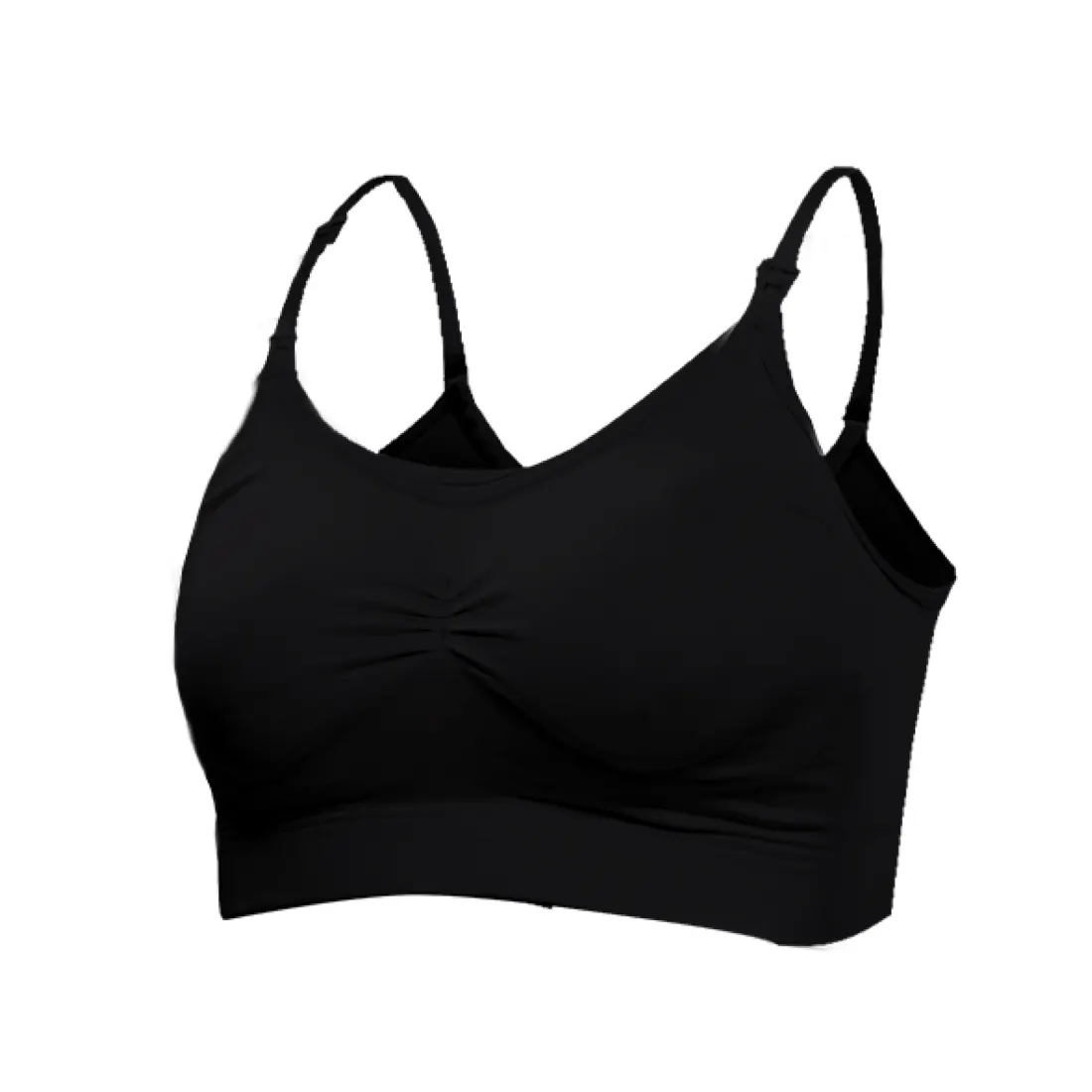
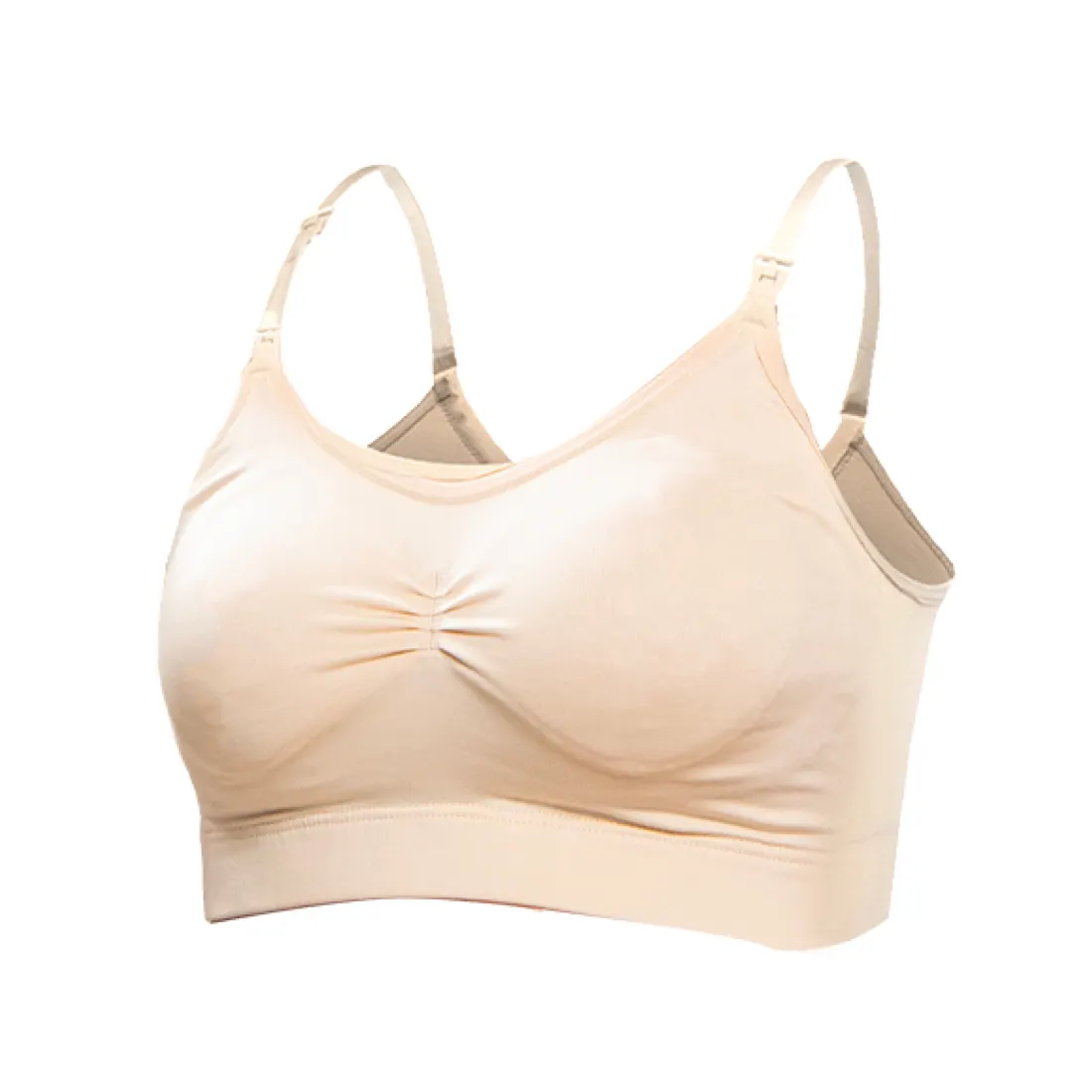
For everyday, Maternity Nursing Bra and Ultra Soft Nursing Bra offer different levels of support.
In the theAsianparent Indonesia community poll on nursing bras, September 2021 (n=1,566), from a media brand in the same group as Mama's Choice but run independently, ours was the most chosen at 26%.
How many you need
Three, for most Mamas. One on, one in the wash, one clean. Add a sleep bra if you feed a lot at night.
Hand wash or use a laundry bag, and keep them out of the tumble dryer. Heat kills elastic, and elastic is the entire point.
Time to replace it when
- The band rides up at the back
- Tissue spills out of the cup
- Straps leave marks
- A tender lump keeps coming back in the same spot
- It is on the tightest hook and still feels loose
The lump is the one to act on. A tender spot returning to the same place usually means the bra is pressing on the same duct every day.
What a nursing bra will not do
It will not increase your supply. That is governed by how often and how well the breast is emptied.
It will not prevent sagging. Breast shape after birth comes down to the pregnancy itself, genetics, age, how many pregnancies, and smoking.
It will not prevent mastitis. Regular emptying and a good latch are what lower that risk.
And what belongs with a midwife rather than a shopping list: pain that persists, redness on the breast, a lump that does not clear after a feed, or a fever.
Frequently asked questions
- When is the best time to buy a nursing bra?
- Around 36 to 38 weeks of pregnancy. By then the ribcage measurement is close to its final size, while the breasts have not yet enlarged the way they do when milk comes in. Buy on the loosest hook, so there is somewhere to go later.
- Are underwired nursing bras dangerous?
- What causes problems is a wire in the wrong size. A wire pressing on breast tissue rather than sitting on the ribcage can restrict flow in a duct. If you choose underwired, make sure the wire follows the ribcage along its whole length.
- How many nursing bras do I need?
- Most Mamas manage on 3, so a clean one is always available while another is in the wash. A softer sleep bra is worth adding if you feed often at night.
Sources
- theAsianparent Indonesia community poll on nursing bras — Sep 2021 (n=1,566)
- Academy of Breastfeeding Medicine — guidance on blocked ducts and mastitis
Share this article
This article is for information only and is not a substitute for diagnosis or medical advice. Please discuss your own situation with your midwife or doctor.