Choosing a Deodorant for Pregnancy: Three Criteria
Which deodorant ingredients are worth avoiding in pregnancy, which warnings are overstated, and what an aluminium-free product can honestly promise.
You sweat more now, and you can smell yourself from further away. Both are pregnancy doing its thing, and both send most Mamas to the deodorant aisle somewhere around the second trimester.
The lists of ingredients to avoid vary wildly in quality. Here they are sorted by what the evidence actually supports.
The ingredients, worst case to weakest case
Phthalates. The one with the strongest argument. Exposure before birth has been linked to effects on hormone development, and they hide inside the single word "fragrance" rather than appearing on the label.
Buy fragrance-free and the question disappears.
Triclosan. An antibacterial, largely phased out after regulatory review. The fair word for it is irritant, not toxin. Skipping it makes sense on skin that has turned reactive, without needing a scarier reason.
Aluminium. The active in antiperspirants, which temporarily blocks sweat ducts.
The breast cancer claim has circulated for years. Cancer Research UK and others state there is no good evidence linking deodorant or antiperspirant use to breast cancer.
Plenty of Mamas still prefer to avoid it while pregnant, and that is a perfectly reasonable preference when alternatives exist. It is a different statement from aluminium being harmful, and keeping those apart matters.
Parabens. Preservatives. At cosmetic concentrations, harm has not been shown, and the FDA says so. Avoiding them in pregnancy is precautionary, which is legitimate.
Propylene glycol and PEGs. Carriers and humectants. They sting on broken or freshly shaved skin, which is worth knowing if a product burns. Not a pregnancy issue beyond that.
Deodorant and antiperspirant are not the same product
This decides what you should expect from whatever you buy.
A deodorant works on odour, by going after the bacteria that break sweat down.
An antiperspirant reduces how much you sweat, which generally needs aluminium salts.
So an aluminium-free product is a deodorant. Anything promising both, without aluminium, is describing something it does not do.
What to look for
- Fragrance-free, which handles the phthalates and your sharpened sense of smell in one go
- Alcohol-free, which stings less after shaving
- A short ingredient list you can read without a search engine
- A texture you will actually use daily, because the best formula is the one that gets applied
Ours
Mama's Choice Dry Serum Deodorant is a fast-absorbing serum with Dead Sea minerals, niacinamide and lemon extract, made without aluminium, alcohol or parabens.
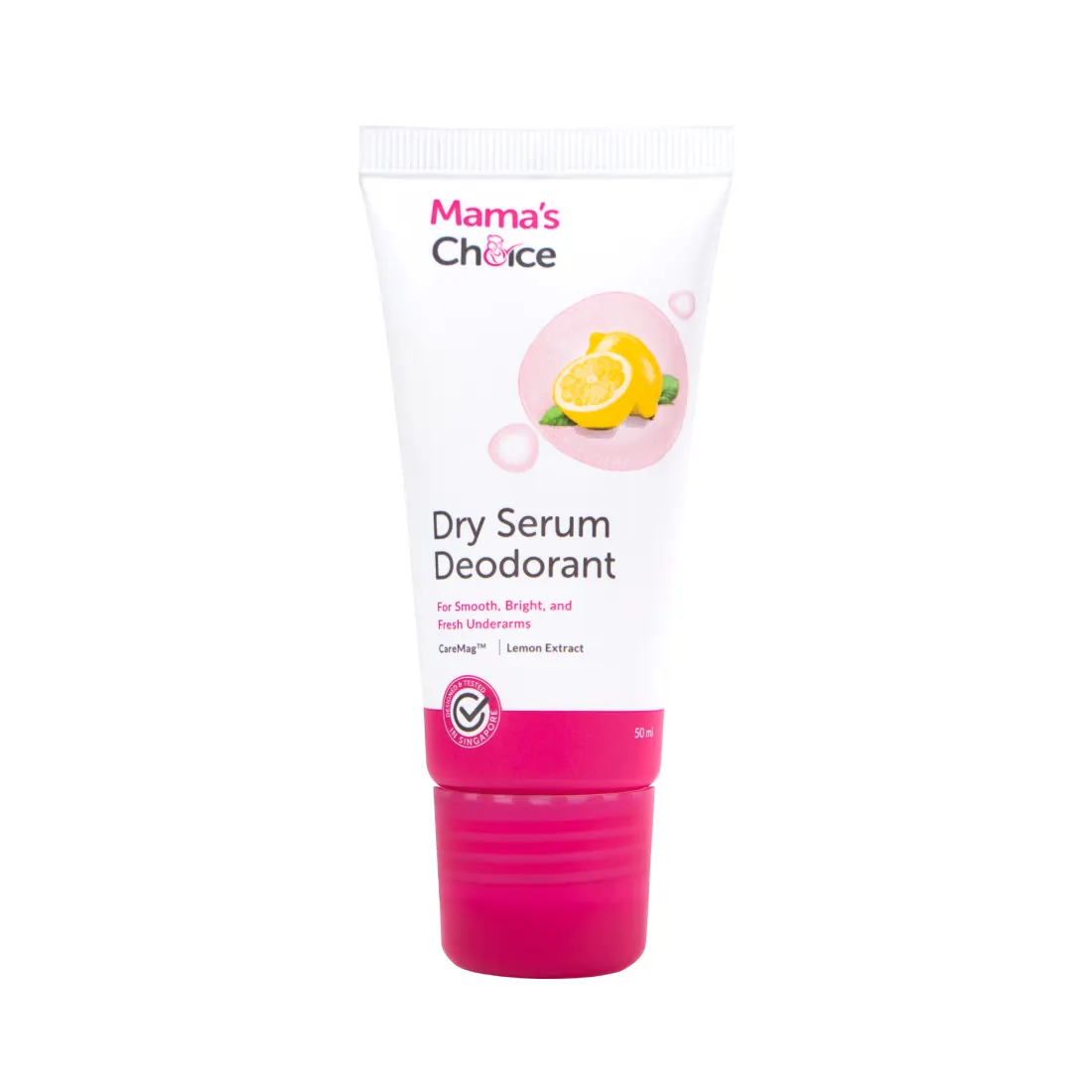
The niacinamide is there for tone. Underarms often darken in pregnancy, from the same hormonal pigment change that draws the line down your belly.
Full ingredient lists are in our ingredient dictionary.
Getting the most out of it
- Clean, dry skin
- Not straight after shaving
- Let it dry before you dress
- Reapply after a shower rather than layering over old product
If your skin goes red or itchy, stop for a few days. Underarm skin is thin and reacts more readily now.
What else is affecting the smell
Your clothes. Synthetics hold sweat residue far longer than cotton. Odour returning within hours of a shower usually means the shirt, not you.
Your hair. Thicker underarm hair holds sweat against skin.
Your diet. Red meat, seafood and onions are linked to stronger odour in some people.
Not how much water you drink. Drinking more does not reduce sweat, which is triggered by your core temperature.
When to mention it to a doctor
- Sweating heavy enough to disrupt your day
- Underarm skin that stays red, sore or rashy
- A sudden change alongside other symptoms
- Fever, fatigue or unexplained weight loss
After the birth, hormones settle and sweating usually goes back to what it was.
Sources
Share this article
This article is for information only and is not a substitute for diagnosis or medical advice. Please discuss your own situation with your midwife or doctor.