Whitening Creams in Pregnancy: What to Use Instead
Skin-lightening actives are mostly set aside in pregnancy. Which ones and why, what works in their place, and why sun protection outperforms all of it.
The patches appeared, you reached for whatever used to work, and now you are reading the label and finding everything on it is off the table.
Some of it is genuinely off. Some is only cautious. And one of them is dangerous in a way nobody warns you about.
The genuinely dangerous one
Unregistered whitening creams sold online are still routinely found to contain mercury.
Mercury in skin creams causes kidney damage and neurological harm, and it crosses the placenta. This is the one hazard on this page, and it is a real one.
Checking a product's registration takes a minute on the BPOM website, and it is worth doing for anything promising rapid lightening at a price that seems too good.
The ones that are simply set aside
Hydroquinone. The most effective lightening ingredient available over the counter in many markets, and the one most often postponed.
There is no clear evidence of harm to your baby. What drives the caution is absorption: a large share of what you apply, up to around 45%, passes through your skin. Most doctors say leave it until afterwards on that basis.
Retinoids. Retinol, tretinoin, adapalene. Avoided in pregnancy, and the firmest recommendation here.
High-dose salicylic acid, particularly as a peel. Low concentrations in something you rinse off are generally considered acceptable.
What "brightening" honestly means
Two different things get sold under one word.
Changing your underlying skin tone is not something any cosmetic does, and not a reasonable thing to expect from one.
Evening out patches and dullness is achievable. Pigment changes in pregnancy are hormonal, they fade after the birth, and in the meantime tone can be kept more even.
The second one is what brightening honestly describes.
What works in their place
Niacinamide, which helps with unevenness and redness and is considered safe.
Vitamin C, supporting collagen and tone, and the usual substitute for what is unavailable.
Rice extract, for hydration and tone.
Hyaluronic acid, which holds water in your skin. Well-hydrated skin looks brighter, and that is the honest mechanism behind most glow claims.
Mineral sunscreen, which does more for pigmentation than any of the above.
Sunscreen is the actual answer
Melasma and darker patches worsen with UV and settle when it is limited.
- Every morning, cloudy days included
- Reapply every two hours outdoors
- A wide-brimmed hat
- Less time outside between 10am and 4pm
Without it, everything else works at half strength. With it, a good number of Mamas find the patches simply stop deepening.
A routine that fits
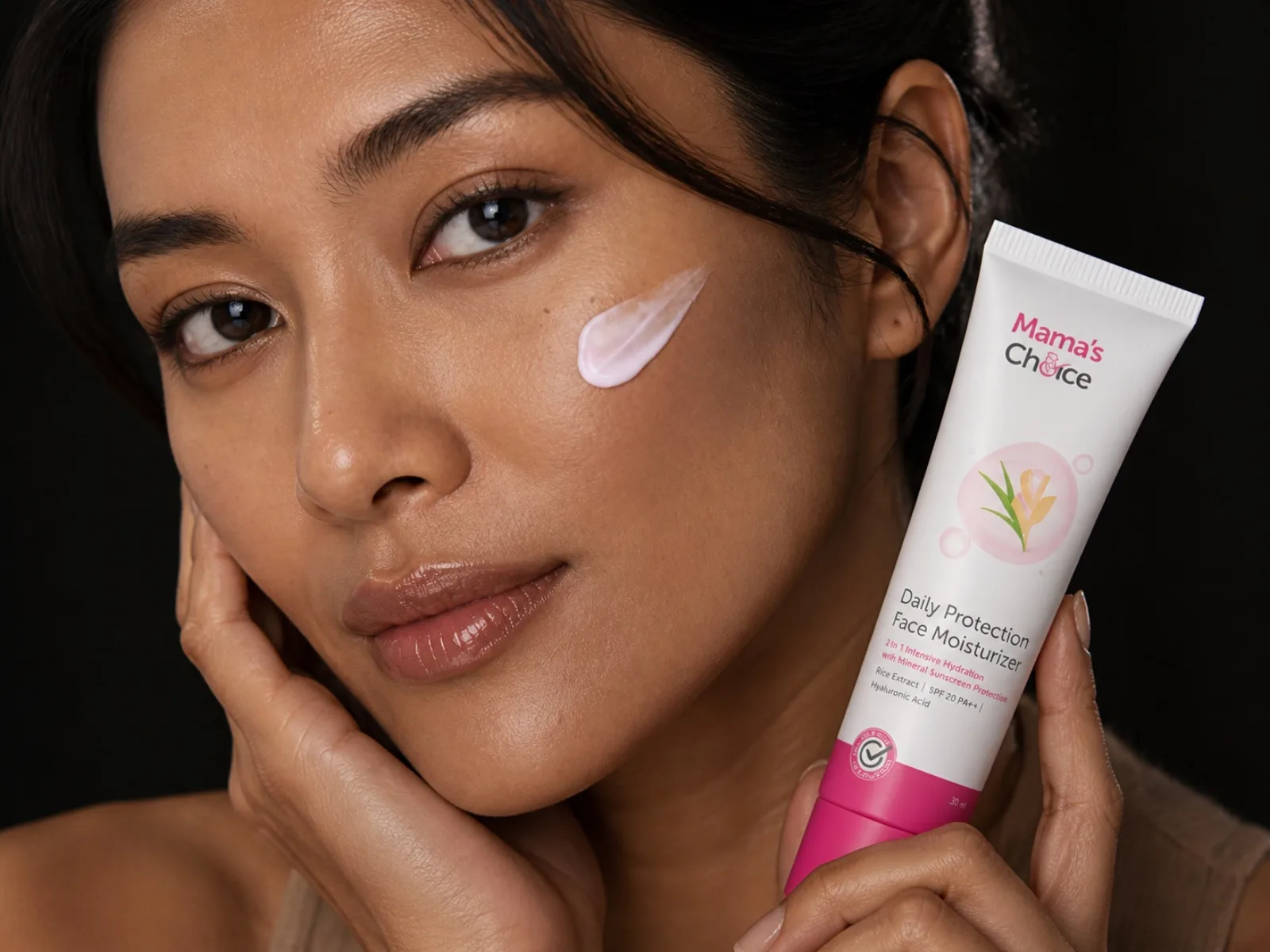
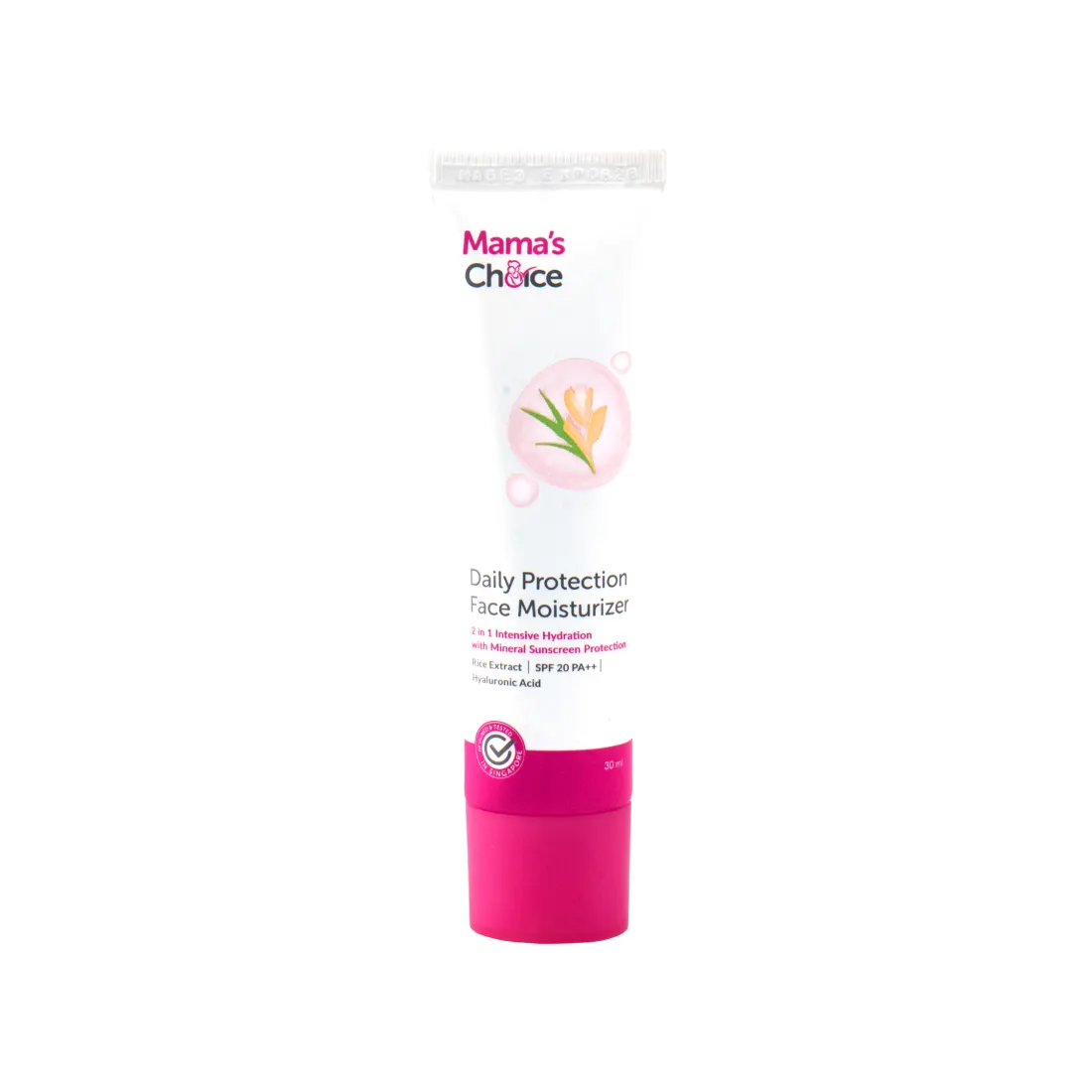
Daily Protection Face Moisturizer SPF 20 PA++ is moisturiser and mineral sunscreen together, with titanium dioxide, zinc oxide, rice extract and hyaluronic acid.
Advanced Brightening Serum is made for pregnancy and breastfeeding, with peony extract, vitamin C, a hyaluronan multi-complex, ceramide NP and niacinamide.
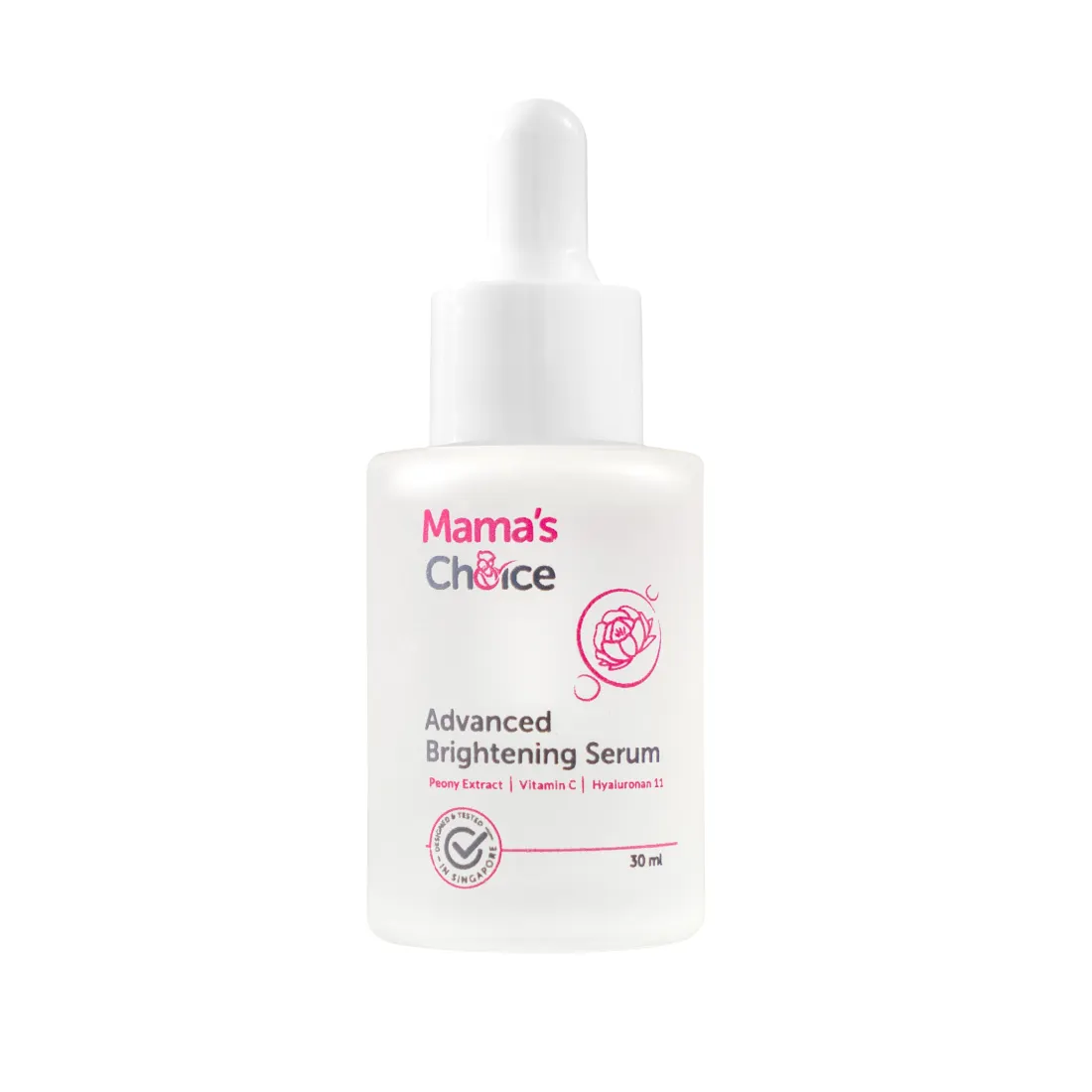
SPF 20 for everyday indoor life. Out for hours, go higher.
Checking a product yourself
- Read the first five ingredients
- Look for retinoids, hydroquinone and high-dose acids
- Check for "fragrance", which can hide phthalates
- Check the registration, particularly for anything promising fast results
- Patch test on your inner arm for two days before it goes on your face
Anything promising to lighten your skin within days is either overstating its case or containing something it should not.
After the birth
Pigment changes fade over the following months, usually without you doing anything.
If melasma persists, treatment exists and works. Usually best started after breastfeeding and under a dermatologist, when the full range of actives is available to you again.
Sources
Share this article
This article is for information only and is not a substitute for diagnosis or medical advice. Please discuss your own situation with your midwife or doctor.