What Conditioner Actually Does for Hair
Conditioner is the step most often skipped and the one that changes most. What it does, how to use it properly, and what it cannot do.
Shampoo gets the attention. Conditioner does the work that shows.
Hair is not living tissue, which nobody tells you. Once a strand has grown, nothing can repair it biologically. Everything that makes hair look and feel better is about the cuticle, the overlapping scales on the outside of each strand.
Conditioner smooths those scales down. That single mechanism explains all of what follows, and all of what it cannot do.
What it does
Reduces damage. A smooth cuticle means strands slide past each other instead of catching. Less catching, less breakage from combing, tying and sleeping.
Much of what looks like hair falling from the root is breakage along the shaft, and reducing it changes how much hair you see on the floor.
Softens the texture. The same smoothing is what makes hair feel soft rather than rough. A coating rather than a repair, and genuinely useful.
Adds shine. Light reflects evenly off a smooth surface and scatters off a rough one. Shine is a straightforward optical consequence of a flat cuticle.
Untangles. Tangles are strands catching on each other's raised scales. Conditioner is why a comb goes through wet hair without a fight, which matters most on the days you have no time for one.
Makes it behave. Hair that is not tangled or frizzing sits where you put it. In this climate that is most of what anyone means by manageable.
Using it properly
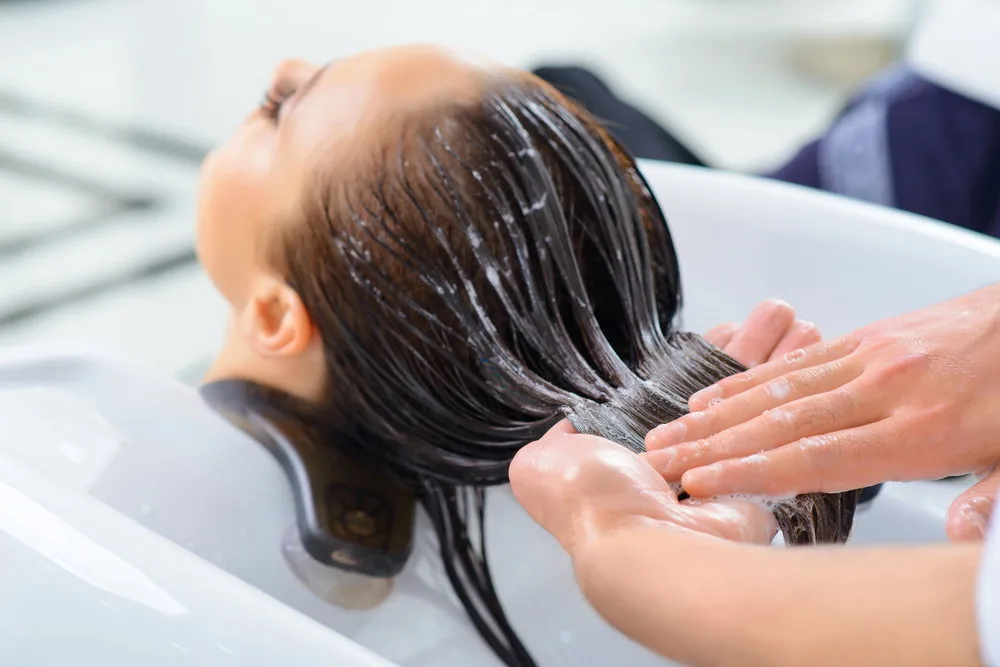
On the lengths and ends, never the scalp. Your scalp produces its own oil. Conditioner there weighs hair down and does nothing useful.
Squeeze the water out first. Conditioner on soaking hair is diluted before it does anything.
Leave it a minute or two. The most common mistake is rinsing straight away.
Rinse cooler. Hot water lifts the cuticle back up, which undoes the entire point.
Every time you shampoo. Shampoo removes oil and conditioner replaces what it took. Skipping it is what leaves hair feeling stripped.
What it cannot do
Repair split ends. A split is a physical separation of the shaft. Coating it makes it look better for a while. Cutting it is the only thing that resolves it.
Stop hair falling out. Postpartum shedding happens at the root, driven by hormones. No conditioner changes that cycle. What it can do is reduce the extra loss from breakage, so new growth gets a chance to grow long.
Rebuild damaged hair. Products promising repair are describing a coating, which is worth having and is not the same thing.
Choosing one for now
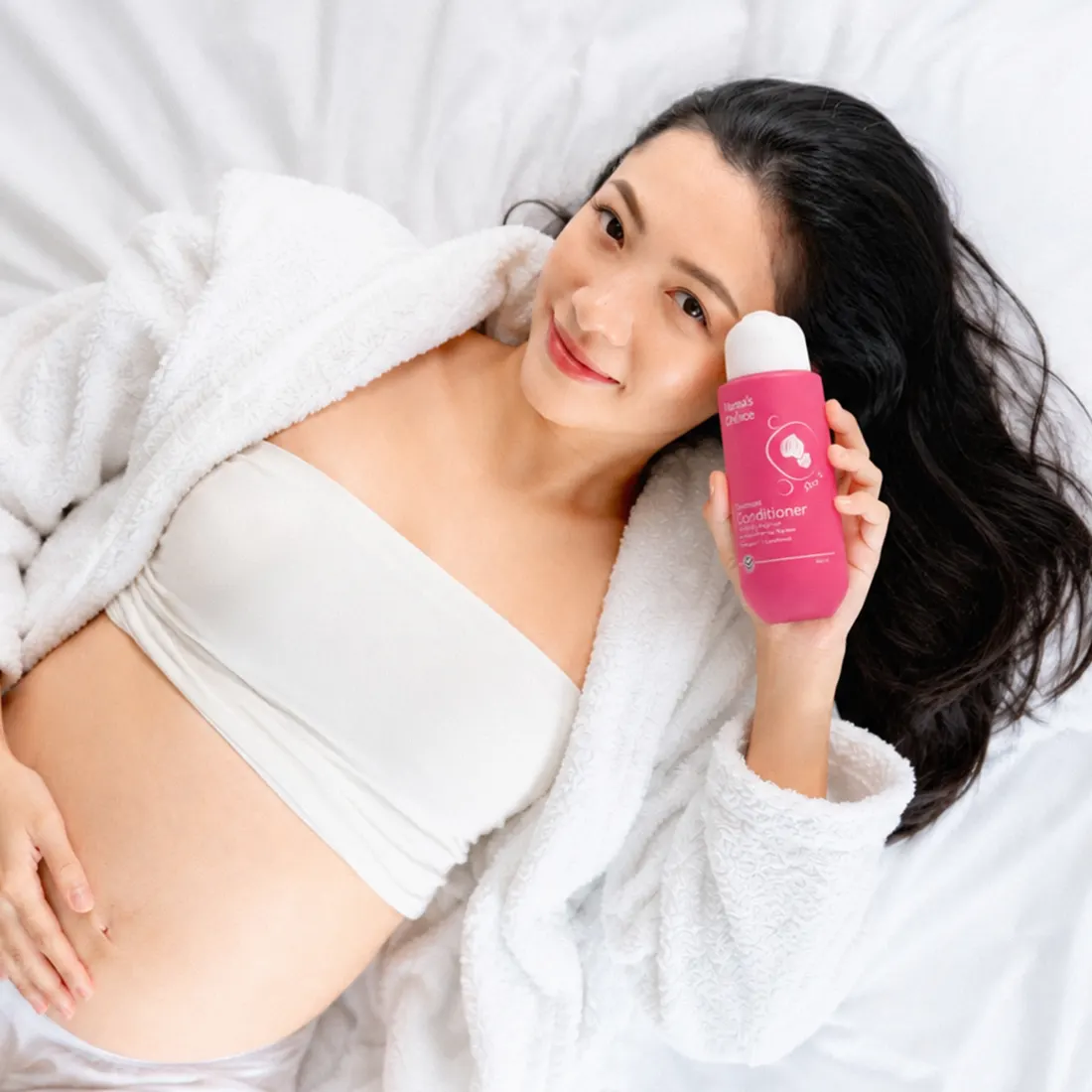
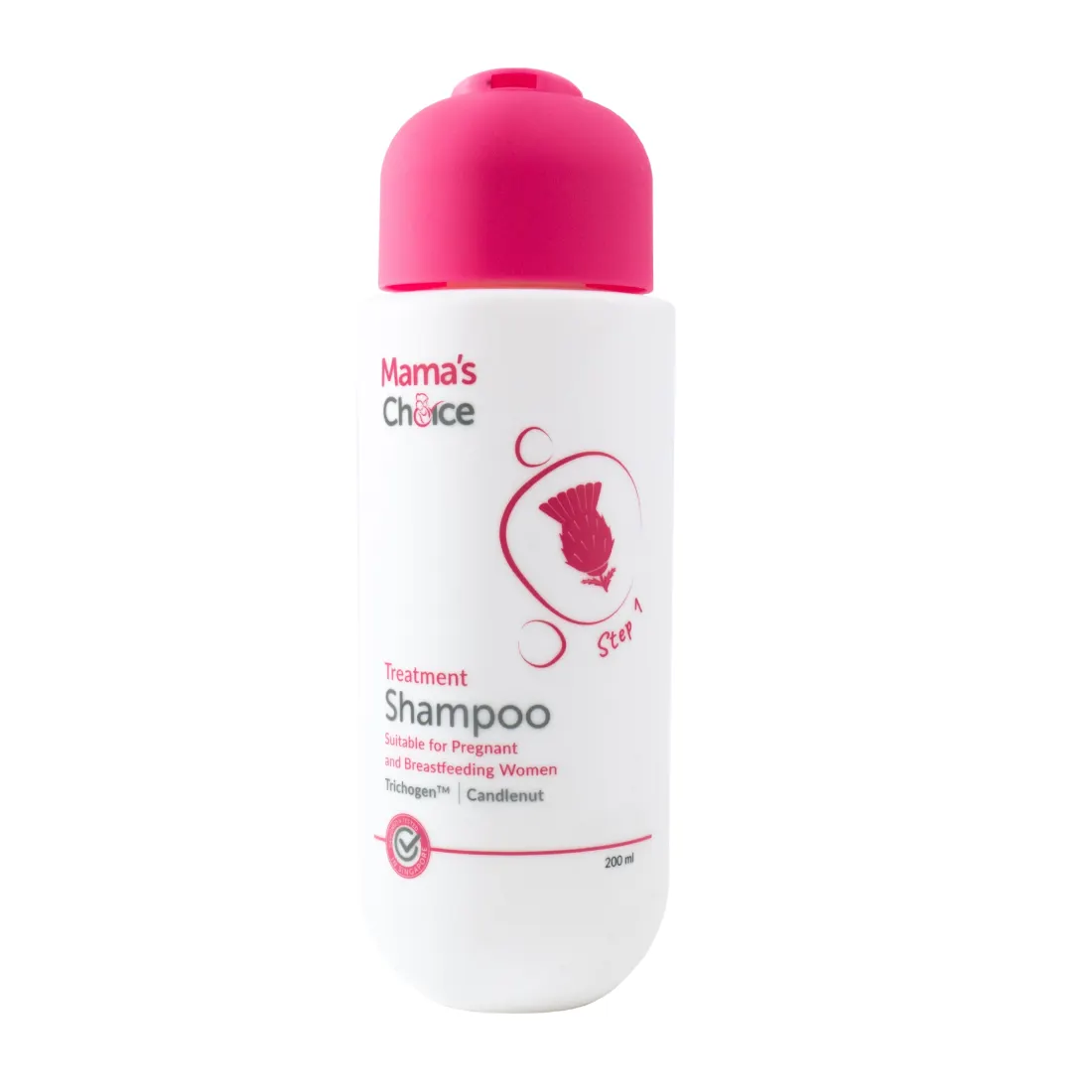
Mama's Choice Treatment Conditioner is made for pregnancy and breastfeeding, with kiwi, candlenut and green pea, without SLS, silicones, parabens or synthetic fragrance.
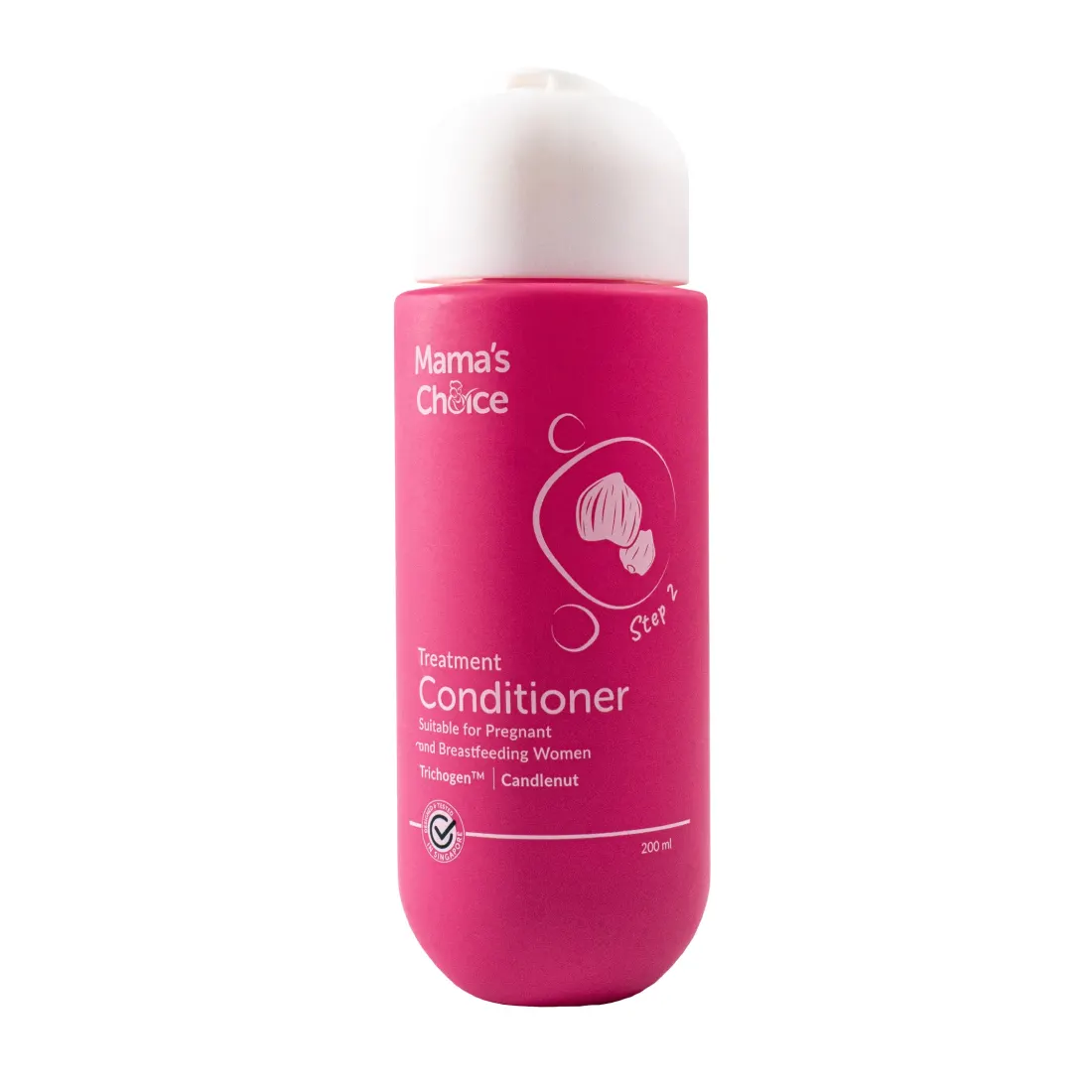
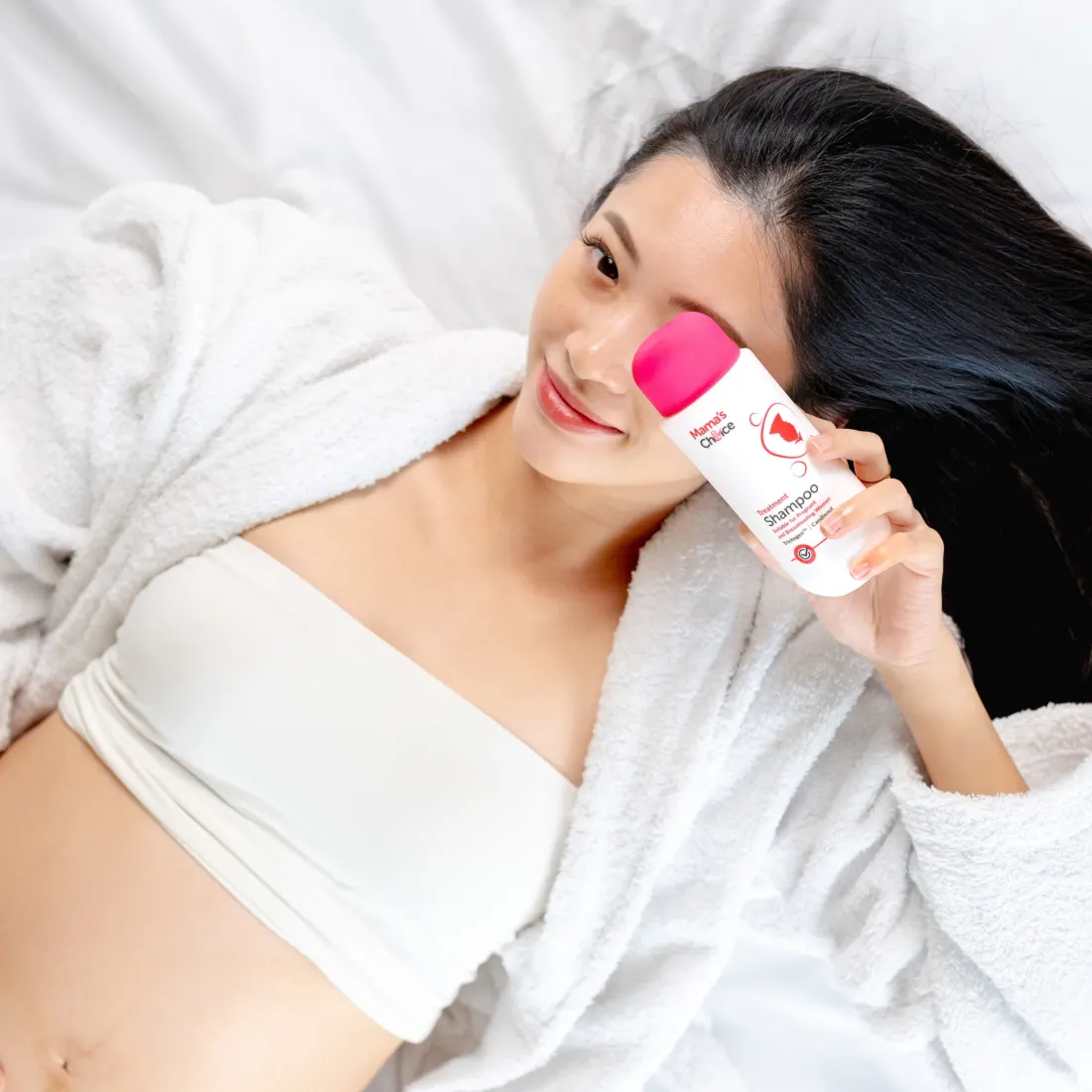
It pairs with Treatment Shampoo, and where they go matters as much as what is in them: shampoo on the scalp, conditioner on the lengths.
Strong synthetic fragrance is worth avoiding in the first trimester for a simple reason. A sharper sense of smell makes a scented shower genuinely unpleasant.
If you are shedding as well as dry
Shedding after birth peaks around month four and ends on its own between six and twelve.
Conditioning does not shorten that. It reduces breakage, so the regrowth is not lost as fast as it arrives. Smaller claim, and a true one.
When to see a doctor
- Still shedding heavily twelve months after the birth
- Round bald patches rather than even thinning
- A scalp that is red, scaly or sore
- Hair changes with heavy fatigue, palpitations or unexplained weight change
That last one is worth a blood test rather than a new conditioner.
Sources
Share this article
This article is for information only and is not a substitute for diagnosis or medical advice. Please discuss your own situation with your midwife or doctor.