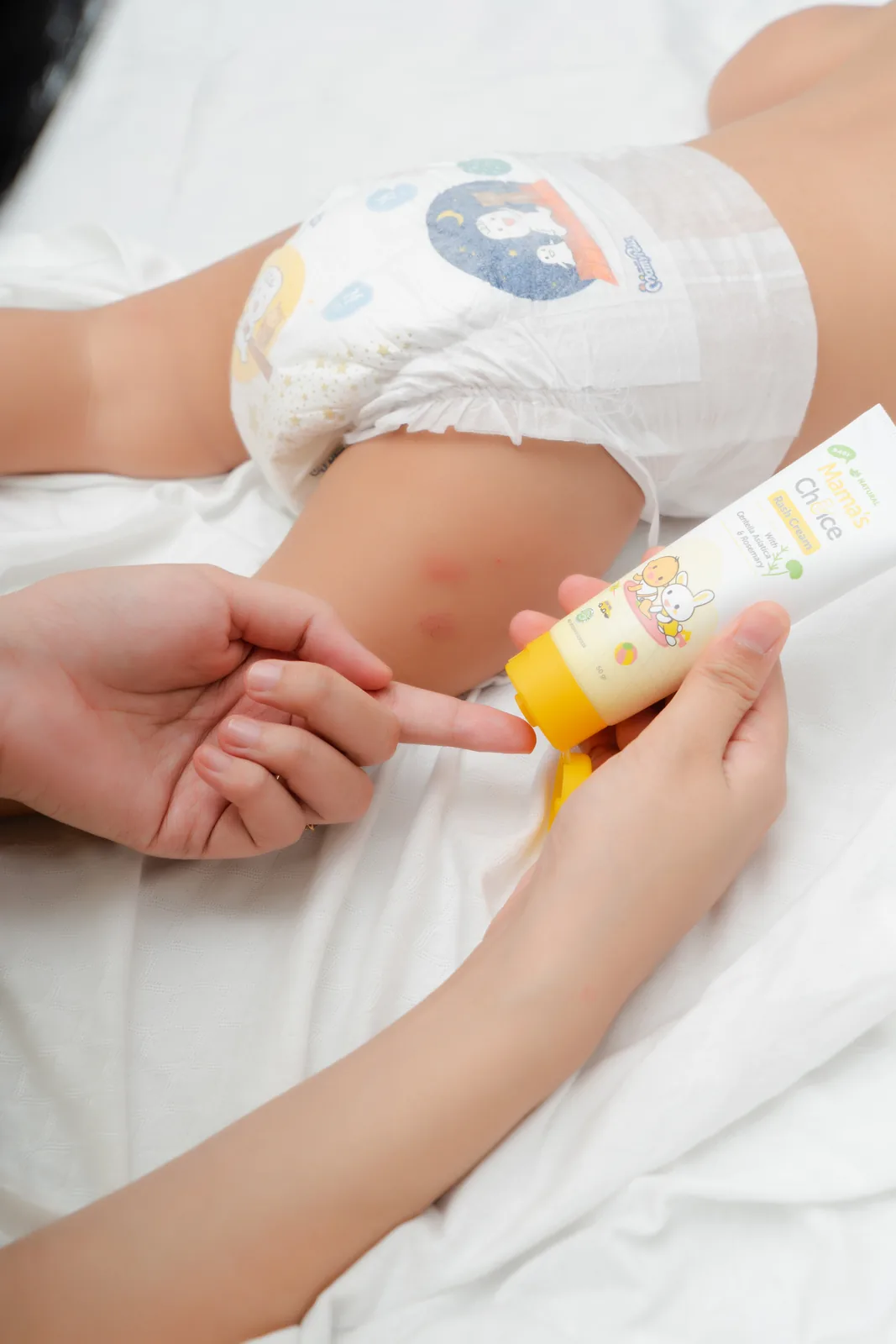
Treating Nappy Rash and Knowing When to See a Doctor
What causes nappy rash, how to treat it at home, and the kinds of rash a barrier cream will not fix however diligently it is applied.
You open the nappy and the whole area is red and angry, and she starts crying before you have touched her.
One of the most common skin complaints in babies, and most of it clears with simple care at home. Despite the name, a tight nappy is rarely the whole story.
What causes it
- New foods or antibiotics giving her diarrhoea
- A nappy not changed soon enough after a wee or a poo
- Chemicals in soap or detergent used on cloth nappies and clothing
- A nappy or clothing that is too tight
What you are looking at
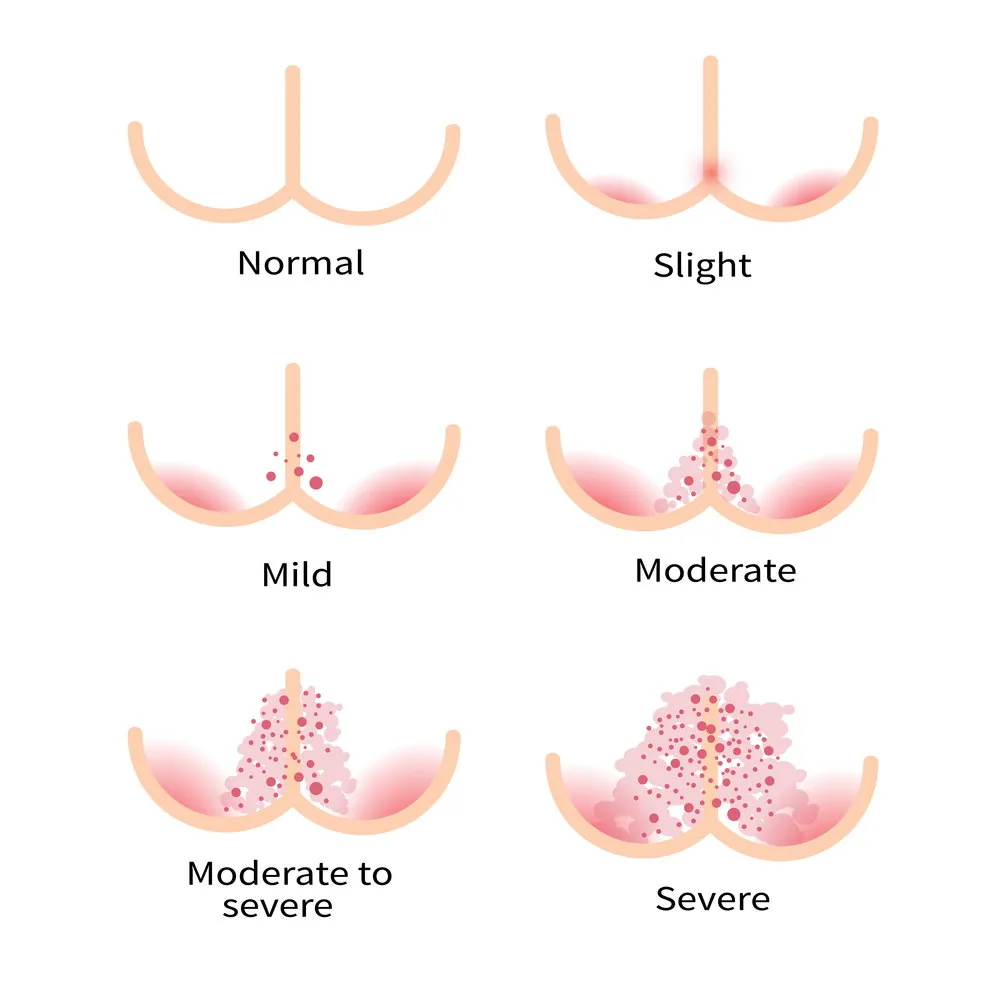
Red irritated skin in the nappy area is the basic picture. Also:
- Small fluid-filled spots or yellow crusting
- Blisters or open sores that look sore
- Swelling in the skin around it
- A baby who is unsettled and cries, particularly during changes
Dry skin is the whole of prevention
Keeping the area clean and dry is it. A wet dirty nappy is where bacteria and fungi grow.
When you clean, do not rub. Soft cloth, and pat dry.
Treating it at home
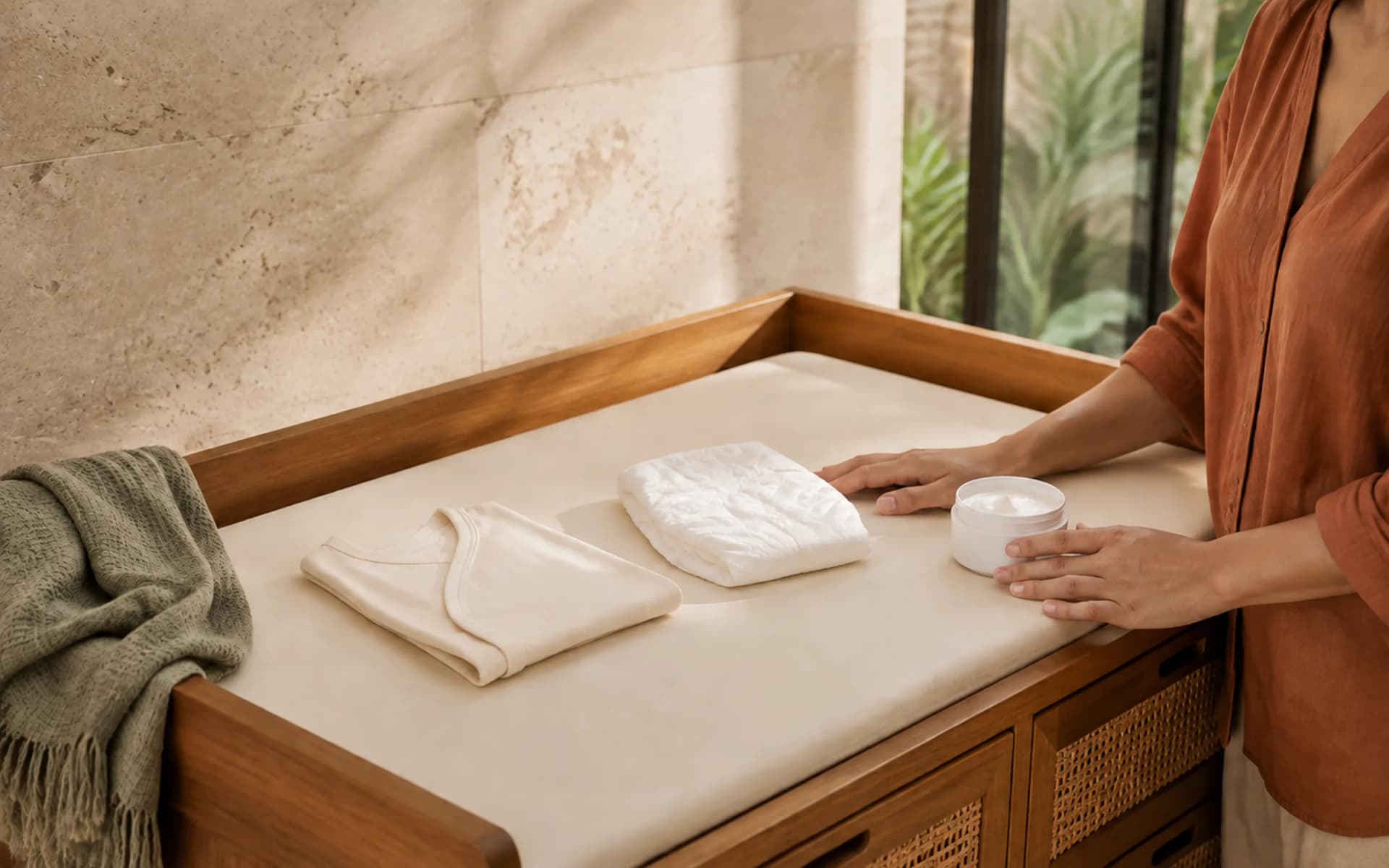
Keep it clean and dry. Irritated skin needs time uncovered to breathe. Where it is practical, let her go without a nappy for a while.
At changes, pat dry with a towel or tissue. Avoid alcohol-based wipes, and avoid rubbing. Both make a rash worse.
Change nappies more often. Do not wait once one is wet or soiled. Damp and dirt are what keep an irritant rash going.
With disposables, get the size right with good absorbency, and go up a size as she grows. With cloth, rinse twice or three times so detergent residue does not stay in the fabric.
Apply a barrier cream after bathing and at each change. Something safe and simple, without alcohol, mineral oil, parabens or fragrance.
A barrier cream does not treat every rash
They work by forming a protective layer. That is effective for irritant nappy rash, which is the most common kind. Not all rashes are the same:
- Fungal (Candida): bright red, clearly edged, often with small spots scattered around it, and it does not clear with a barrier cream alone. It needs an antifungal from a doctor
- Bacterial: oozing pus, yellow crusting, skin hot to the touch. Needs medical assessment
- Eczema, heat rash and milk rash each have their own treatment
So if it does not improve within a few days, spreads beyond the nappy area, blisters, oozes pus, or comes with a fever, see a doctor. Do not simply add more cream.
Ours
Not every rash ointment suits a newborn, whose skin is still highly sensitive.
Mama's Choice Baby Rash Cream uses eight natural ingredients:
- Centella asiatica, calming irritated skin
- Rosemary, a natural antibacterial
- Green tea, calming inflammation
- Sweet almond, moisturising
- Chamomile, for sensitive skin
- Japanese knotweed, reducing inflammation
- Licorice, supporting repair
- Skullcap, antioxidant and anti-inflammatory
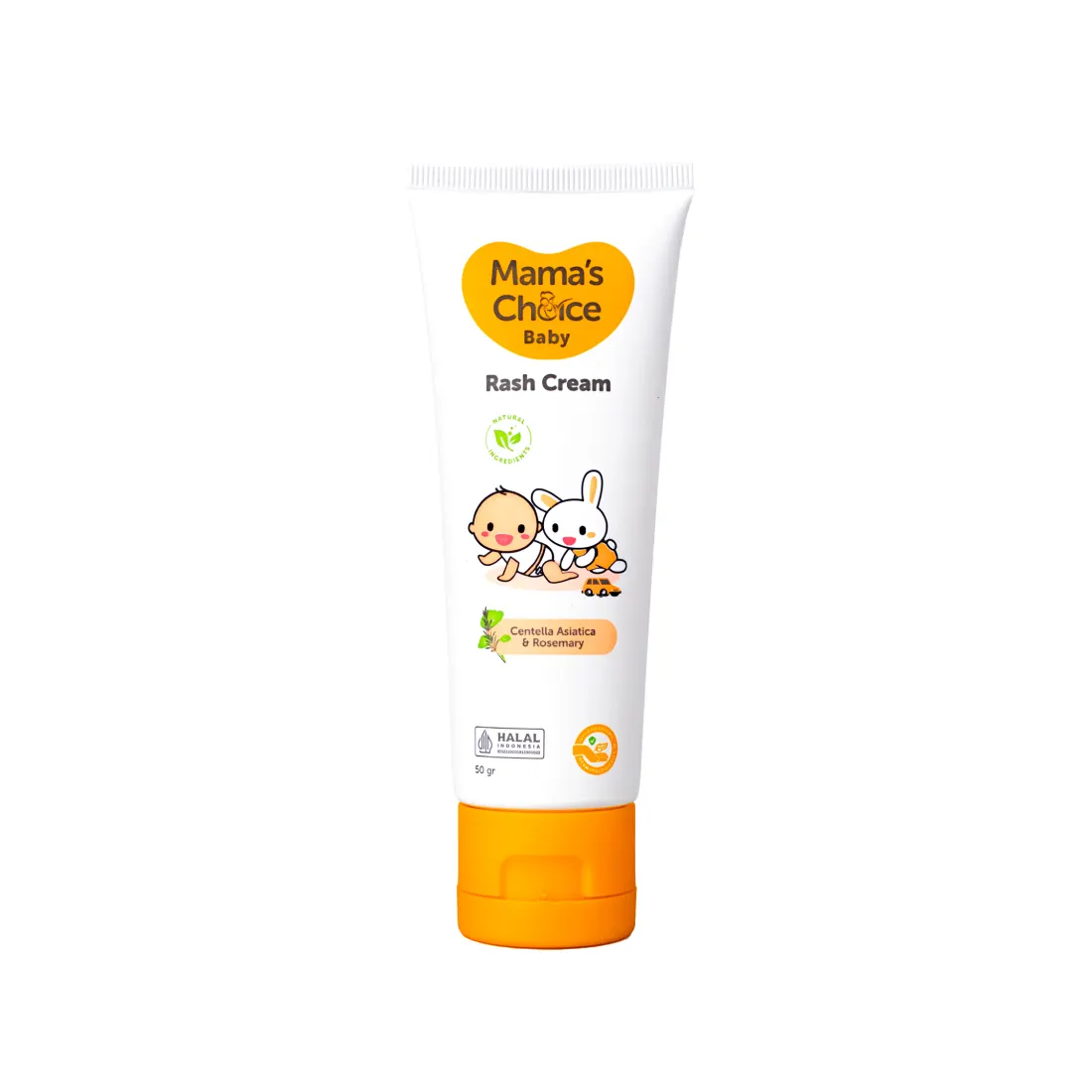
Light texture, absorbs quickly, so it does not stay tacky under a nappy.
"Easy to spread, not too sticky. Rash creams like this are usually sticky and hard to spread."
Home panel test feedback
A note on the claim: "helps ease a rash within 3 applications" comes from the Mama's Choice Efficacy Test 2021 (n=30), a use test on the finished product where participants reported improvement, not complete resolution, and which was not a controlled clinical trial. Results vary between babies and between types of rash.
When to see a doctor
- It bleeds, or there are blisters or open sores with pus
- It spreads to her arms, face or scalp
- She cries constantly and seems in pain when passing stool
- It comes with a fever
Sources
- Cleveland Clinic — Diaper rash (diaper dermatitis)
- Mayo Clinic — Diaper rash
- Mama's Choice Efficacy Test 2021, n=30
Share this article
This article is for information only and is not a substitute for diagnosis or medical advice. Please discuss your own situation with your midwife or doctor.