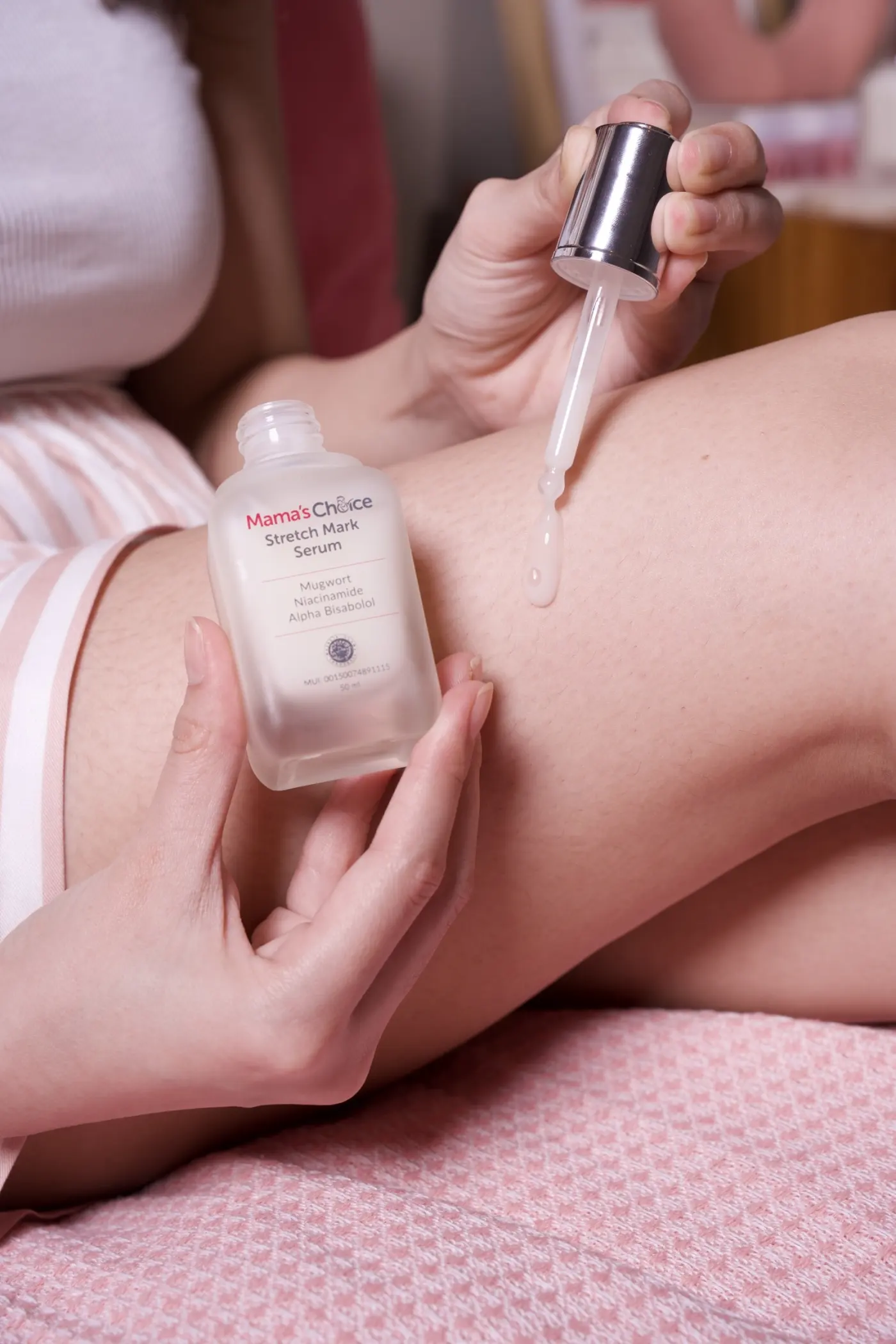
A Seven-Point Checklist for Stretch Mark Products
What to check before buying a stretch mark cream or serum, from formulation and ingredients to price, and the two habits that make marks more visible.

Same promises, ten times the price difference, ingredient lists nobody reads in a shop.
Seven things are worth checking before you buy. Two habits matter as much as the purchase, and neither costs anything.
The two free ones first
Keep the area out of direct sun. Fresh marks pigment differently from the skin around them, and sun exaggerates the contrast.
Do not scratch. Stretching skin itches, and scratching damages skin already under strain.
Dr Dia Febrina SpKK, who consults through the Mama's Choice Ruang Tanya Mama programme, makes the point that it is never too late to start. Even white marks look softer with consistent care. The change is just slower.
The checklist
Properly formulated and tested. Look for dermatologically tested, and for a brand that publishes what testing was done rather than gesturing at it.
Ingredients that do the job. Niacinamide, alpha bisabolol, mugwort, olive oil, aloe vera, Lypobelle Soyaglicone, jojoba oil.
What separates a stretch mark cream from a body lotion in a different bottle is whether anything in it works below the surface, on your skin's own collagen, rather than only sitting on top.
Suitable for sensitive skin. Your skin is more reactive than usual now. Hypoallergenic, without synthetic fragrance, is the safer starting point.
Simple enough to use twice a day. With massage. If the routine is complicated it stops after a fortnight, and consistency is the largest single variable in how any of these perform.
Check for a BPOM registration on the packaging while you are at it.
Evidence rather than promises. Reviews tell you about texture, smell and whether the pump works. They are weak evidence for effect.
When a product publishes a figure, ask what kind of study produced it. A satisfaction survey reports impressions. A clinical test with a comparison group measures change. Both legitimate, not the same thing.
Something for the itch. Anyone who has had stretch marks in pregnancy knows about the itch. Aloe vera and similar earn their place for this alone, and scratching less means fewer marks made worse.
A price you can keep paying. These only work used continuously over months. A cream you can afford to keep buying beats an expensive one you ration.

How ours differ from each other
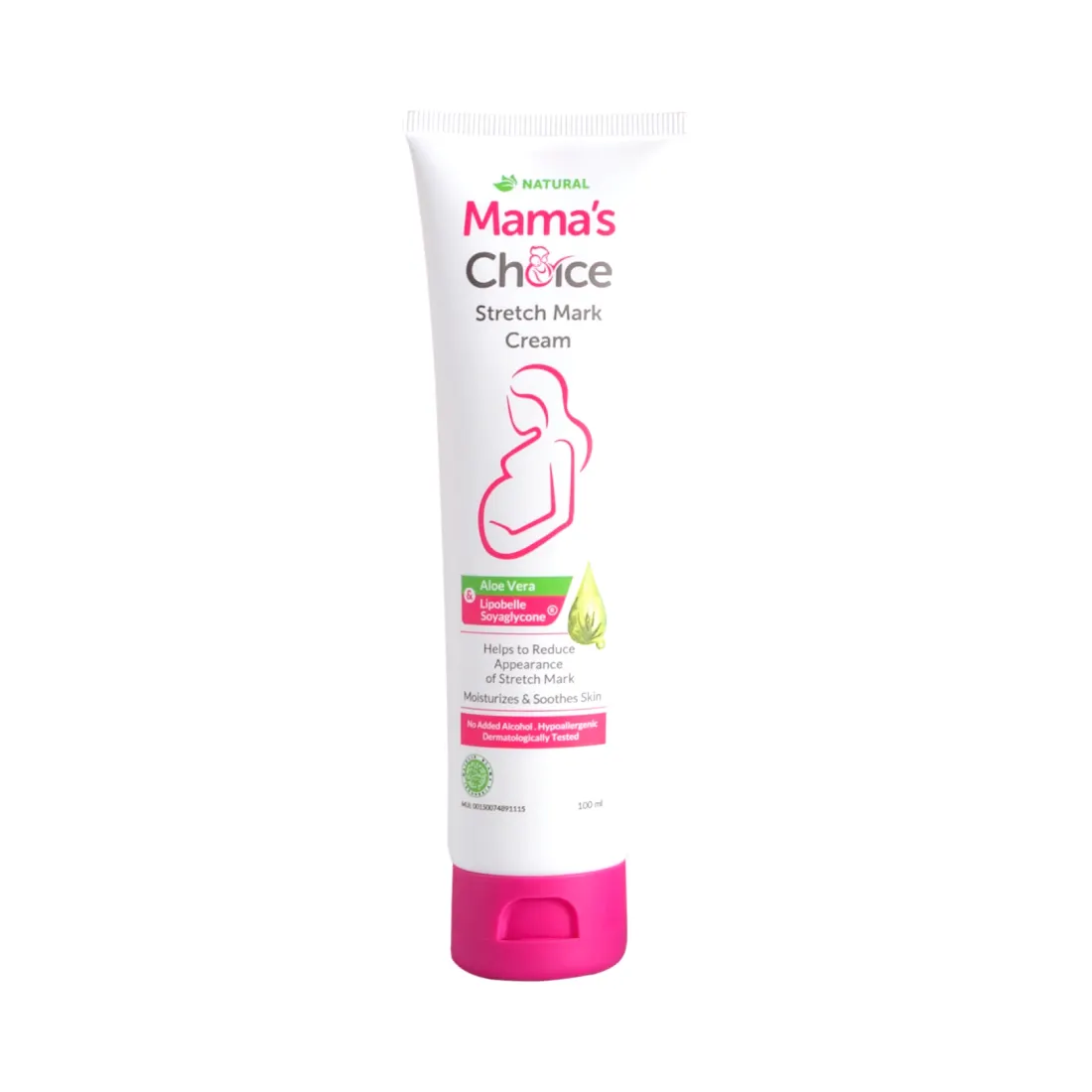
Stretch Mark Cream is the daily layer. Olive oil as antioxidant and moisturiser, aloe vera for the itch, Lypobelle Soyaglicone to support collagen production, jojoba oil to keep skin supple.
Stretch Mark Serum is lighter and absorbs faster, aimed at marks already formed.
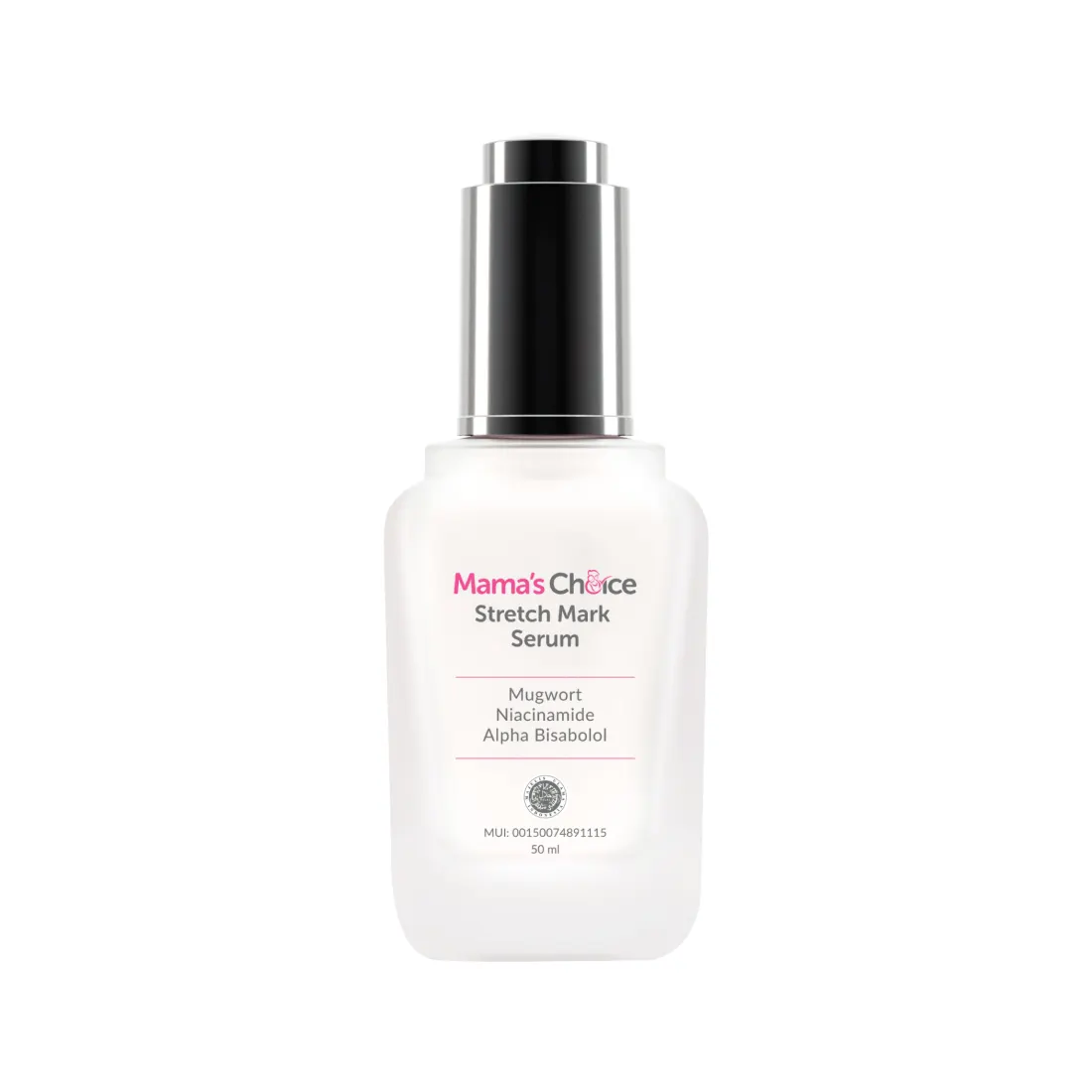
Serum on the marks, cream over the whole area that stretches. Both made for pregnancy and breastfeeding, and either can be used by anyone with stretch marks, pregnant or not.
What to expect, and when
In the first weeks what changes is comfort. Less dry, less itchy. That is a real result even though the marks look identical, and it is the point most people give up.
Appearance changes more slowly, and varies between people. Fresh red marks respond better than settled white ones.
The limit, said once: no moisturiser has been shown to prevent stretch marks. Whether they appear is decided mostly by genetics, how fast your skin stretches, and hormones.
Reading the numbers on this page
- Prevalence survey (n=1,515): how many Mamas get stretch marks. It measures no product at all.
- Spincontrol Thailand 2023 (n=22): up to 65% reduction in appearance over 28 days, with Cream and Serum used together. Both at once, no comparison group, so it cannot be split between them.
- Consumer satisfaction surveys: the share of Mamas who felt a change. Impressions, not measurements.
Any product publishing a percentage without saying which of those it came from is asking you to take it on trust.
Sources
- Mama's Choice — Spincontrol Thailand clinical test 2023, n=22
- American Academy of Dermatology — management of striae distensae
Share this article
This article is for information only and is not a substitute for diagnosis or medical advice. Please discuss your own situation with your midwife or doctor.