Pregnancy-Safe Skincare: How to Choose and What to Skip
Which skincare ingredients are worth avoiding in pregnancy, which are precautionary, and a simple three-step routine that fits around a changing skin.

Half of social media says the thing in your bathroom cabinet is dangerous. The other half says that is fear-mongering.
The real picture has more shades in it, and knowing which shade you are dealing with saves a lot of unnecessary worry.
Sorting it honestly
Retinoids (retinol, tretinoin, adapalene). The clear ones. Stop these.
Hydroquinone. No clear evidence of harm, and a large share is absorbed through skin, so most doctors say leave it until afterwards.
High-dose salicylic acid, particularly as a peel. Low concentrations in something you rinse off are generally considered fine.
Parabens and oxybenzone. The two most often called dangerous, and honestly the evidence is limited and inconclusive. Plenty of Mamas avoid them as a precaution, which is a reasonable choice for a reasonable reason.
What is not reasonable is dropping sunscreen entirely over the oxybenzone question. Mineral sunscreens exist precisely for Mamas who would rather not use it.

Why the reviews are not much help
They are genuinely useful for texture, smell, and whether the pump works. Much weaker on safety.
Two things get lost in a scroll. Skin reacts differently between people, so a product that suited one Mama tells you very little about yours. And "natural" is not a regulated term, while plenty of plant extracts irritate sensitive skin.
The ingredient list on the back is the part worth reading.
Cleanse, treat, protect
Complicated routines rarely survive the first trimester. Cleanse, treat, protect.
Cleanse. Gentle Face Wash uses rice extract and hydrolysed collagen extract on a mild base.
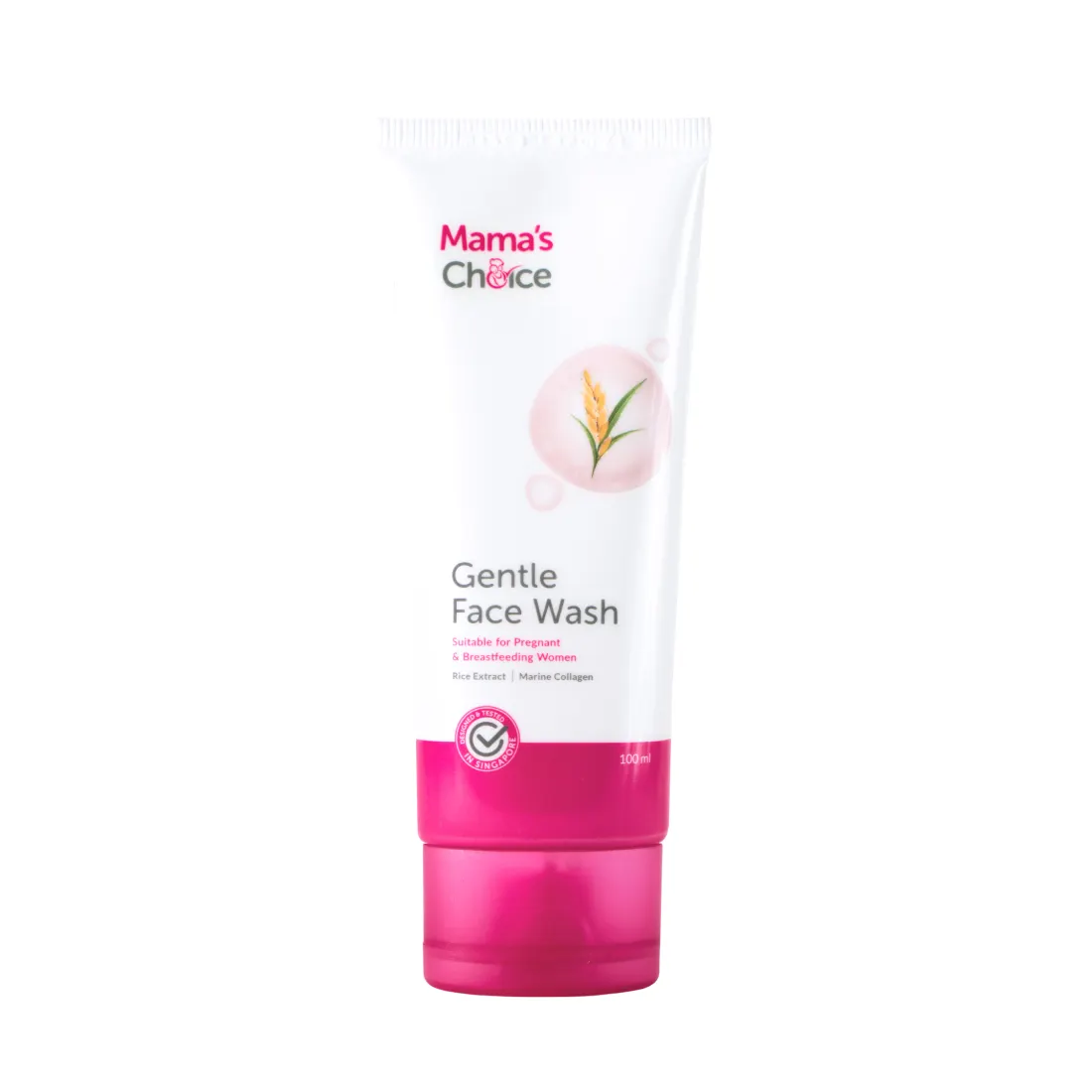
Twice a day. More often leaves skin drier and easier to irritate, which is the opposite of what you wanted.
Treat. Advanced Brightening Serum is made for pregnancy and breastfeeding, with peony extract, vitamin C, a hyaluronan multi-complex, ceramide NP and niacinamide.
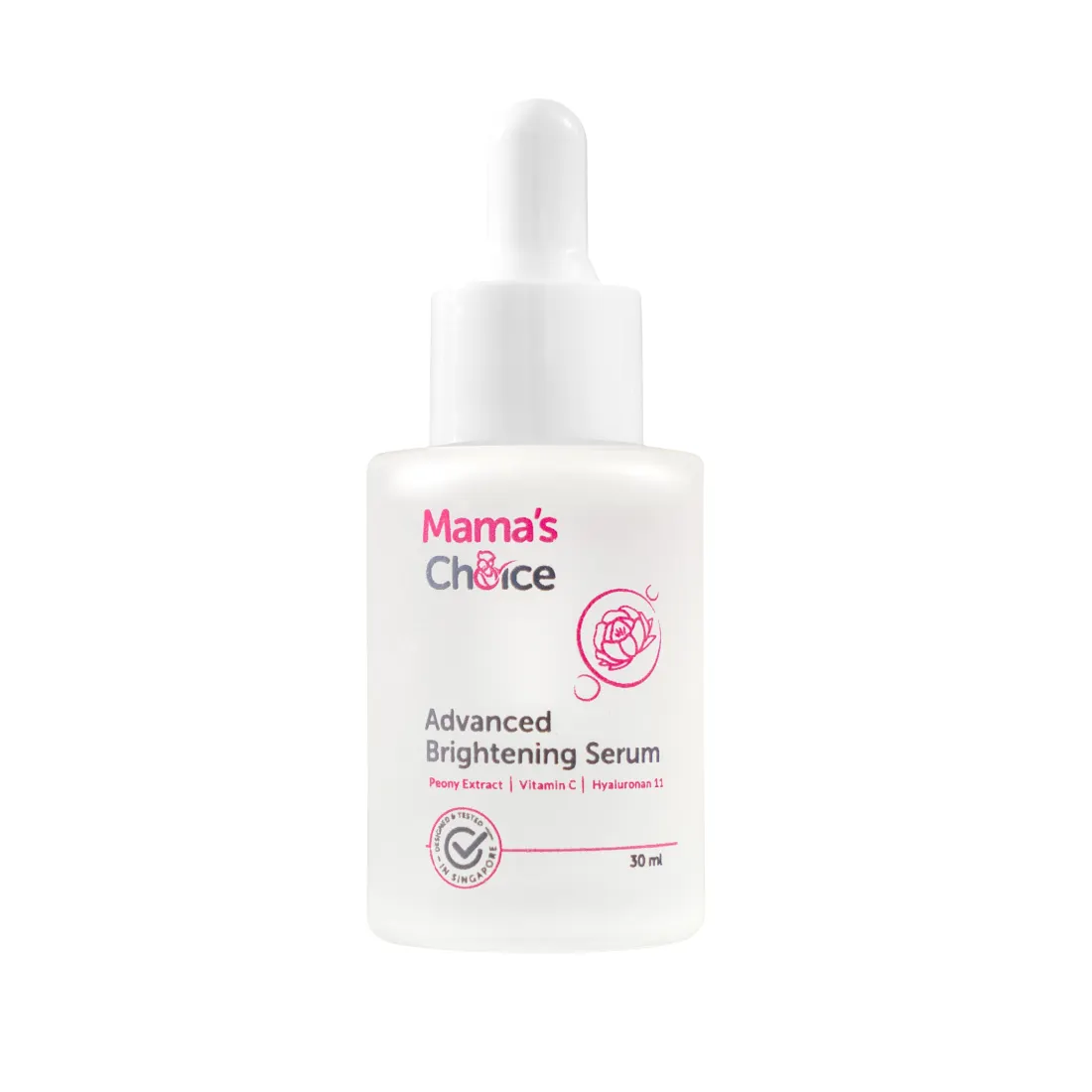
Plainly, what it can do: support hydration and help even out tone. The darker patches that appear in pregnancy are hormonal, and they mostly fade on their own after the birth.
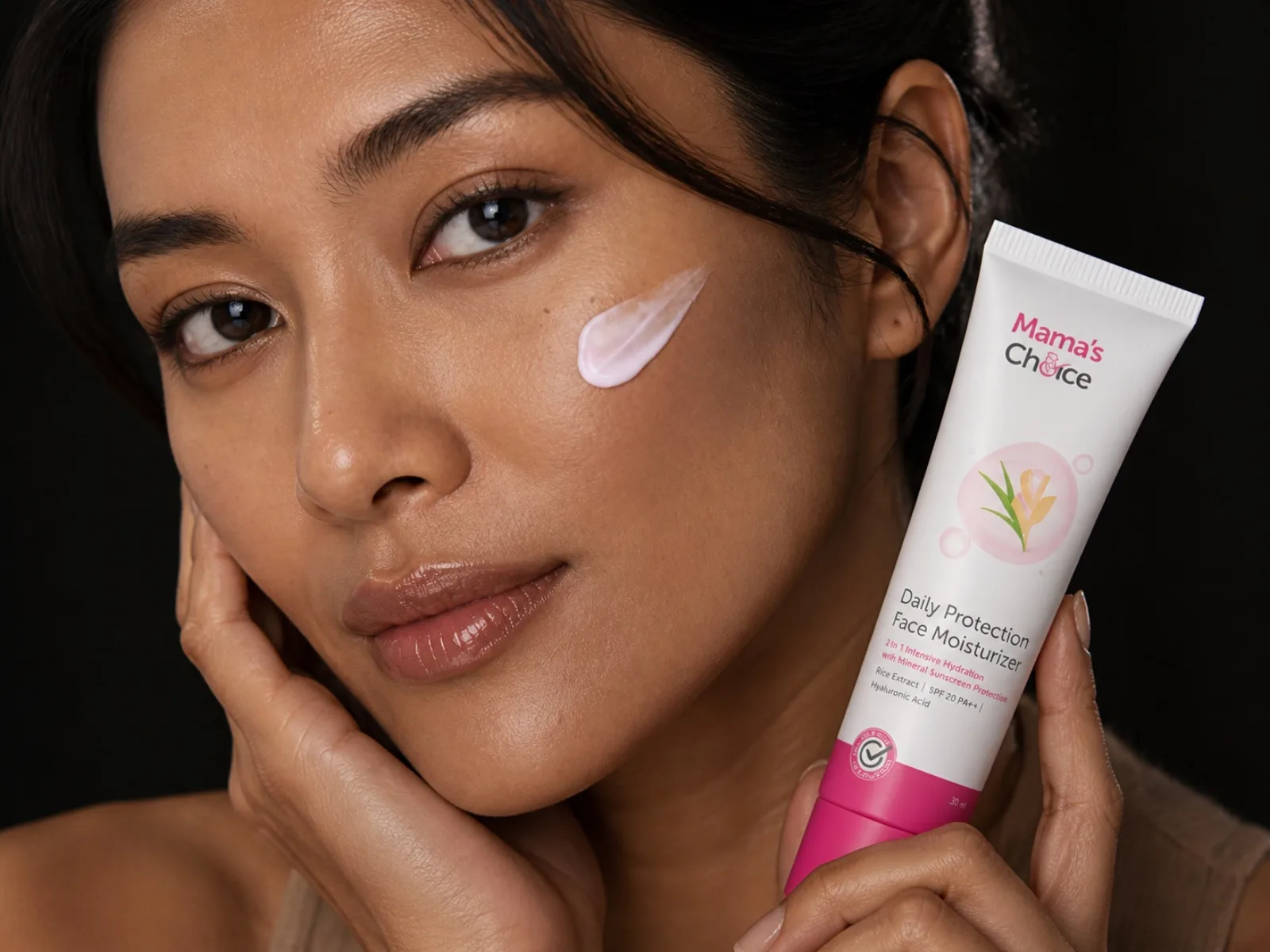
Protect. Daily Protection Face Moisturizer SPF 20 PA++ is moisturiser and mineral sunscreen together, with titanium dioxide, zinc oxide, rice extract and hyaluronic acid.
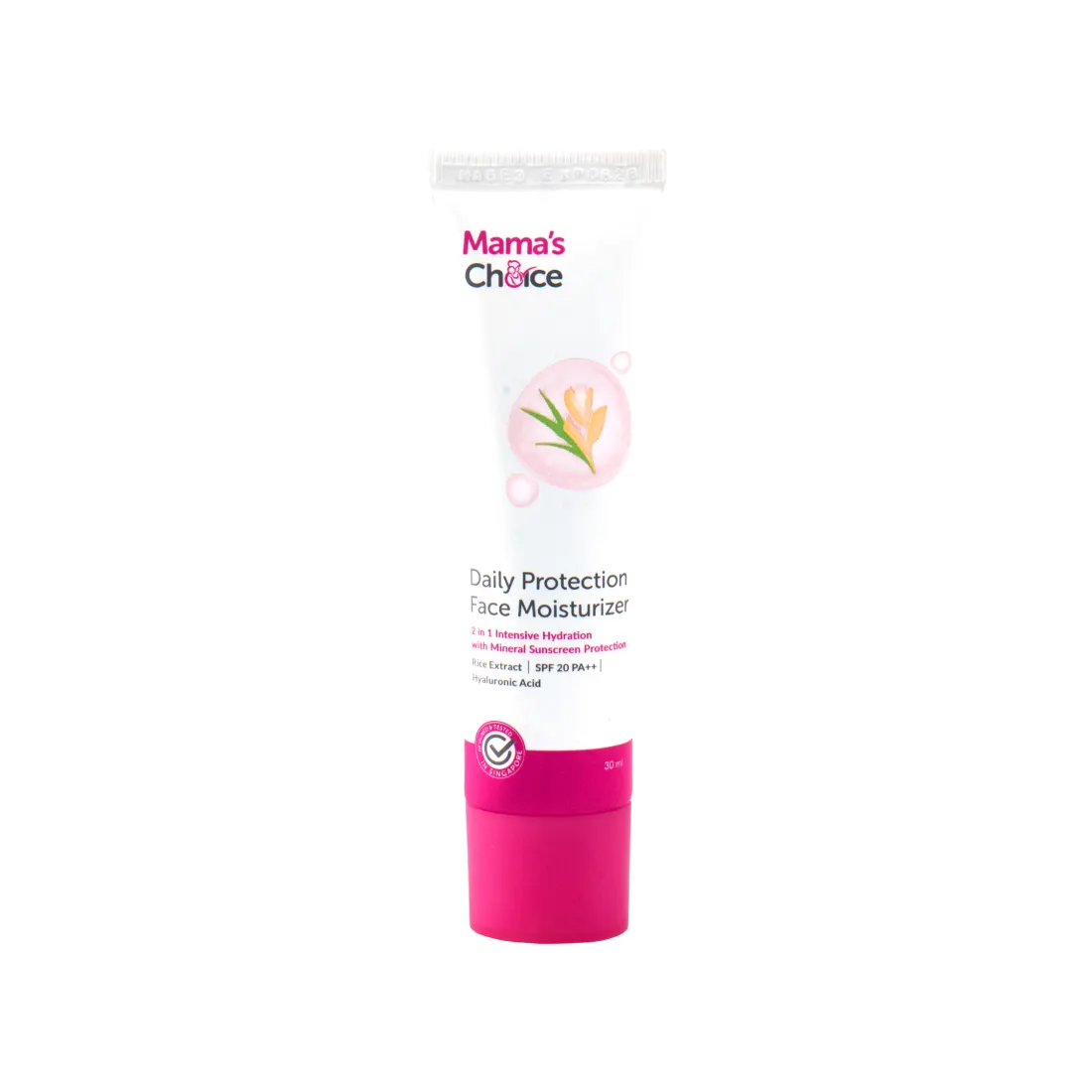
SPF 20 for everyday indoor life. Out for hours, go higher.
The sunscreen does most of the work
Melasma, the uneven patches on your forehead, cheeks and upper lip, worsens with sun and improves when it is limited.
- Every morning, cloudy days included
- Reapply every two hours outdoors
- A wide-brimmed hat
- Less time outside between 10am and 4pm
Skip this step and everything else in the routine is working at half strength.
Starting something new
Your skin is more reactive now, so reactions are more common than they used to be.
- Patch test on a small area, inner arm, for two days
- One new product at a time
- Read the list, particularly for the word "fragrance"
- Stop if redness, heat or itching appears
If you are unsure about an ingredient, our ingredient dictionary sets out what is in each of our products and why.
What a routine can honestly do
Your skin is going to change in ways no routine fully controls.
Acne can improve or worsen, and both are normal.
Melasma and the line down your belly are hormonal, and usually fade over the months afterwards.
Dryness and itching, particularly across a stretching belly, respond well to a moisturiser used consistently.
A good routine keeps your skin comfortable and protected while all of that happens. That is a fair thing to ask of it, and it is enough.
When to see a dermatologist
- Acne that is severe and not settling
- A rash that is very itchy and spreading
- Severe itching with no rash, especially palms and soles, which can point to cholestasis of pregnancy. Same day
- A mole changing size, shape or colour
- Dark patches that have not faded several months after the birth
Sources
Share this article
This article is for information only and is not a substitute for diagnosis or medical advice. Please discuss your own situation with your midwife or doctor.