Nipple Care While Breastfeeding: What Helps
Sore nipples in the early weeks are common and usually mean the latch needs adjusting. What helps, what to avoid, and when to get it looked at.
Some tenderness in the first days is normal. Pain right through every feed is not, and it is telling you something specific rather than testing your resolve.
Pain is information
The most common cause of sore nipples is a shallow latch.
A baby taking only the nipple, rather than a good mouthful of areola, compresses it against her hard palate. That hurts, and it transfers little milk, so she feeds for longer and the damage compounds.
Signs the latch is what needs fixing:
- Pain right through the feed, rather than a few seconds at the start
- A nipple that comes out flattened, creased or wedge-shaped
- Clicking sounds while she feeds
- Long feeds with a baby who never seems satisfied
One session with a lactation consultant fixes most of this. Waiting rarely improves it, and cracked skin makes every feed after that harder than the last.
Daily care
Water only. Your nipples do not need soap. The Montgomery glands on your areola produce an oil that cleans and protects the area, and soap strips it.
Let a few drops of milk dry on the nipple after a feed.
Pat dry before your bra goes back on. Damp skin under a bra is where irritation starts.
Change breast pads once they are damp, for the same reason.
Air them where you can. Not always practical, and it helps when it is.
Using a nipple cream
For skin that is dry, cracked or sore, a cream protects it while it heals.
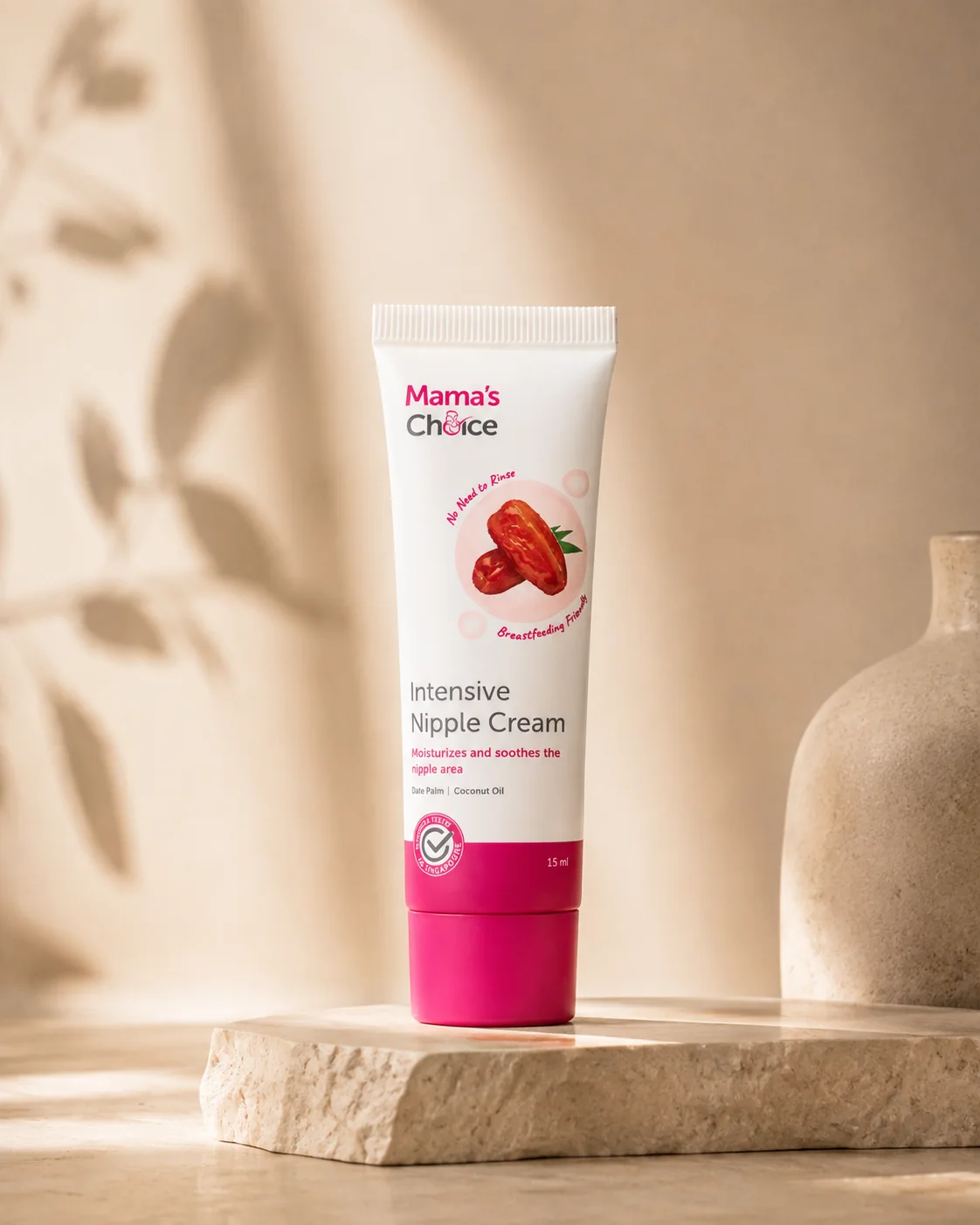
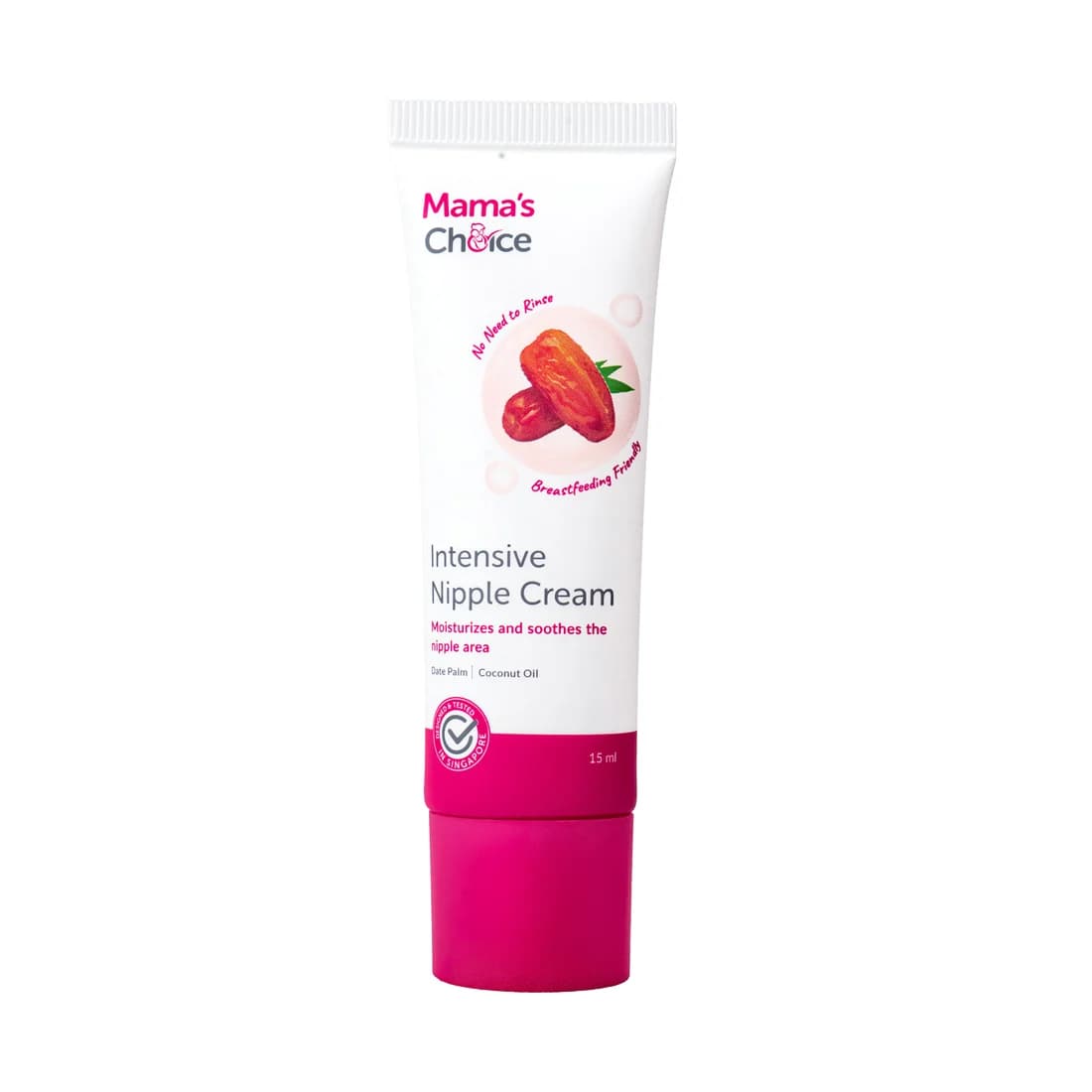
Mama's Choice Intensive Nipple Cream is food grade, so you do not have to wash it off before a feed. That matters at 3am, and it removes one more reason not to bother.
Apply after a feed rather than before, which gives it the longest run at working.
What to avoid
Soap and alcohol-based products on the nipple.
Rubbing dry with a rough towel.
Waiting for it to sort itself out when the skin is cracked or bleeding. It will not.
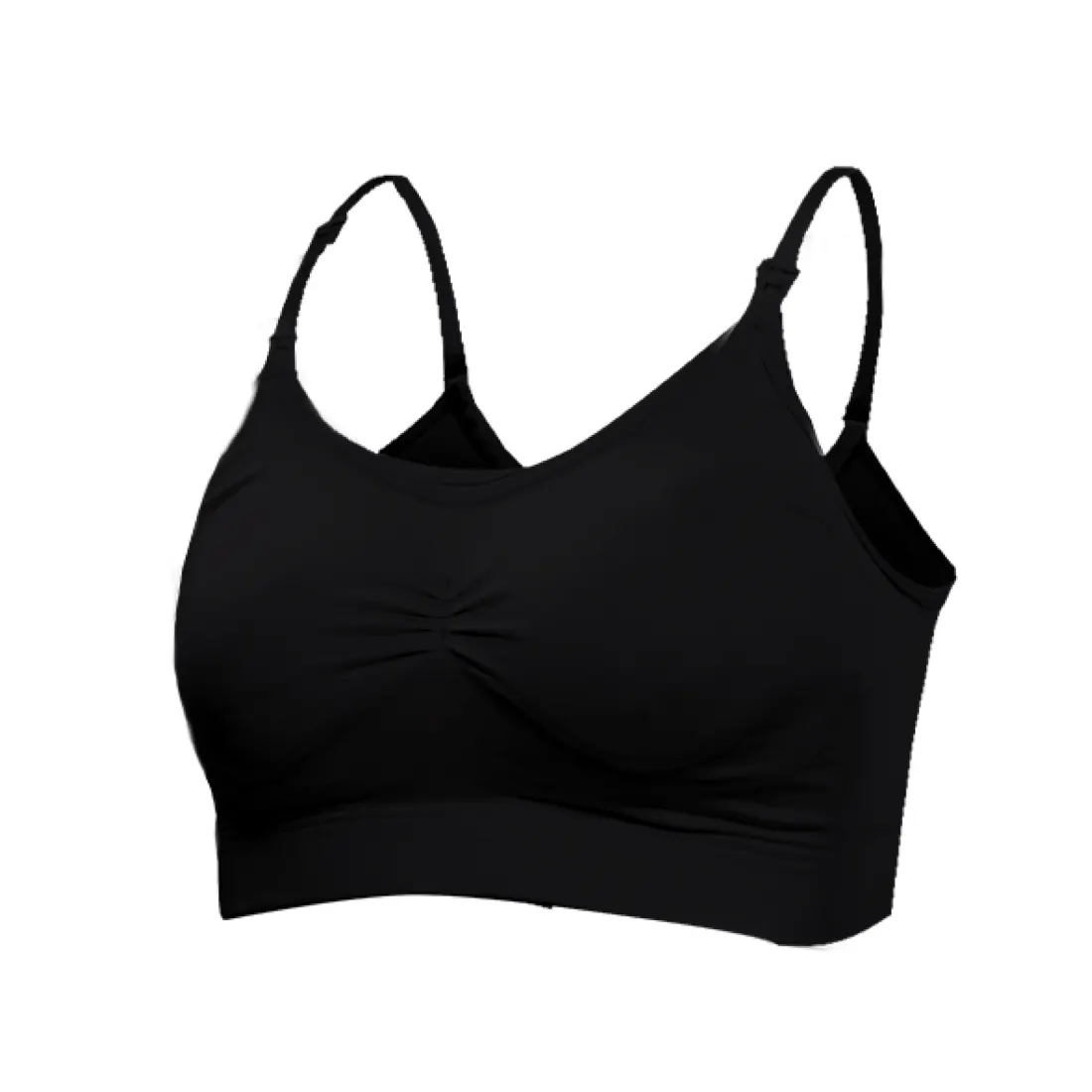
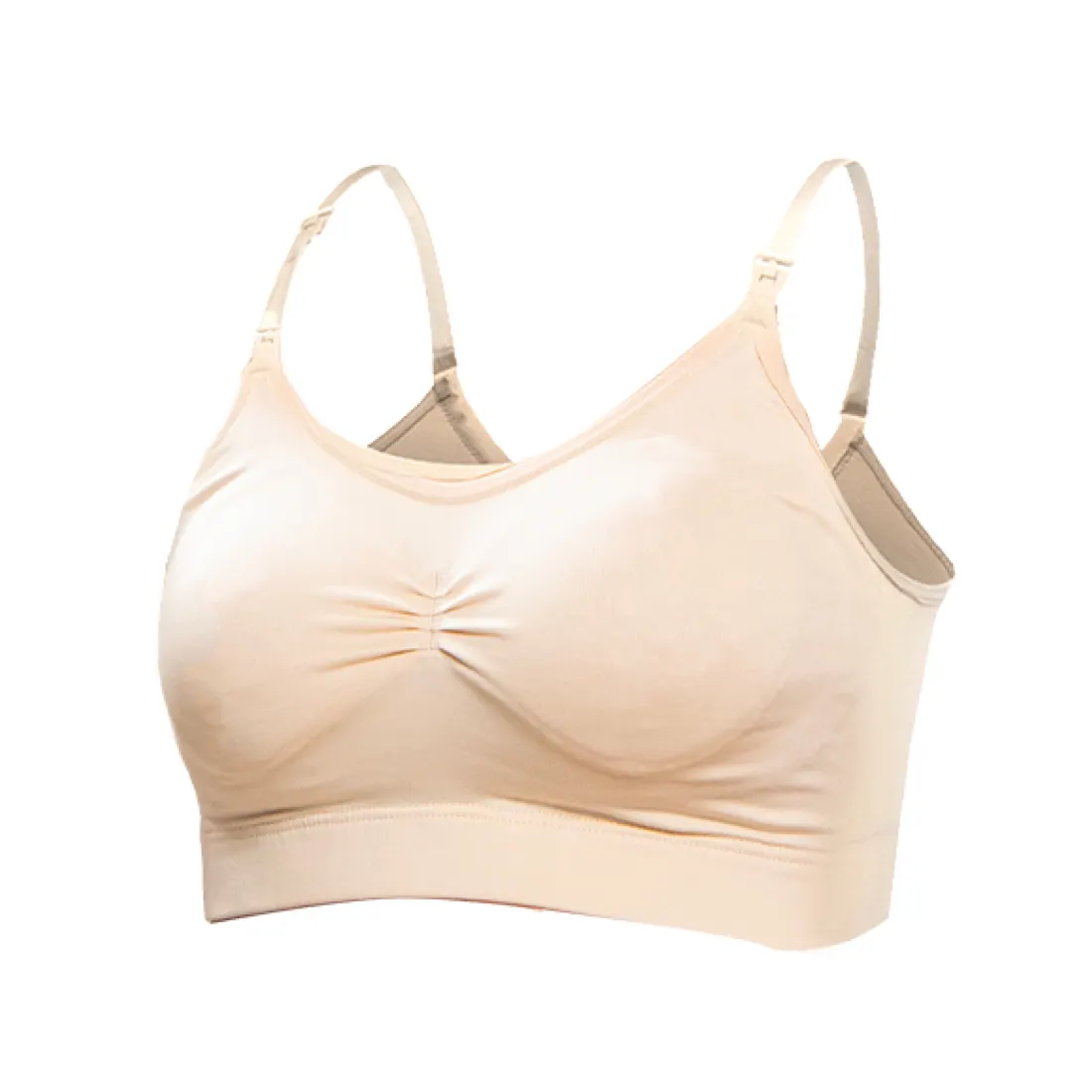
A bra that presses. A cup that is too small compresses breast tissue all day, and a wire in the wrong size sits on a duct.
When it is not the latch
Thrush. Burning or shooting pain during and after feeds, often with shiny or flaky skin, and sometimes white patches in her mouth. You both need treating at the same time or it bounces between you.
Vasospasm. Your nipple blanches white after a feed and then throbs. Warmth helps, and it is worth mentioning to a health professional.
Tongue tie. A restricted tongue prevents a deep latch however good the positioning. Assessed by a professional, not from photographs online.
A blocked duct, a tender lump that keeps returning to the same spot. Often pressure from a bra or a bag strap.
When to get help
- Cracked or bleeding nipples
- Pain right through every feed
- Burning or shooting pain afterwards
- A breast that is red, hot and painful, with a fever. Same day
- A tender lump that does not clear after a feed
- She is not gaining weight along her curve
Mastitis moves quickly, and the sooner it is treated the shorter it is.
Why this matters beyond the pain
Sore nipples are one of the most common reasons breastfeeding stops earlier than a Mama intended.
The pain is rarely unbearable. What it does is turn feeds into something you dread, and dread leads to skipped feeds, which reduces your supply and gives you a second problem stacked on the first.
Fixing the latch early stops that whole chain before it starts.
Sources
Share this article
This article is for information only and is not a substitute for diagnosis or medical advice. Please discuss your own situation with your midwife or doctor.