Milk Rash on a Baby's Cheeks: What It Is and What Helps
Milk rash is usually infant eczema rather than a reaction to milk. How to tell it apart, what daily care helps, and what a cream can and cannot do.
Red dry patches on her cheeks, and someone has already suggested changing her formula.
Almost certainly not the milk. The name is misleading, and it sends parents in exactly the wrong direction.
It is usually eczema
Despite what it is called, this is generally infant eczema, or atopic dermatitis. Milk touching her skin did not cause it, and in most cases milk has nothing to do with it at all.
That matters, because the name pushes you towards changing formula or cutting foods from your own diet, and neither addresses what is actually happening: a skin barrier that is still developing and loses water too easily.
Telling it apart from the others
Eczema is dry, rough, sometimes flaking or weeping. It itches. It starts on the cheeks and moves into skin folds, and it comes and goes, worse in dry or very hot conditions.
Baby acne is small red or white bumps rather than dry patches, usually in the first weeks, clearing by itself.
Heat rash is tiny red spots where she has been hot and covered.
A fungal rash is bright red with a clear edge and small satellite spots.
Drool rash sits around her mouth and chin while she is teething, where saliva pools.
The distinction matters because a barrier cream helps only some of them.
What daily care looks like
For eczema, the routine is the treatment rather than something you do alongside it.
- Moisturise at least twice a day, more when her skin is dry. Consistency beats the choice of product
- Short warm baths, ten minutes at most, then moisturise within a few minutes while she is still damp
- A mild fragrance-free wash, only where needed rather than over all of her
- Soft cotton, washed in a mild detergent and rinsed thoroughly
- Nails short, because scratching is what turns a dry patch into a broken one
The triggers nobody mentions
Saliva. A teething baby drools constantly, and saliva sitting on her cheeks irritates skin. Wiping gently and applying a barrier does more than any change to your diet.
Heat. In this climate, overheating is one of the commonest aggravators and one of the easiest things to fix.
Detergent residue on clothes and bedding, especially heavily fragranced ones.
Bath products used too often, stripping the oils her skin is trying to keep.
Very hot water, doing the same thing faster.
What a cream can and cannot do
A moisturiser or barrier cream supports the skin barrier and reduces the dryness driving the itch. Used consistently, that genuinely works for mild eczema.
What it does not do is treat moderate or severe eczema. Inflamed, weeping or widespread eczema usually needs a prescribed treatment, and moisturiser alone means a longer and more uncomfortable course of it.
There is nothing to gain by holding out. Prescribed treatments for infant eczema are well established and used for short periods.
For daily care
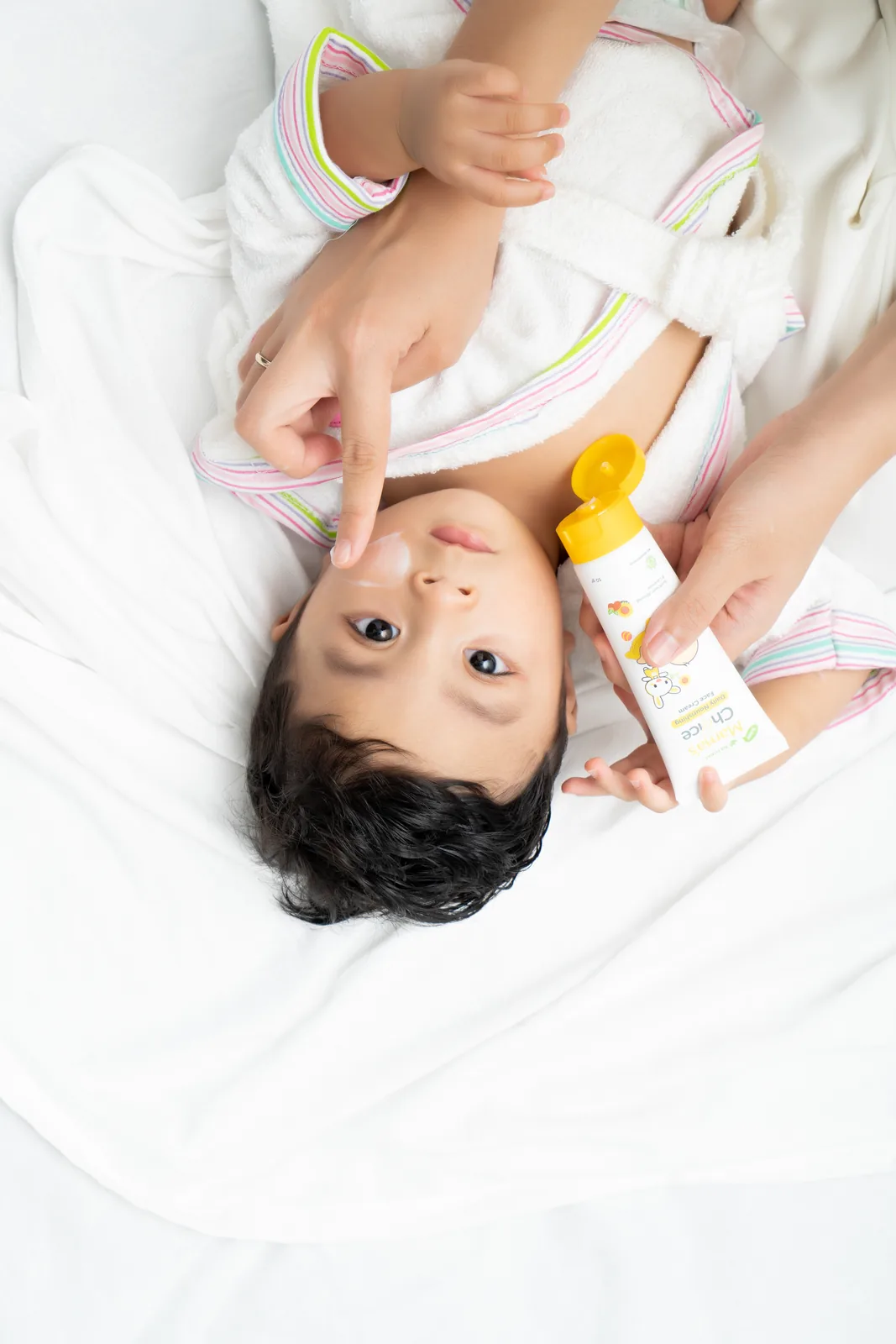
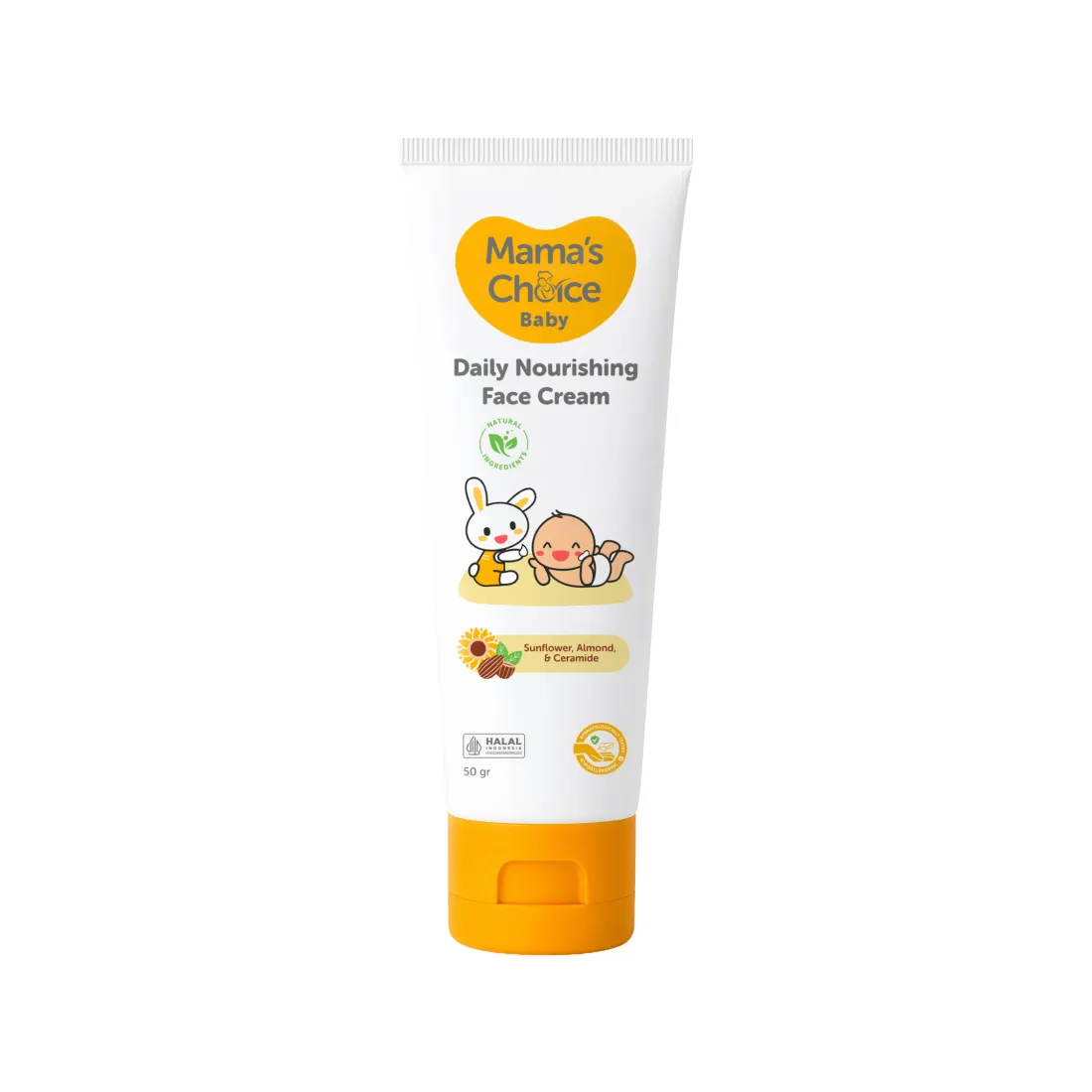
Mama's Choice Baby Daily Nourishing Face Cream is made for the thinner skin on her face.
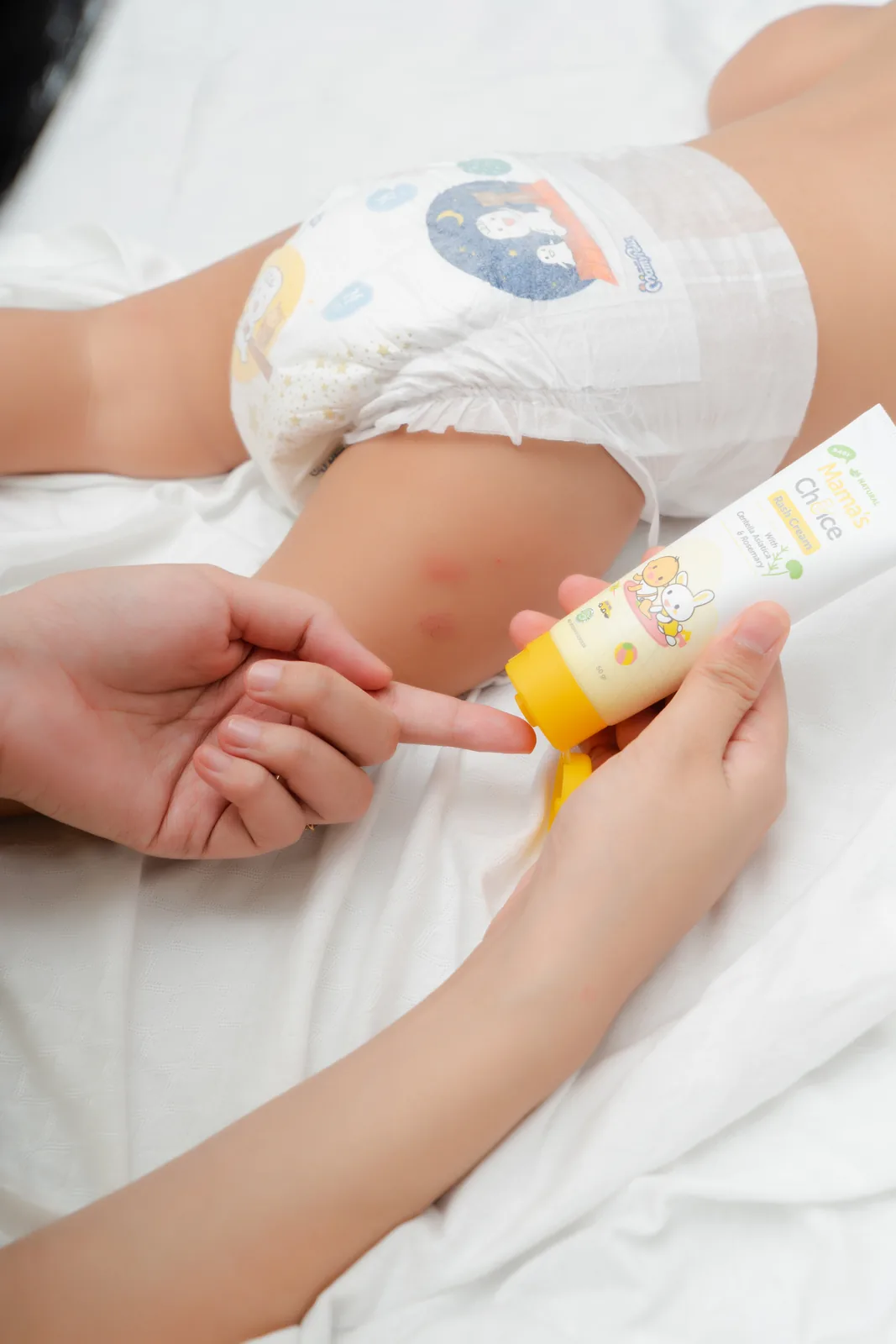
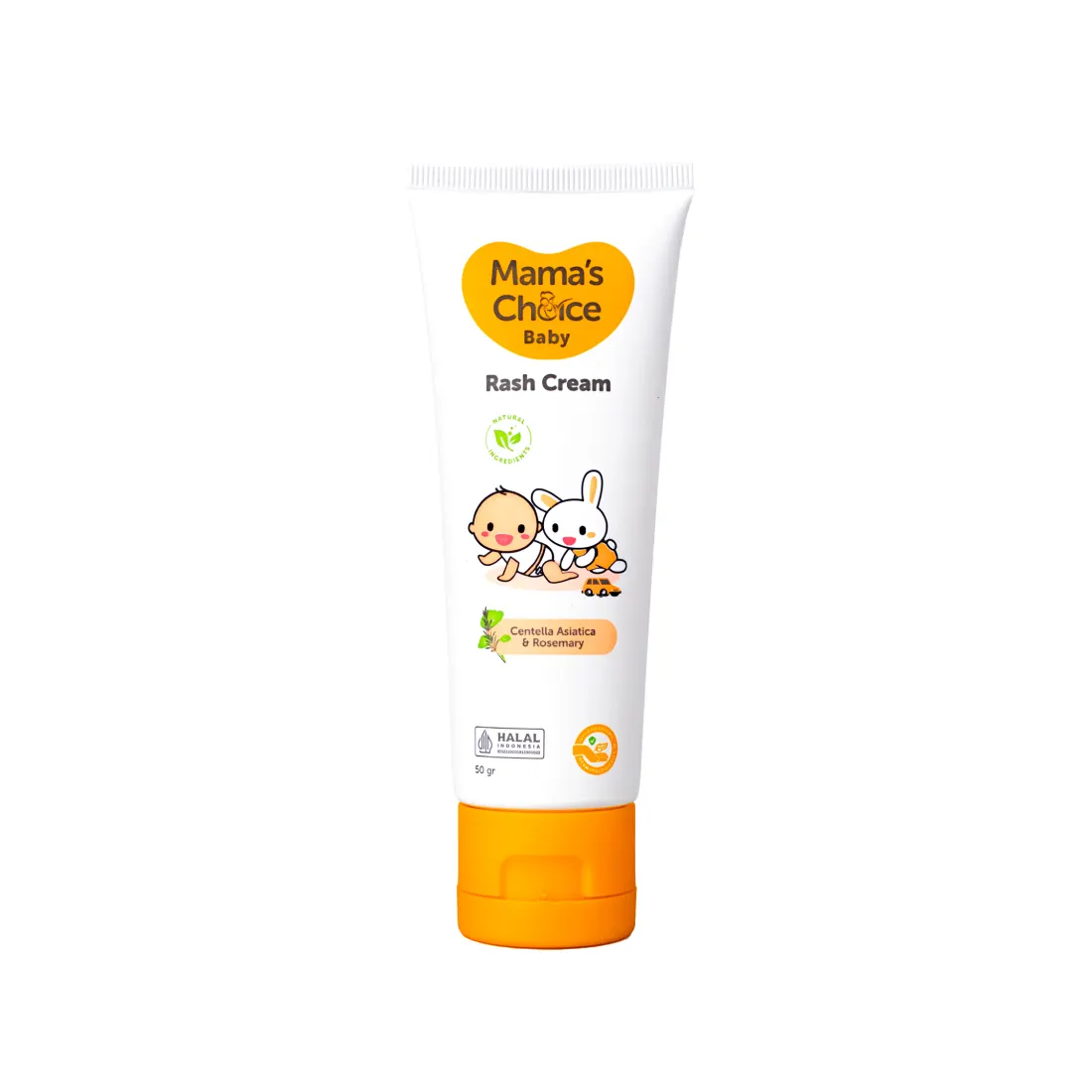
Mama's Choice Baby Rash Cream uses eight natural ingredients including centella asiatica, and works across her body.
Patch test anything new on a small area for a day before using it widely, particularly if eczema runs in your family.
Before you cut out dairy
If you are breastfeeding, the instinct to eliminate dairy is strong and usually premature.
Cow's milk protein allergy exists, and it does present with eczema. It also comes with other signs: vomiting, blood in her stools, poor weight gain, or persistent distress. Eczema on its own is not enough to conclude it.
Do not start an elimination diet without medical guidance. It narrows your own nutrition at a demanding point, often for nothing.
When to see a doctor
- Eczema weeping, crusted, or looking infected
- Skin hot, swollen, or redness spreading
- A rash with a fever
- Eczema disturbing her sleep, or not improving with consistent moisturising
- Poor weight gain, vomiting or blood in stools alongside the rash
That last one changes the question entirely, and is worth mentioning specifically rather than assuming someone will ask.
Sources
Share this article
This article is for information only and is not a substitute for diagnosis or medical advice. Please discuss your own situation with your midwife or doctor.