Melasma, the Mask of Pregnancy: Signs and Treatment
What melasma looks like, why it appears in pregnancy, which treatments are available and which have to wait until after breastfeeding.
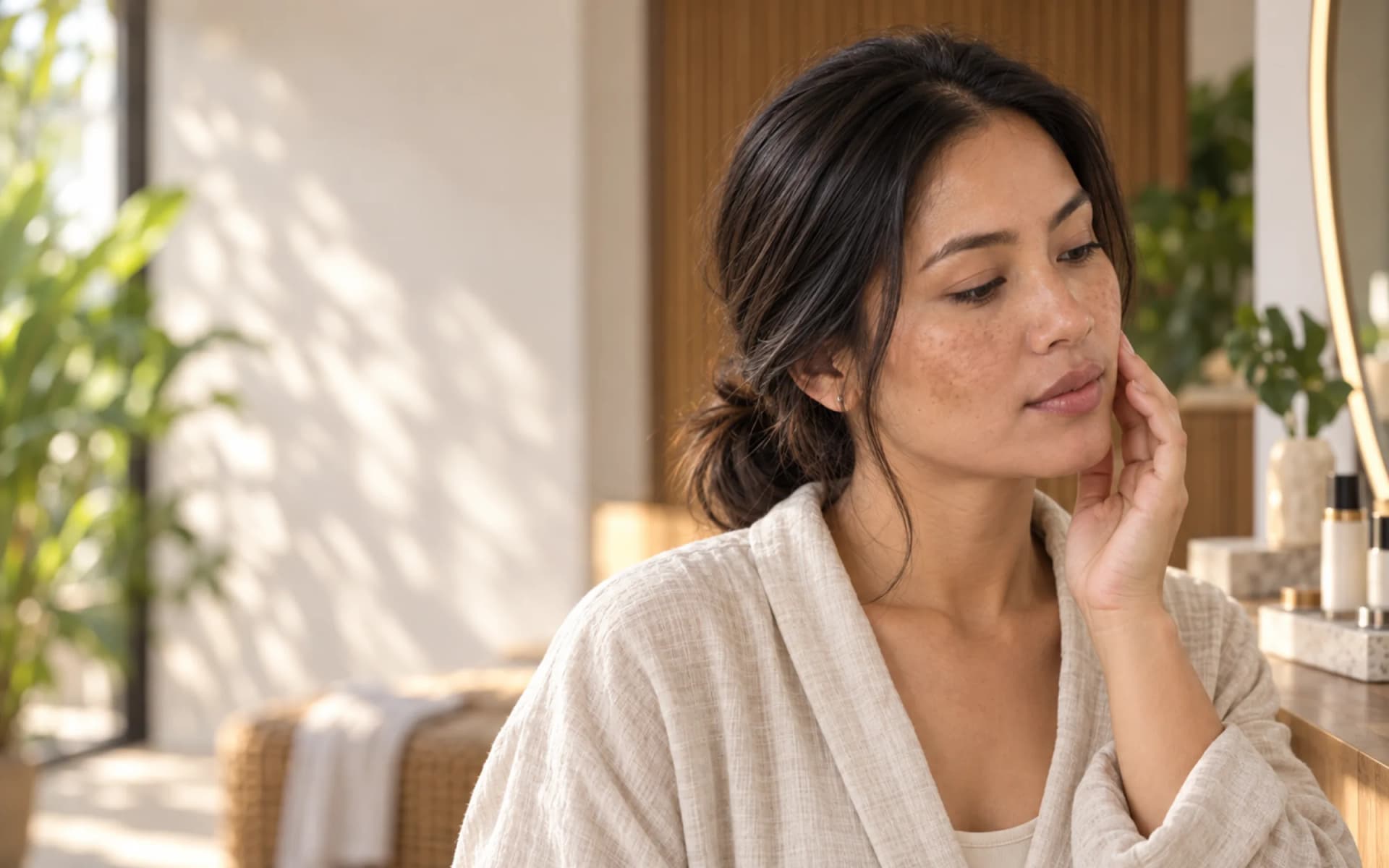
It sits where everyone can see it, which is most of why it is so wearing.
Melasma is the patchy darkening that appears across the face in pregnancy, and the mask of pregnancy is what people call it. Common, harmless, and among the most frustrating things pregnancy does to you.
What it looks like
Darker patches, usually symmetrical, on your forehead, cheeks, upper lip and along the jaw. Brown to greyish-brown depending on your skin tone.
Uneven tone across the face, which reads as dullness even where the skin is otherwise fine.
Drier-feeling areas, sometimes, though melasma is a pigment change rather than a barrier one.
More reactivity to products that used to be fine, from the general rise in skin sensitivity now.
It does not itch, flake or hurt. If yours does, it is something else.
Why it happened
Oestrogen and progesterone drive your melanocytes, the pigment-producing cells. Sun then activates those same cells further, which is why the patches deepen through a sunny fortnight and lift through a rainy one.
Hormones plus UV explains both why melasma is so common in pregnancy and why sun protection does more for it than any cream.
Genetics matter too. It is more common on deeper skin tones and it runs in families.
What helps while you are pregnant
Sunscreen every morning, no exceptions. Broad spectrum, SPF 30 or higher if you are out, reapplied every two hours.
Of everything on this page, sunscreen is the one that matters. It decides whether any of the rest has a chance.
A wide-brimmed hat, and less time outside between 10am and 4pm.
Vitamin C and niacinamide, both considered safe and both useful for tone.
A gentle hand. Irritated skin pigments more, so scrubs, strong acids and anything that leaves your face red make melasma worse rather than better.
What has to wait
Hydroquinone, the most effective topical treatment, is usually postponed because so much of it is absorbed.
Retinoids, avoided in pregnancy.
Chemical peels and laser, generally deferred, partly because pregnancy changes how your skin responds and makes results unpredictable.
Which leaves you a narrower toolkit for nine months, and a strong argument for preventing rather than correcting.
A routine that fits
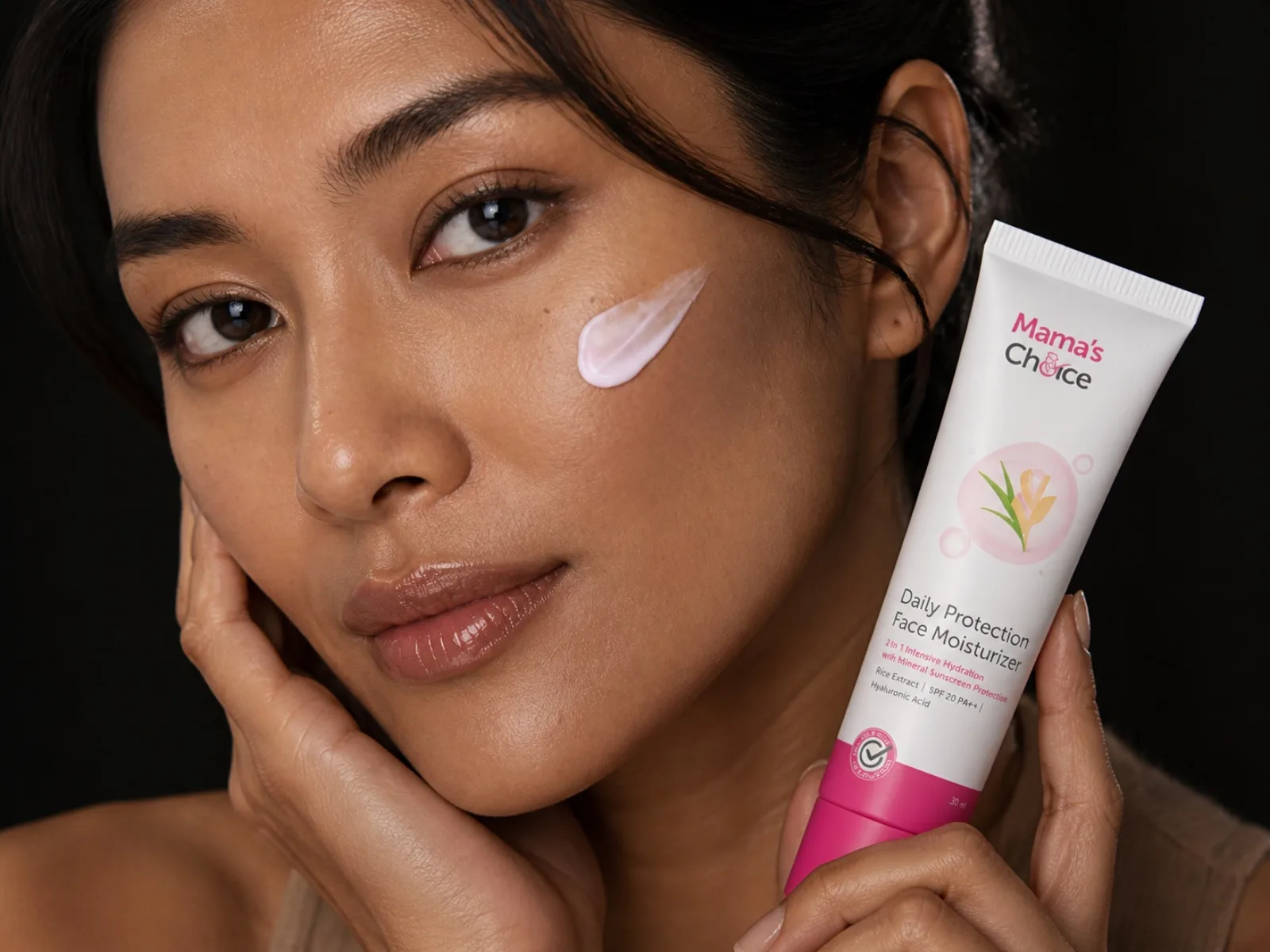
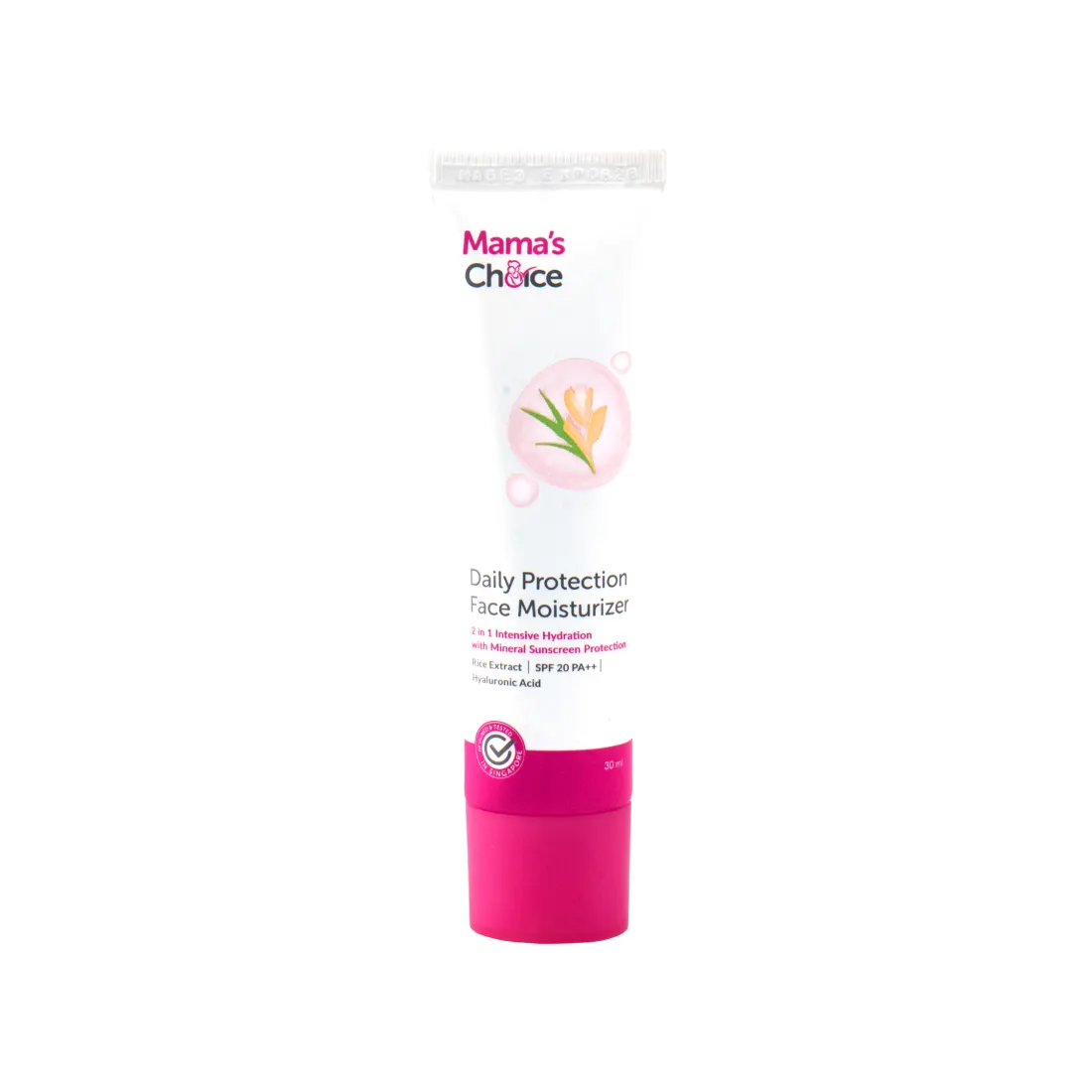
Daily Protection Face Moisturizer SPF 20 PA++ is moisturiser and mineral sunscreen together, with titanium dioxide, zinc oxide, rice extract and hyaluronic acid.
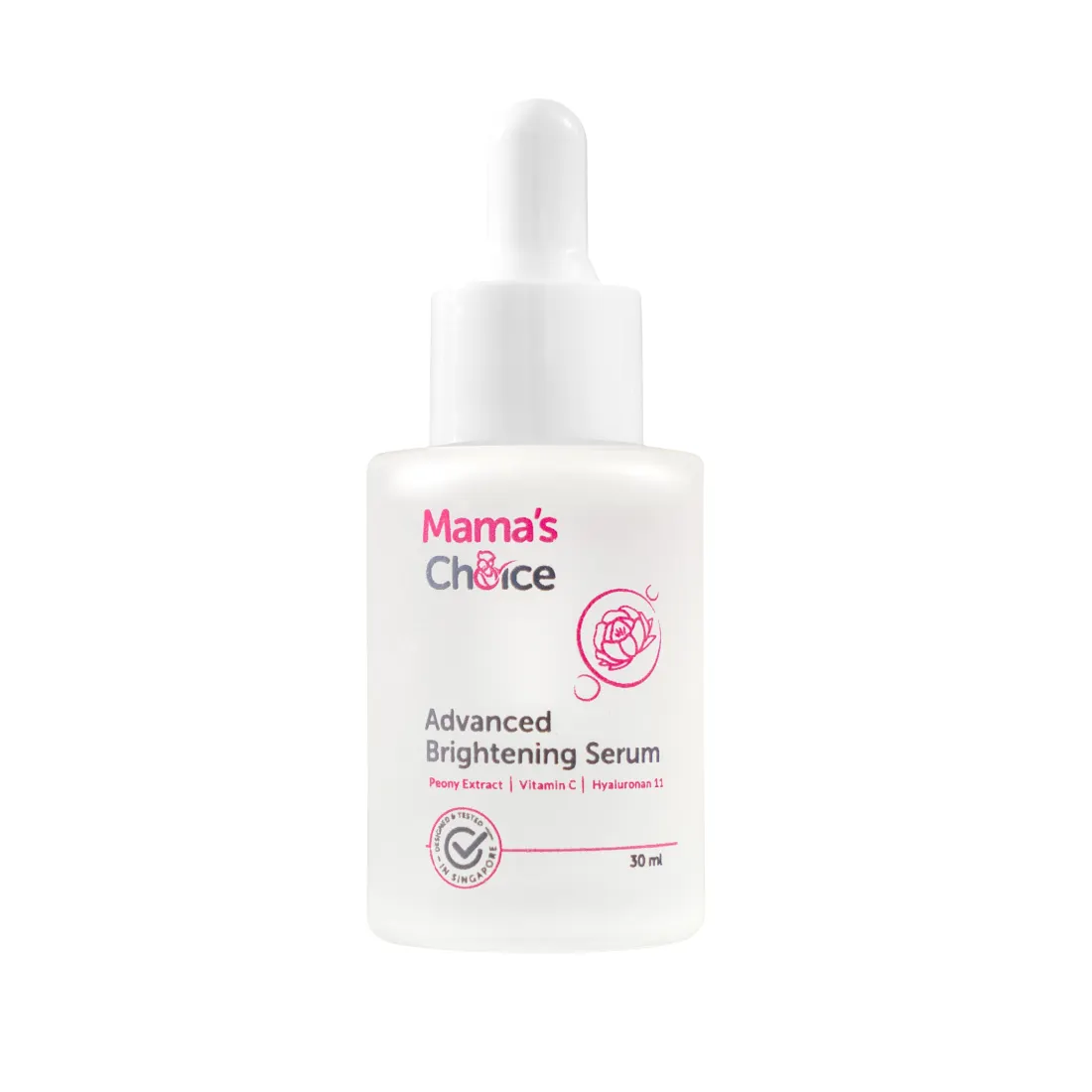
Advanced Brightening Serum is made for pregnancy and breastfeeding, with peony extract, vitamin C, a hyaluronan multi-complex, ceramide NP and niacinamide.
SPF 20 suits everyday indoor life. Out for hours, go higher.
How long
For most Mamas it fades over the months after the birth as hormones settle. Six months to a year is common, and it often returns in a later pregnancy.
For some it persists, particularly where there has been a lot of sun. Persistent melasma is treatable, usually starting after breastfeeding when the full range of options opens up.
It is known for being stubborn. It responds to treatment and comes back readily without sun protection, which is why dermatologists talk about managing it rather than curing it. Worth knowing before you start a course of anything and expect it to be finished.
When to see a dermatologist
- Patches still there several months after the birth
- Pigmentation spreading or darkening despite sun protection
- Any patch that is one-sided, raised, or changing shape
- Real doubt about whether this is melasma at all
That third one matters most. Melasma is symmetrical and flat. Anything that is neither deserves a proper look.
Sources
Share this article
This article is for information only and is not a substitute for diagnosis or medical advice. Please discuss your own situation with your midwife or doctor.