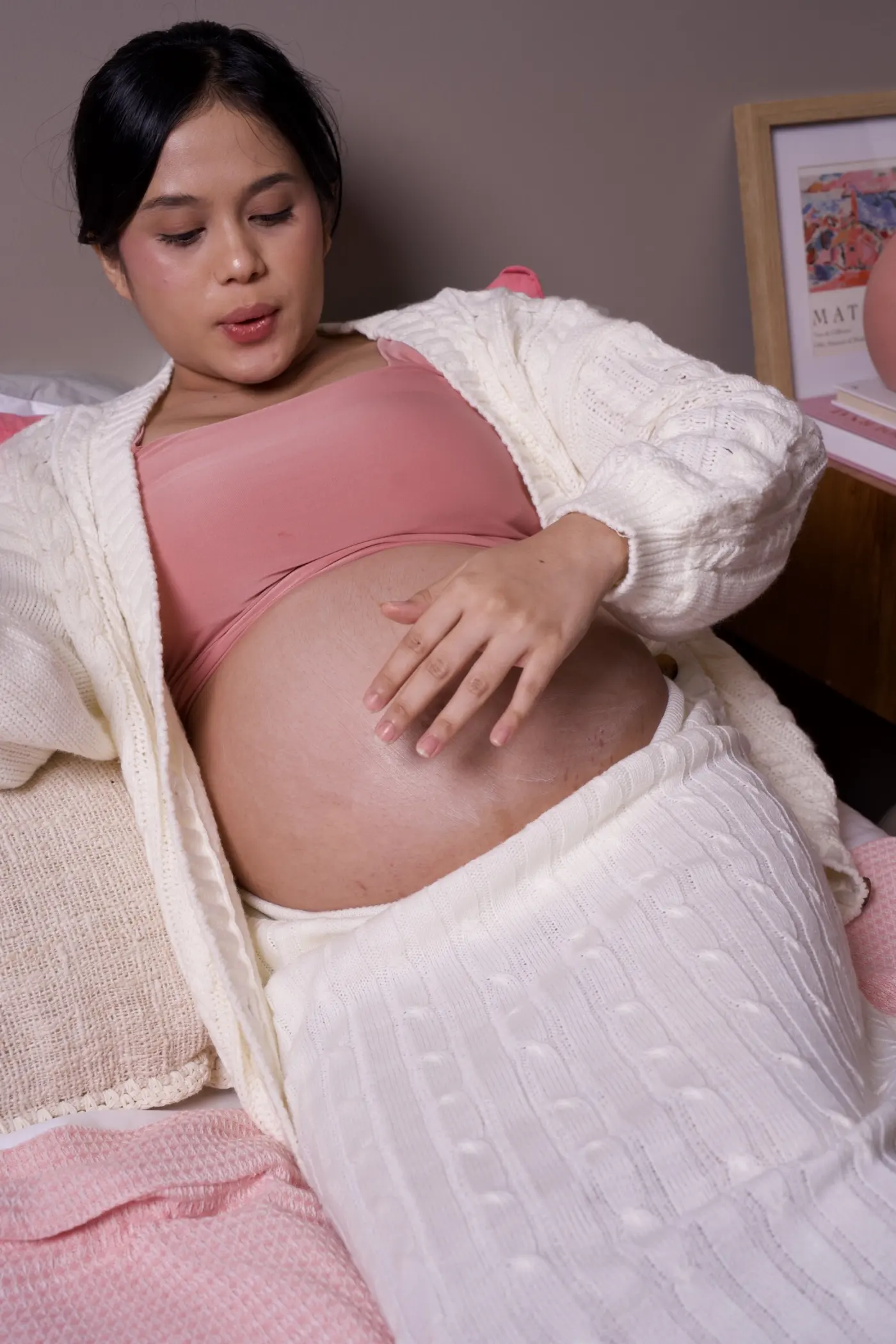
Itchy Belly in Pregnancy: Causes and What Helps
An itchy bump is usually harmless stretching skin. What helps, and the one itching pattern that needs a same-day appointment rather than a moisturiser.

It is worst at night, you have been scratching in your sleep, and you have started dreading bedtime.
Most itching in pregnancy is ordinary and harmless. One pattern is not, and telling them apart is the only genuinely important thing on this page. So that first.
The one that is not ordinary
Intrahepatic cholestasis of pregnancy, ICP, is a liver condition. Its hallmark is intense itching with no rash.
The pattern:
- Severe itching, and nothing to see on the skin
- Often worst on your palms and the soles of your feet
- Worse at night, badly enough to stop you sleeping
- Usually in the third trimester
ICP carries risks for your baby, and it can be managed once it is identified. If your itching matches that description, see a doctor and ask for liver function tests and bile acid levels.
Do not treat it with moisturiser.
Why an ordinary bump itches

Skin stretching. Your bump grows, and the skin across your belly, breasts, thighs and hips goes with it. New stretch marks itch as they form.
Dry skin. Hormones mean your skin loses moisture and elasticity more readily, and dry skin itches.
PUPPP, pruritic urticarial papules and plaques of pregnancy. An intensely itchy rash of red bumps, usually starting on the belly along stretch marks, then spreading to thighs and arms. What separates it from ordinary itching is a visible rash. Typically a first pregnancy, third trimester.
Pemphigoid gestationis, rare and autoimmune, usually itching with small blisters. Needs a dermatologist.
Telling them apart
The useful questions are is there a rash and where is it worst. Intensity tells you less than either.
| Type | Rash | Worst where | What to do |
|---|---|---|---|
| Dry, stretching skin | None | Belly, thighs, hips | Moisturise, loose clothing |
| PUPPP | Yes, red bumps | Along belly stretch marks | See a dermatologist |
| Cholestasis (ICP) | None | Palms and soles, worse at night | Liver function and bile acid tests |
| Pemphigoid gestationis | Yes, small blisters | Around the navel, then spreading | Dermatologist |
Use it to describe your symptoms to a doctor, not to diagnose yourself.
What helps ordinary itching

A cool compress. Hot water dries your skin further and makes the itch worse. Lukewarm baths, for the same reason.
Moisturiser while your skin is still damp, a few minutes after a shower, when it holds water best.
Less SLS. It is the ingredient that makes soap foam, and it irritates some people. On skin that is already itchy, a mild wash that rinses easily is more comfortable.
Pat dry with a soft towel rather than rubbing.
Loose cotton, which absorbs sweat and reduces friction on belly skin.
Enough water, and food with something in it.
If your skin is reactive right now, go fragrance-free.
Do not scratch
Tempting, and worth resisting.
The skin over a pregnant belly is thinner and more fragile than usual. Scratching causes irritation and sometimes infection, on skin that is already under strain.
About stretch mark cream
Itching from stretching skin and stretch marks forming are the same problem seen from two angles, and a moisturising cream addresses the dryness and the itch.
Mama's Choice Stretch Mark Cream is made with Lipobelle Soyaglycone and aloe vera. Light texture, absorbs easily, safe throughout pregnancy.

The limit, plainly: no product has been shown to prevent stretch marks entirely. What a moisturiser can claim is keeping your skin hydrated and reducing the itch, which is useful enough on a night you cannot sleep.
Getting through the night
Itching feels worse at night largely because nothing else is competing for your attention.
- Moisturise before bed, not only in the morning
- Keep the bedroom cool. Heat intensifies itching
- Loose cotton nightwear
- Nails short, so scratching in your sleep does less damage
If itching wakes you regularly, particularly with no rash, that is reason enough on its own to see a doctor.
When to see a doctor
- Severe itching with no rash, especially palms and soles
- Itching that worsens at night and stops you sleeping
- A rash spreading to other parts of your body
- Skin broken or infected from scratching
- Itching that has not settled with any of the above
Sources
Share this article
This article is for information only and is not a substitute for diagnosis or medical advice. Please discuss your own situation with your midwife or doctor.