Intimate Hygiene During Pregnancy
What changes down there in pregnancy, seven habits that keep infection away, and why a feminine wash is optional rather than necessary.

Everyone sells you something for down there, and almost all of it is aimed at a problem you do not have.
The correction worth making first, because it is usually understood backwards: your vagina cleans itself. Nothing needs to go inside it, and washing inside makes infection more likely, not less.
What needs attention is your vulva, the outside. Plain water covers it.
What changes now
Your hormones have risen and blood flow to the area has increased, which changes the discharge you notice. More of it is normal. So is a slightly different consistency.
Two things are worth recognising rather than tolerating.
Thrush. Common in the second trimester. Thicker white discharge, and it itches. Uncomfortable, treatable, and more likely now than before.
Bacterial vaginosis. An imbalance between the helpful and unhelpful bacteria. Thinner discharge with a fishy smell, sometimes white, grey or greenish, sometimes itchy. Worth treating in pregnancy rather than waiting it out, so take this one to your midwife.
Seven habits that do the work
- Wipe front to back, every time. It keeps bacteria from the anus away from your urethra
- Skip tight underwear. It traps moisture, and moisture is what bacteria want
- Wear cotton. It absorbs sweat better than synthetics
- Dry properly after washing, with tissue or a clean towel
- Change underwear when it feels damp, rather than at a set time
- Do not use ordinary bath soap there. It is alkaline, and your skin there is not
- Avoid washes above pH 4.5, and any with glycerin, fragrance or parabens
Do you need a feminine wash
No. It is not required, and it is not what keeps infection away. Clean water on the outside is adequate.
If you want one because you like it, the rules are narrow. Only on the external vulva, never inside. Acidic pH of around 3.5 to 4.5, no fragrance, nothing that irritates easily.
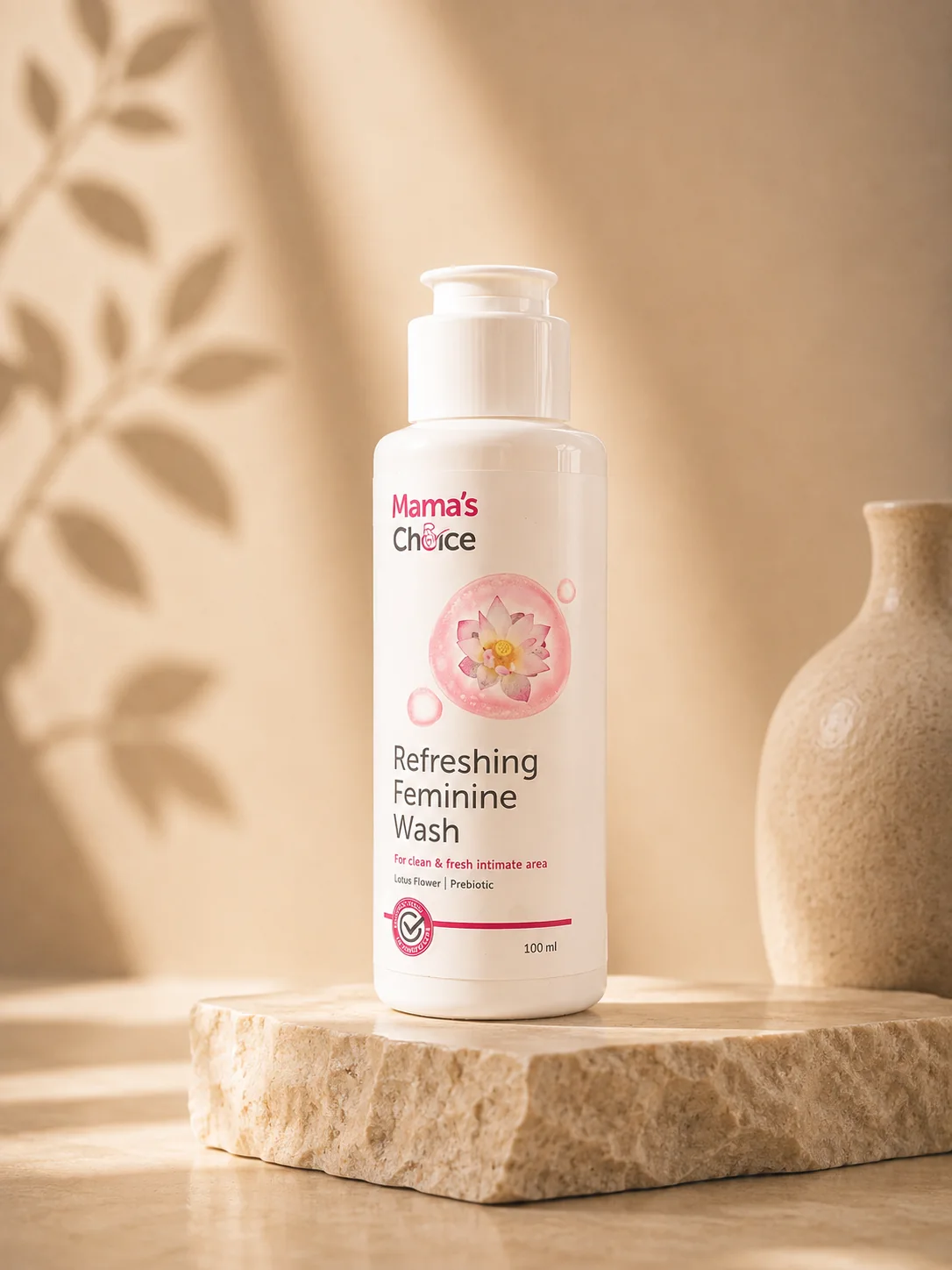
Mama's Choice Refreshing Feminine Wash is built to that specification, with organic green tea, lotus flower and prebiotics.
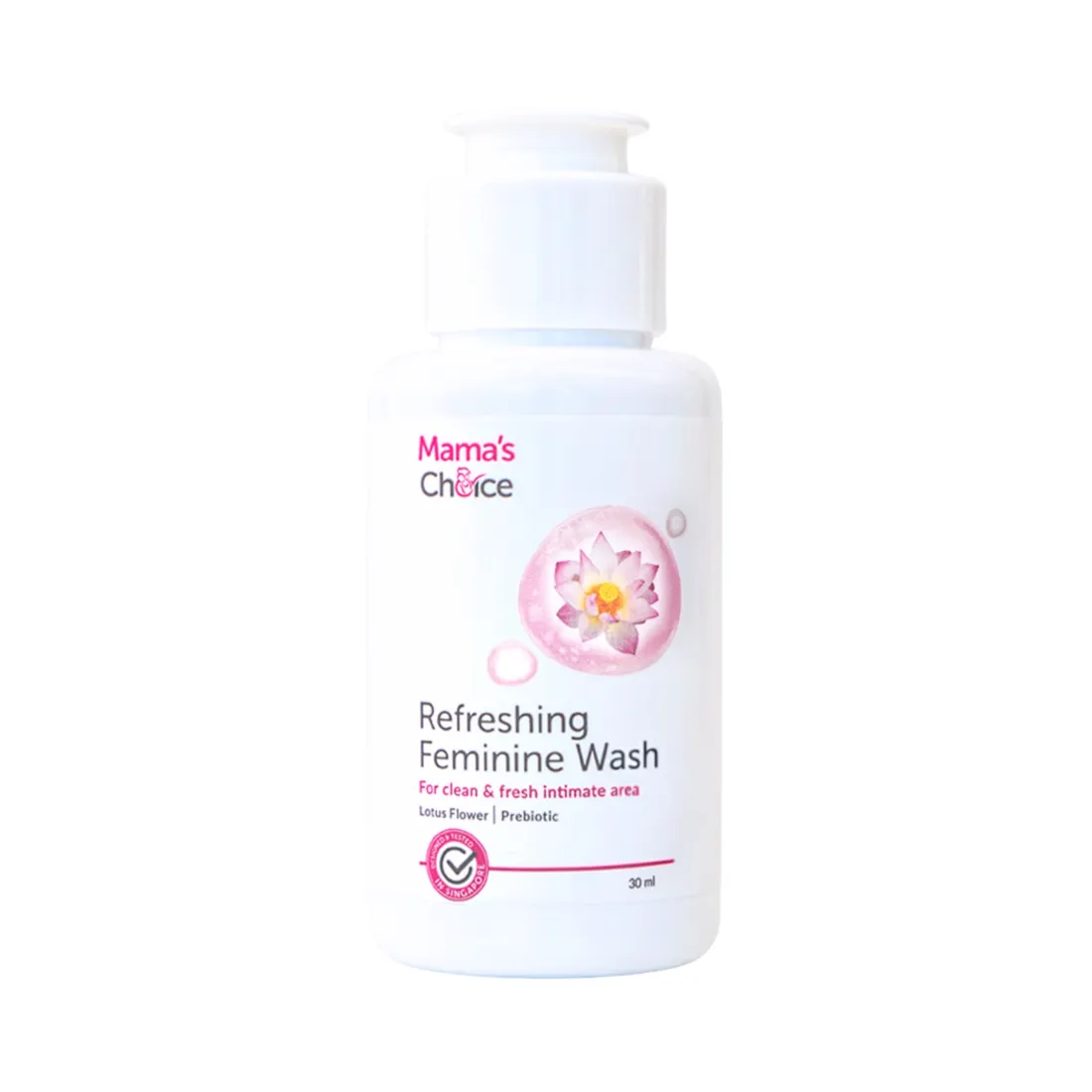
A small amount in your palm, lathered, on the outside. Rinse front to back, dry with tissue or a towel.
Never douche
Its own heading, because it is still being recommended.
Douching flushes out the bacteria keeping the environment acidic and hostile to the ones that cause problems. It raises your risk of bacterial vaginosis, and in pregnancy it is associated with worse outcomes.
Same goes for scented wipes, sprays, and anything sold on the promise of a smell.
What normal looks like
Clear or milky white, no other symptoms. There is more of it now, and that increase is not a sign of anything wrong.
What needs a midwife, not a product
- A fishy or strong smell
- Yellow, green or greyish
- Itching, burning, soreness or swelling
- Pain passing urine
- Blood, at any point
- A sudden gush or steady trickle of clear fluid, which may be your waters
None of those is a hygiene problem, and no wash resolves any of them. Treating them yourself just delays the thing that works.
Things that get harder as the bump grows
Nobody writes this part down, and by the third trimester it is most of the problem.
You cannot see down there. A hand mirror is not undignified, it is practical, and it is how you notice a change early rather than late.
Wiping front to back gets awkward. Reaching from behind rather than in front is easier late on and keeps the direction right.
Showering beats bathing. Easier to rinse properly, and easier to get in and out of.
Ask for help with hair removal if you were doing it and can no longer see. Shaving what you cannot see is how people cut themselves, and broken skin there is a route for infection.
What is normal in pregnancy that would worry you otherwise
Much more discharge. Some Mamas need a liner daily. That alone is not a sign of infection.
Swelling and a feeling of pressure, from increased blood flow and the weight above.
Varicose veins in the vulva, which are uncomfortable, alarming to discover, and settle after the birth.
Needing to pass urine constantly. Not a hygiene problem, and worth mentioning if it burns or stings, because urine infections are more common now and need treating.
The short version
Water outside, nothing inside, cotton underwear, front to back. Anything with a smell, a colour or an itch goes to your midwife.
Sources
Share this article
This article is for information only and is not a substitute for diagnosis or medical advice. Please discuss your own situation with your midwife or doctor.