Hair Removal During Pregnancy: What Is Safe
Shaving, waxing, depilatory creams and IPL in pregnancy, sorted by what is known and what is simply untested, plus care for skin that has turned sensitive.

There is more of it, it grows faster, and reaching your own legs has become a genuine logistical problem.
Why there is more
The same hormonal shift keeping hair on your head keeps it everywhere else. Hairs that would ordinarily have shed stay put, so growth looks thicker on your legs, arms, face and belly.
Most of it settles in the months after the birth, along with the shedding on your scalp.
The methods, sorted
Shaving. The safest and least complicated. It works on the surface, nothing is absorbed, and you can do it at any point.
The real difficulty is reach. Later on, a bump makes seeing what you are doing genuinely hard, which is a good argument for a long-handled razor, a mirror, or asking for help rather than rushing it.
Sharp blade, shave with the growth on sensitive areas, moisturise afterwards. A blunt razor causes the irritation people blame on shaving.
Waxing. Generally considered fine, with two caveats.
Your skin is more sensitive now and more richly supplied with blood, so it hurts more and bruises more easily than it used to.
Broken skin is a route for infection, so avoid waxing over varicose veins, moles or irritated skin, and tell whoever is doing it that you are pregnant.
Depilatory creams. Not clearly unsafe, and not well studied, which are different things.
The actives break down the protein structure of the hair, and how much gets absorbed through skin has not been established in pregnancy.
Most guidance lands on: use them if you want, in a ventilated room, patch test first, never on irritated or broken skin. In the first trimester the smell alone puts most Mamas off.
IPL and laser. Usually postponed.
No harm has been shown. It simply has not been studied in pregnancy, and there is little reason to be the test case for something cosmetic.
There is a practical reason too. Pigment changes in pregnancy alter how your skin responds to light-based treatment, which makes results less predictable and burns more likely. Most clinics decline to treat pregnant clients for exactly that.
Looking after underarm skin
The skin there is thinner than most, gets rubbed by clothing, and is probably darker right now from the same hormonal pigment change that draws the line down your belly.
- Dry it thoroughly after washing
- Do not remove hair harshly. A blunt razor or plucking makes both the irritation and the darkening worse
- Leave a day between hair removal and anything fragranced
- Loose breathable fabrics, to cut the friction
The darkening fades gradually after the birth.
While we are on underarms
Your sweat glands are more active now, so odour changes even though your hygiene has not.
Mama's Choice Dry Serum Deodorant is a fast-absorbing serum with Dead Sea minerals, niacinamide and lemon extract, without aluminium, alcohol or parabens.
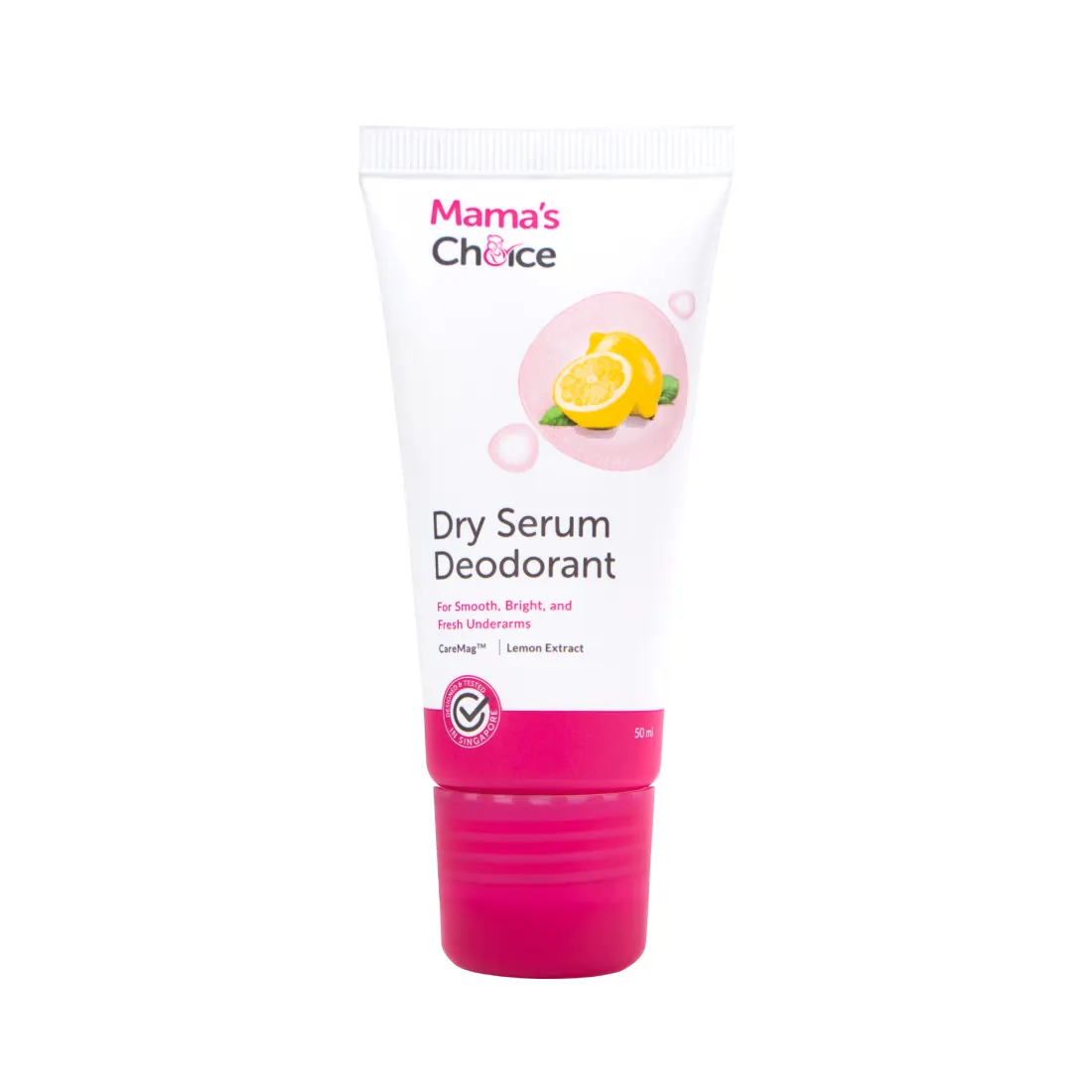
No aluminium means it is a deodorant, working on odour, rather than an antiperspirant reducing sweat. Reducing sweat generally requires aluminium salts.
Clean dry skin, and not straight after shaving, which is when anything stings.
Doing it safely later on
By the third trimester the practical problems outweigh the ingredient questions, and nobody writes about those.
Sit down. A shower stool or the edge of the bath beats balancing on one leg on a wet floor with a centre of gravity that has moved.
Use a mirror, or a long-handled razor, or both. Shaving what you cannot see is how people cut themselves.
Ask someone. Bikini line and lower legs are the two most people give up on, and asking your partner is less awkward than the alternative of an accident.
Or simply stop. Nobody is inspecting your legs, the hair settles after the birth, and if getting to them has become a fortnightly ordeal, that is a reasonable thing to let go of for a few months.
Skin that has turned reactive
A method you used for years can start stinging in pregnancy, and it is not the product that changed.
Your skin is more richly supplied with blood, thinner in places and quicker to inflame. So expect more redness after shaving, more bruising after waxing, and more stinging from anything applied afterwards.
What helps: a fresh blade, hair removal at night rather than before you go out, and a plain fragrance-free moisturiser afterwards instead of anything perfumed.
If somewhere reacts badly, leave it a fortnight before going near it again. Repeatedly removing hair from irritated skin is how ingrown hairs and folliculitis start.
Where that leaves you
- Shaving: fine at any point, with a sharp blade
- Waxing: generally fine, expect more sensitivity, avoid broken skin
- Depilatory creams: untested rather than unsafe. Patch test and ventilate
- IPL and laser: leave it until afterwards
Sources
Share this article
This article is for information only and is not a substitute for diagnosis or medical advice. Please discuss your own situation with your midwife or doctor.