Safe Hair Care During Pregnancy and What Actually Helps
Hair care during pregnancy, what changes and why, which ingredients are worth avoiding, and why most shedding arrives after birth rather than during.

Your hair got thicker, and nobody warned you what happens next.
Which phase you are in
For most Mamas, hair gets thicker during pregnancy, not thinner. High oestrogen holds each hair in its growing phase for longer, so the strands that would normally have gone stay put.
The shedding comes after the birth, peaking at around 3 to 4 months, when oestrogen drops and all those delayed hairs let go at once. It is called postpartum telogen effluvium, and it ends by itself.
Which phase you are in changes what is worth doing. Dryness and dullness during pregnancy are a hair-care problem you can act on. Shedding after birth is a hormonal cycle that no shampoo touches.

The basics that do work
Washing. Regular washing keeps your scalp clear, which matters more now that you are sweating more than usual.
How often follows your hair type rather than a rule. Oilier hair, daily. Drier hair, every second day.
Not washing does not reduce shedding. It postpones it, and the handful that arrives at the next wash looks far worse for having been saved up.
Conditioning. The step most often skipped and the one that changes most.
It smooths the cuticle so strands slide past each other instead of snagging, keeps hair from going brittle, and cuts the tangles that cause breakage when you comb them out.
A lot of what looks like hair falling from the root is breakage along the shaft. Reducing that makes a visible difference.
A serum or tonic after washing and conditioning. The optional one of the three, worth adding once the other two are consistent.
Which ingredients actually matter
The usual advice overreaches here, so precisely:
Phthalates have the clearest case. Used as plasticisers or inside fragrance blends, and prenatal exposure has been linked to effects on hormone development. They hide inside the word "fragrance".
SLS, silicones and parabens are better described as irritants or preferences than as dangers to your baby. Harsh surfactants leave already-dry hair drier, and plenty of Mamas prefer to avoid them. That is a fair reason without calling them toxins.
Strong synthetic fragrance, for a simpler reason: your sense of smell has sharpened, and a strong scent in the shower is genuinely unpleasant in the first trimester.
What no product will fix
Postpartum shedding. It happens at the root, driven by hormones, and runs its own six to twelve month course.
Breastfeeding is not causing it. The trigger is the oestrogen drop after birth, which happens whether or not you feed. Weaning early will not stop it, and Mamas wean over this.
What products can do is reduce the extra loss from breakage, so new growth gets a chance to get long.
Handling it while it is fragile
- Do not comb it soaking wet. Wait until it is half dry
- Wide-toothed comb, from the ends upwards
- Loosen the daily ponytail or bun, which pulls on an already fragile hairline
- Less heat styling
- Keep iron and protein up. Stores run low after birth, especially if you bled heavily
A shorter cut makes hair look fuller through this phase. Medically it changes nothing, and it changes how the phase feels.
Ours
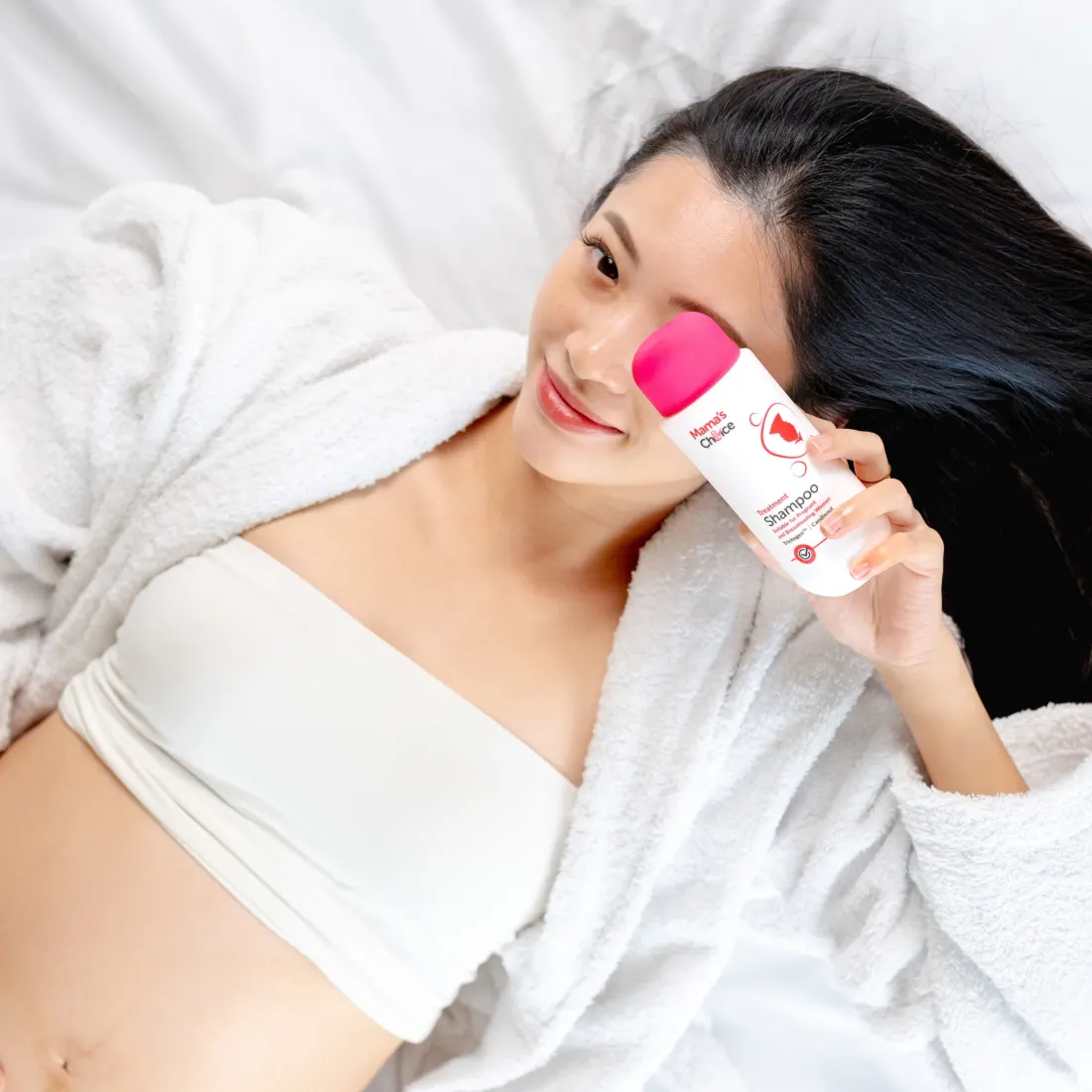
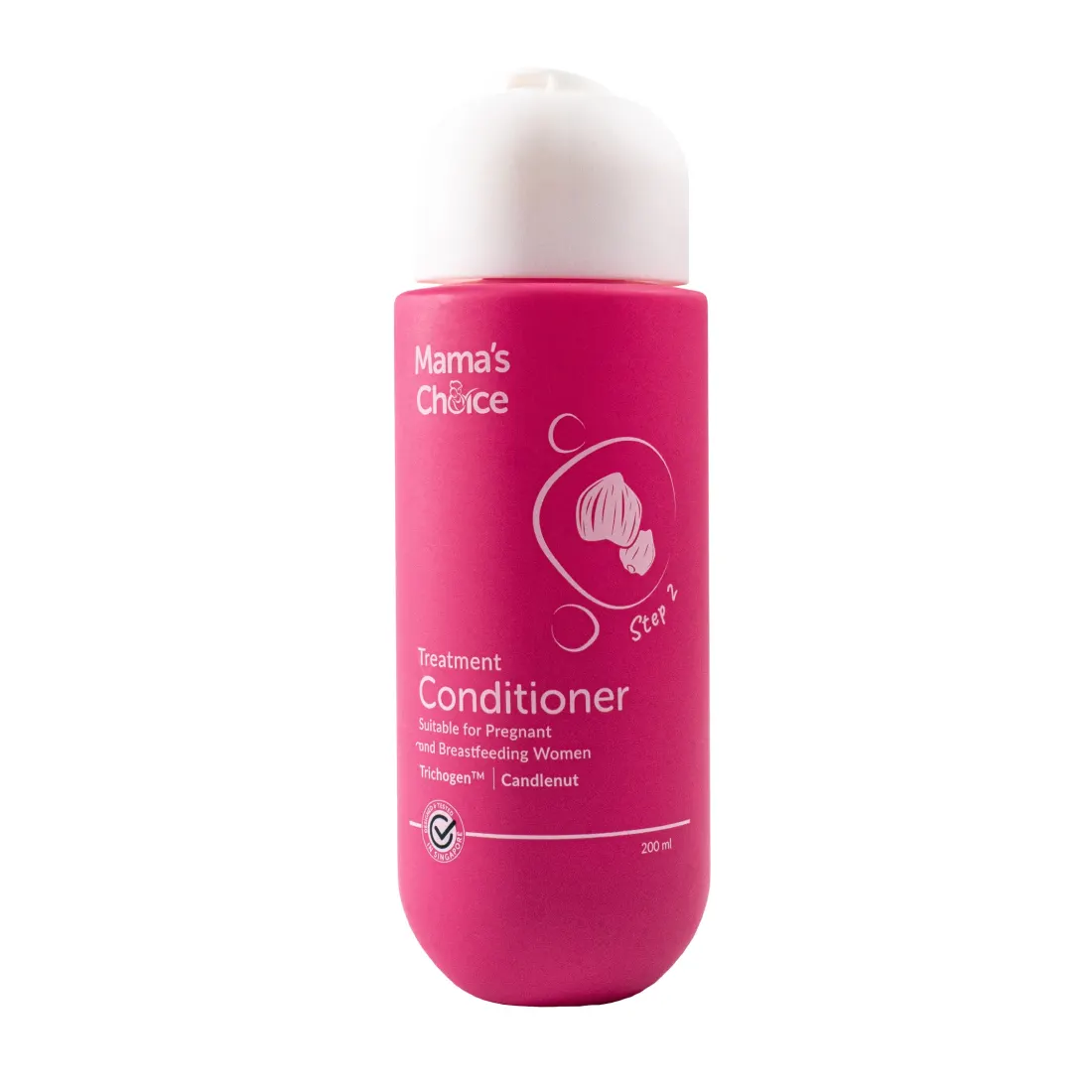
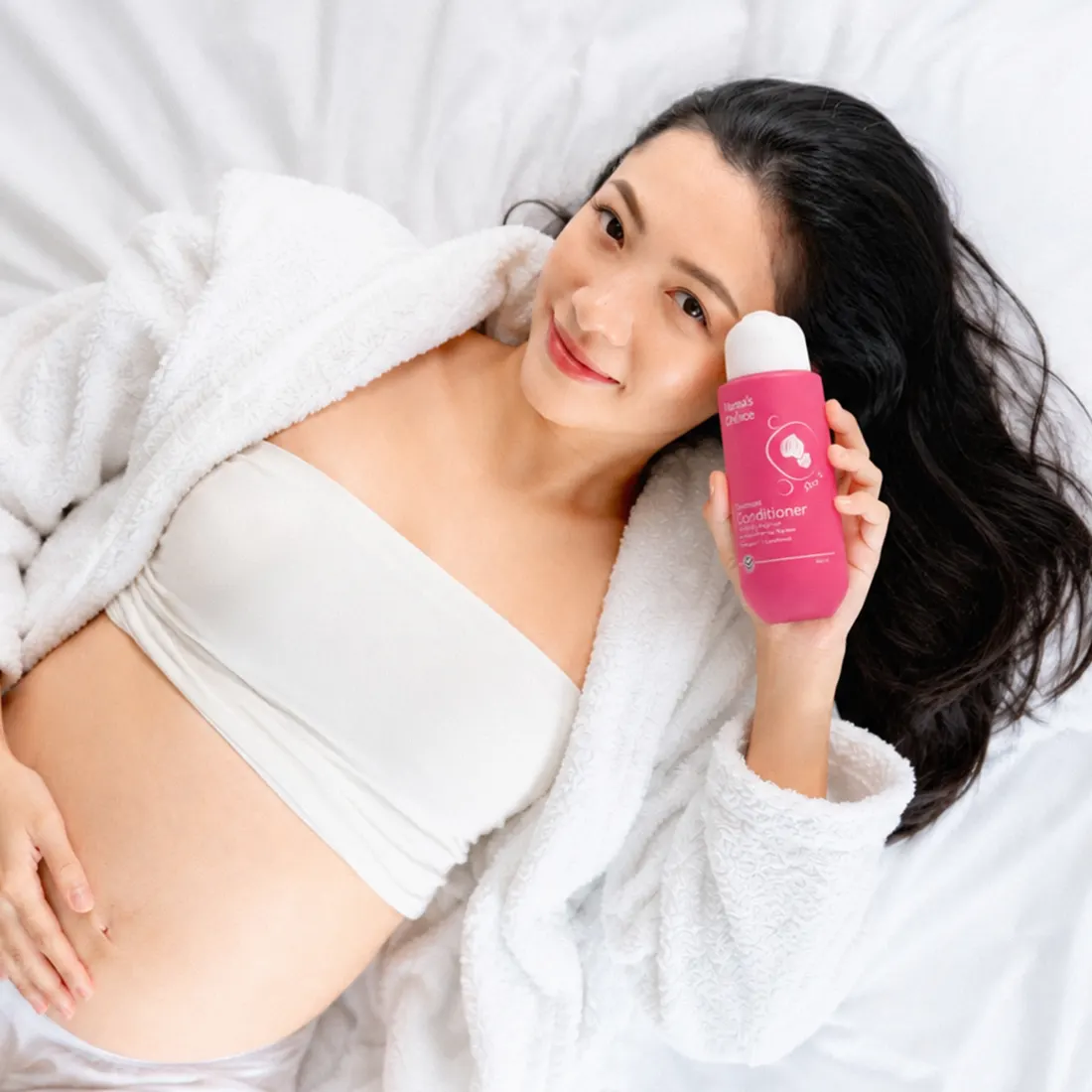
Treatment Shampoo and Treatment Conditioner are made for pregnancy and breastfeeding, with kiwi, candlenut and green pea, and without SLS, silicones, parabens or synthetic fragrance.
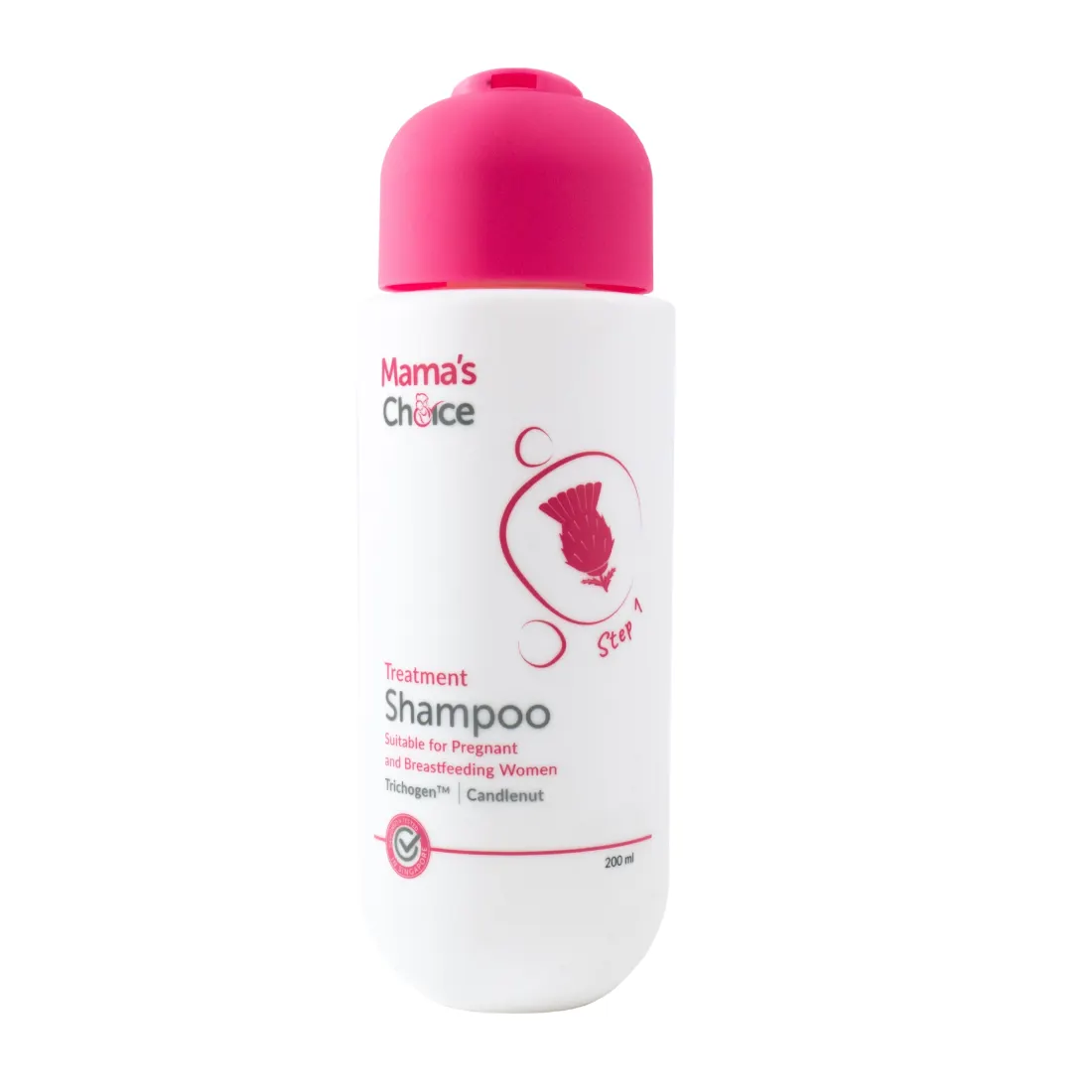
Conditioner on the lengths, not the scalp. Shampoo on the scalp, not the lengths. That order does more than the brand does.
When to see a doctor
- Still shedding heavily twelve months after the birth
- Round bald patches rather than even thinning
- A scalp that is red, scaly or sore
- Shedding with heavy fatigue, palpitations or unexplained weight change
That last one can be a postpartum thyroid problem, which is common and treatable. Anaemia and thyroid issues are both settled with one blood test.
Sources
Share this article
This article is for information only and is not a substitute for diagnosis or medical advice. Please discuss your own situation with your midwife or doctor.