Can You Use a Face Serum During Pregnancy?
Yes, with a short list of actives to avoid. Which ingredients are contraindicated, which are precautionary, and what works in their place.

Yes, you can keep using a serum. You just have to read the back of the bottle now.
The list of things genuinely worth avoiding is shorter than most people assume, and it is not the list circulating on social media.
Why your skin changed
Hormonal, immune and cardiovascular changes all show up on your face. Acne and darker patches are the two most common.
Both are usually temporary and both settle after the birth for most Mamas. Which makes treating them about comfort rather than urgency, worth remembering when something promises to fix everything by next Tuesday.
The ones with a real case for avoiding
Retinoids and retinol. Vitamin A derivatives, popular for acne and fine lines.
Oral retinoids like isotretinoin cause birth defects and are never used in pregnancy. Topical ones are absorbed far less, and ACOG and most doctors still say stop during pregnancy as a precaution.
This is the firmest recommendation on this page.
High-dose salicylic acid. Low concentrations in something you rinse off are generally considered fine. What is avoided is above 2%, peels, and oral aspirin, where absorption is far higher.
Phthalates. Plasticisers, also inside fragrance blends. They appear as diethyl phthalate, dimethyl phthalate or dibutyl phthalate when they are named at all, which is rarely. Prenatal exposure has been linked to hormone disruption.
Mostly they sit unnamed inside the word "fragrance", which is a good argument for fragrance-free.
Hydroquinone. Used to lighten pigmentation. There is no clear evidence of harm to a baby, and up to around 45% of it is absorbed through the skin.
That absorption figure, rather than any demonstrated damage, is why most doctors say leave it until afterwards.
The ones that are only precautionary
Parabens, alcohol and mineral oil come up on every avoid-list you will read.
At permitted cosmetic concentrations they have not been shown to be harmful. Plenty of Mamas avoid them anyway, which is a reasonable choice when the evidence is unsettled. It is simply not the same category as retinoids, and treating it as though it were makes the whole list harder to take seriously.
What to use instead
Niacinamide is the usual stand-in for retinol. Helps with breakouts, evens tone, softens dark spots, considered safe.
Hyaluronic acid holds water in the skin, and is well tolerated even at higher concentrations.
Alpha bisabolol calms skin that has turned reactive, which yours probably has.
Vitamin C for tone and brightness, and a sensible alternative to the more aggressive brightening actives.

One made for this stage
Advanced Brightening Serum is formulated for pregnancy and breastfeeding, with peony extract, vitamin C, a hyaluronan multi-complex, ceramide NP and niacinamide.
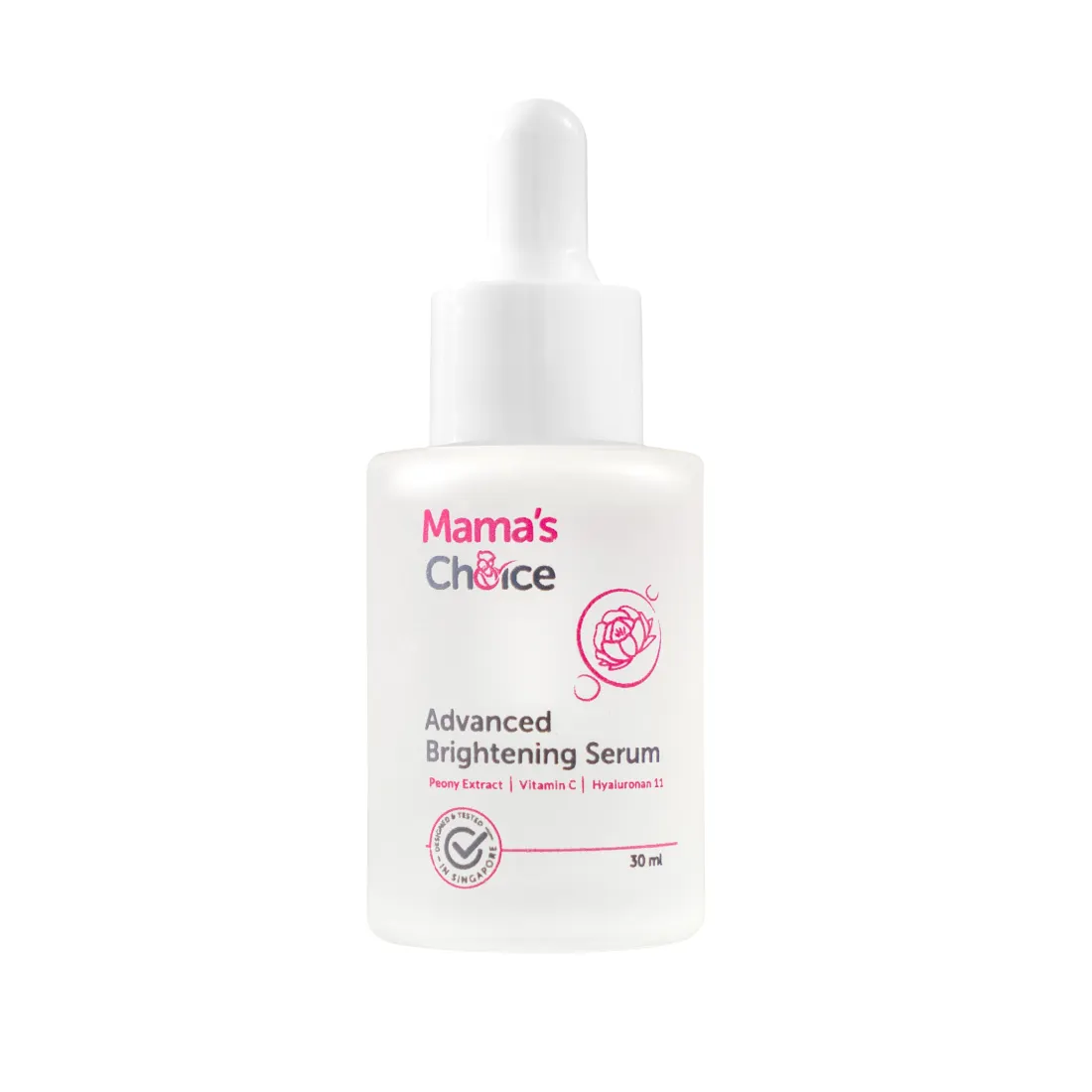
After cleansing, before moisturiser, once or twice a day.
Full ingredient lists are in our ingredient dictionary.
Introducing it
Your skin is more reactive now, so reactions are more common than they used to be.
- Patch test on your inner arm for two days
- One new product at a time
- Onto clean, slightly damp skin
- Moisturiser after, and sunscreen in the morning
- Stop if redness, heat or itching turns up
Sunscreen is still doing the heavy lifting
For the darker patches, no serum outperforms sun protection.
Melasma deepens with UV and fades when it is limited. A serum without daily sunscreen is working against a tide.
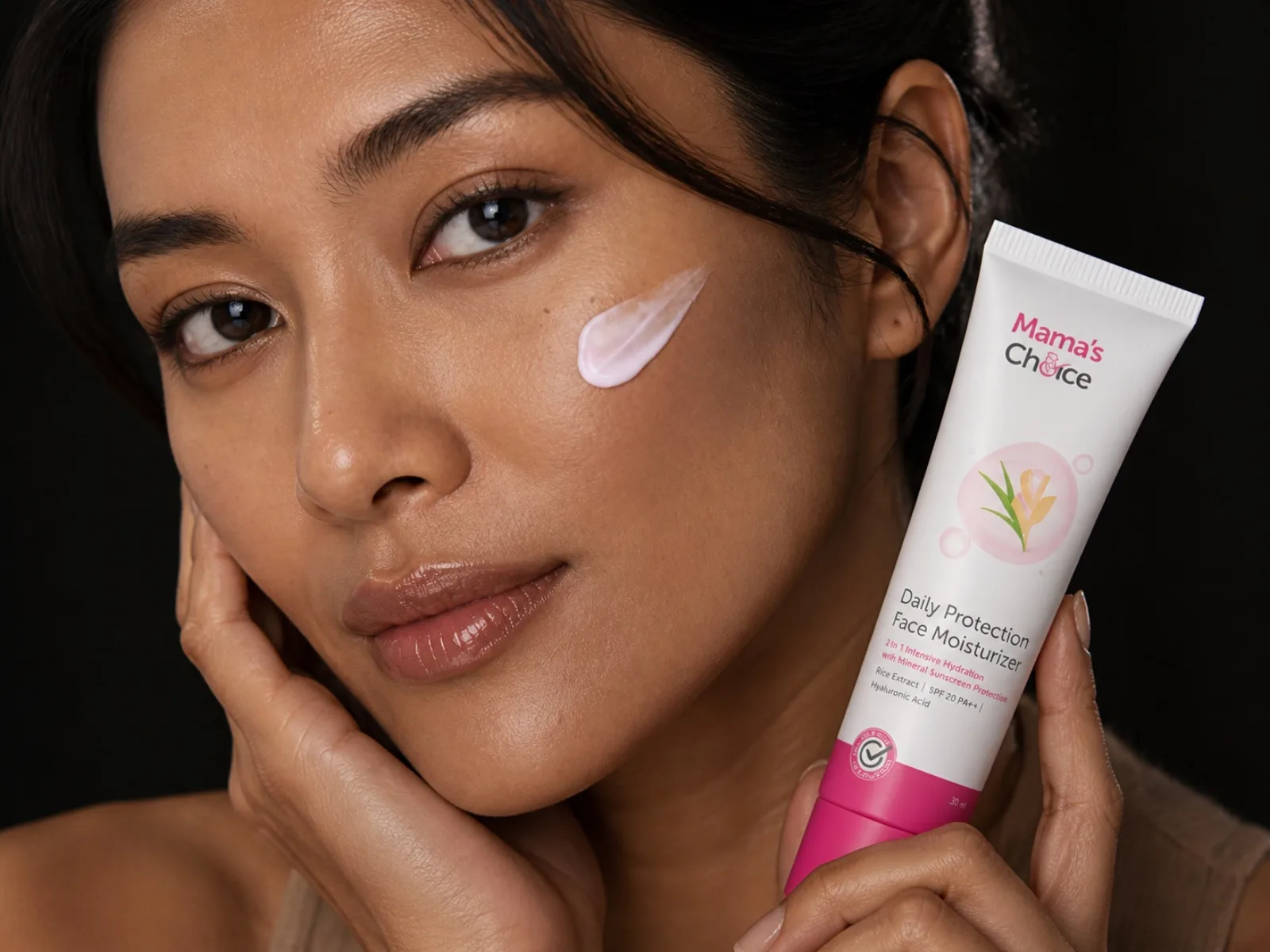
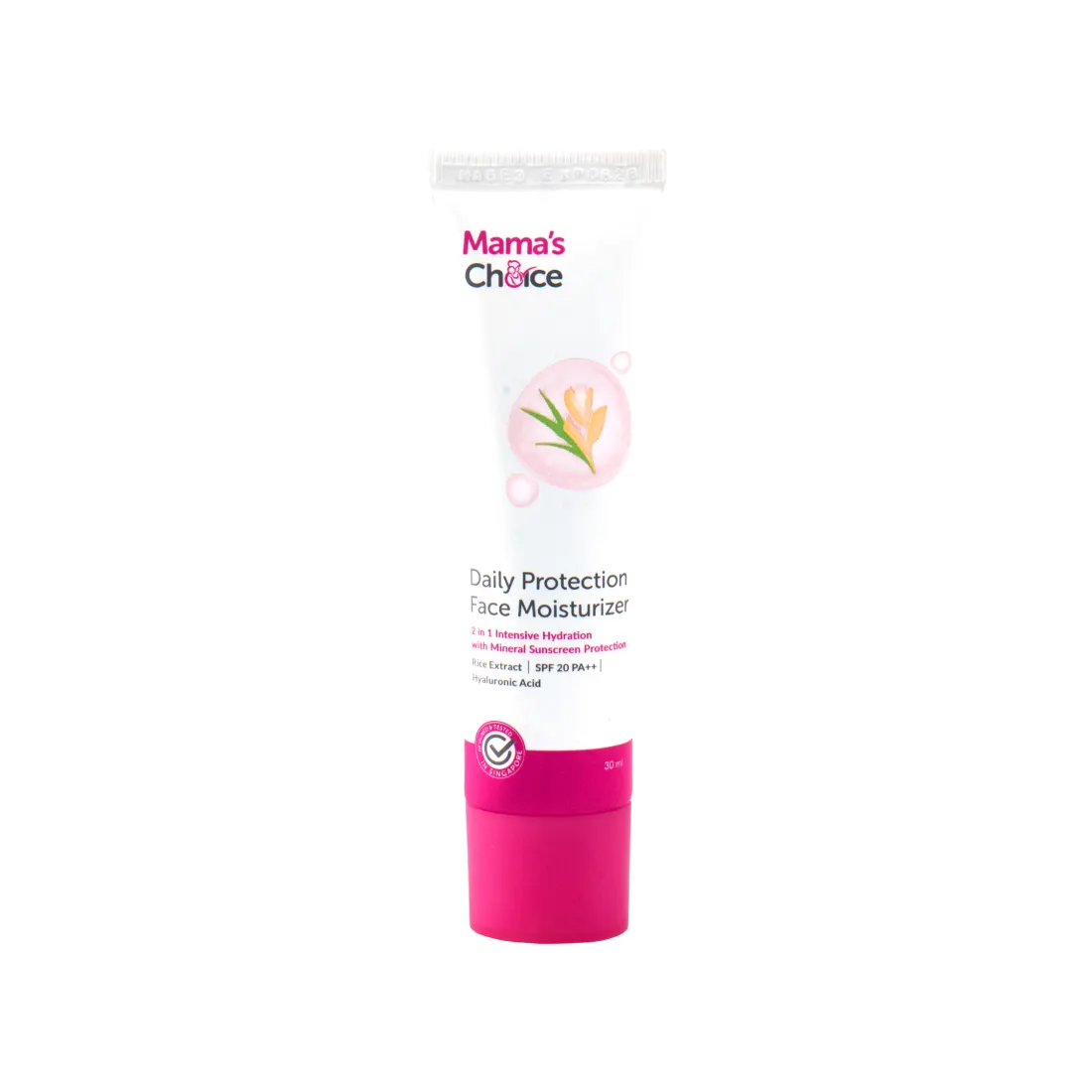
Daily Protection Face Moisturizer SPF 20 PA++ does both steps at once.
Ask a doctor rather than a label if
- Your acne is bad enough that you would want a prescription
- You were on a prescribed treatment before pregnancy and are unsure about continuing
- A rash is spreading, or itching intensely
- Severe itching with no rash, especially on palms and soles. That needs same-day assessment
Stopping a prescribed treatment without asking causes problems of its own. That question belongs with whoever prescribed it, not with an article.
Sources
Share this article
This article is for information only and is not a substitute for diagnosis or medical advice. Please discuss your own situation with your midwife or doctor.