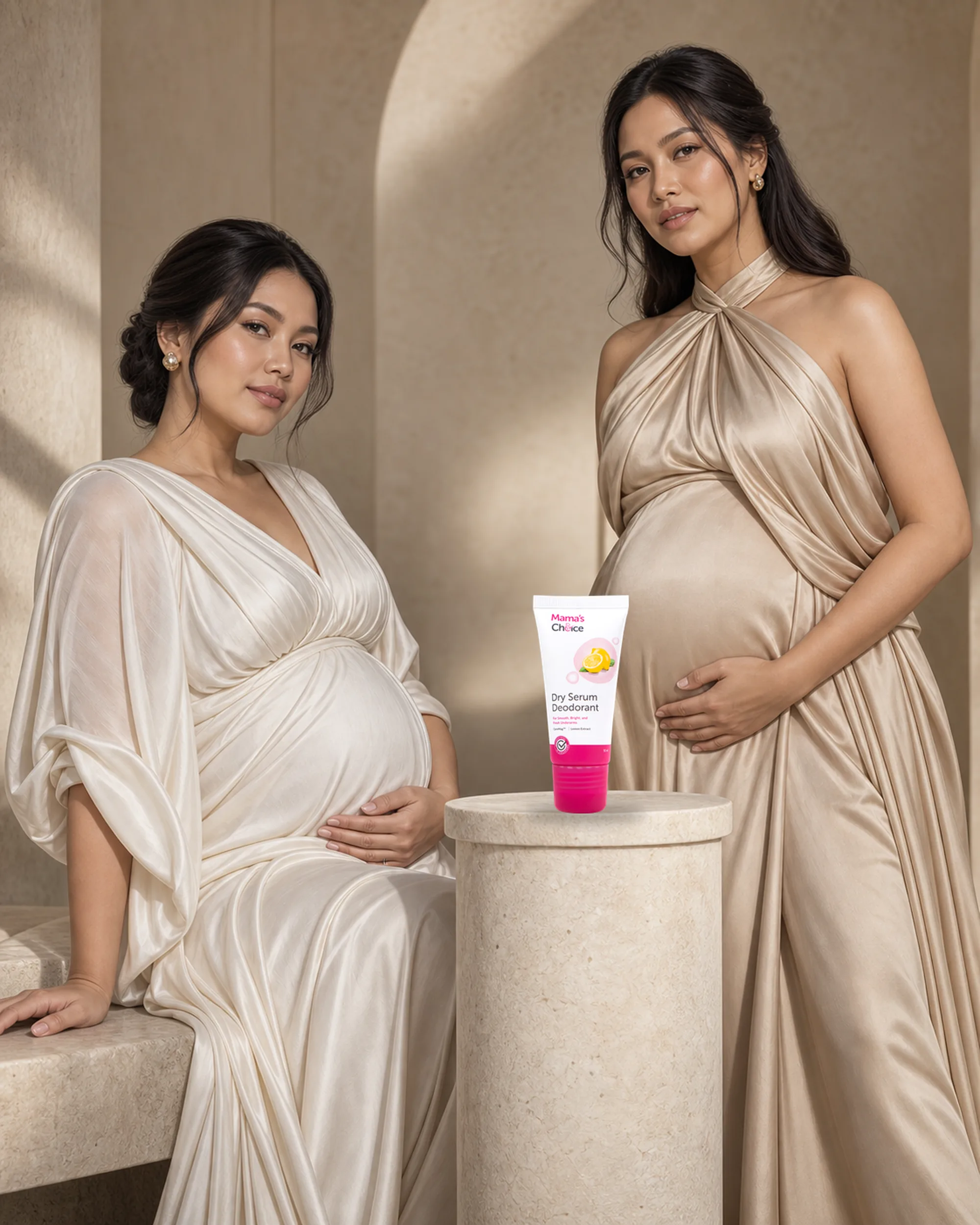
Dry Serum Deodorant in Pregnancy: What It Does
How serum deodorants differ from sticks and sprays, what an aluminium-free formula can and cannot do, and where the aluminium cancer claim stands.
Your sweat glands are working harder and your nose has got sharper, which is a combination that sends most Mamas to read the back of a deodorant somewhere in the second trimester.
What the formats actually do differently
Sticks and solids. Familiar, easy to apply, notorious for white marks on clothes. Some feel waxy.
Sprays. Fast, and the propellant stings on freshly shaved skin. Overspray goes everywhere.
Roll-ons. Wet going on, and they need a moment before you dress.
Serums. Liquid or gel, absorbed quickly, applied with fingers or a roller.
Why a serum
It absorbs fast, which matters when you are dressing in a hurry.
It does not mark clothes.
It feels lighter on skin that has turned sensitive.
None of that is a health claim. They are reasons a product gets used every day instead of abandoned in a drawer, which is the actual difference between a deodorant that works and one that does not.
Deodorant and antiperspirant are different things
Marketing blurs this and it decides what you should expect.
A deodorant handles odour, by targeting the bacteria that break sweat down.
An antiperspirant reduces how much you sweat, which generally needs aluminium salts to temporarily block the ducts.
So an aluminium-free product is a deodorant. It will deal with the smell and it will not make you sweat less. Anything claiming both without aluminium is describing something it does not do.
Where the aluminium worry stands
The claim that aluminium in antiperspirants causes breast cancer has been circulating for years.
Cancer Research UK and other cancer bodies say there is no good evidence linking deodorant or antiperspirant use to breast cancer. The studies behind the claim have not held up.
Plenty of Mamas still prefer to skip it while pregnant. Where evidence is unsettled and alternatives exist, the cautious option costs almost nothing, and that is a perfectly reasonable position.
It is a different sentence from "aluminium causes cancer", and we would rather explain the choice than sell it to you as an escape from a danger.
What is in ours
Mama's Choice Dry Serum Deodorant uses Dead Sea minerals, niacinamide and lemon extract, without aluminium, alcohol or parabens.
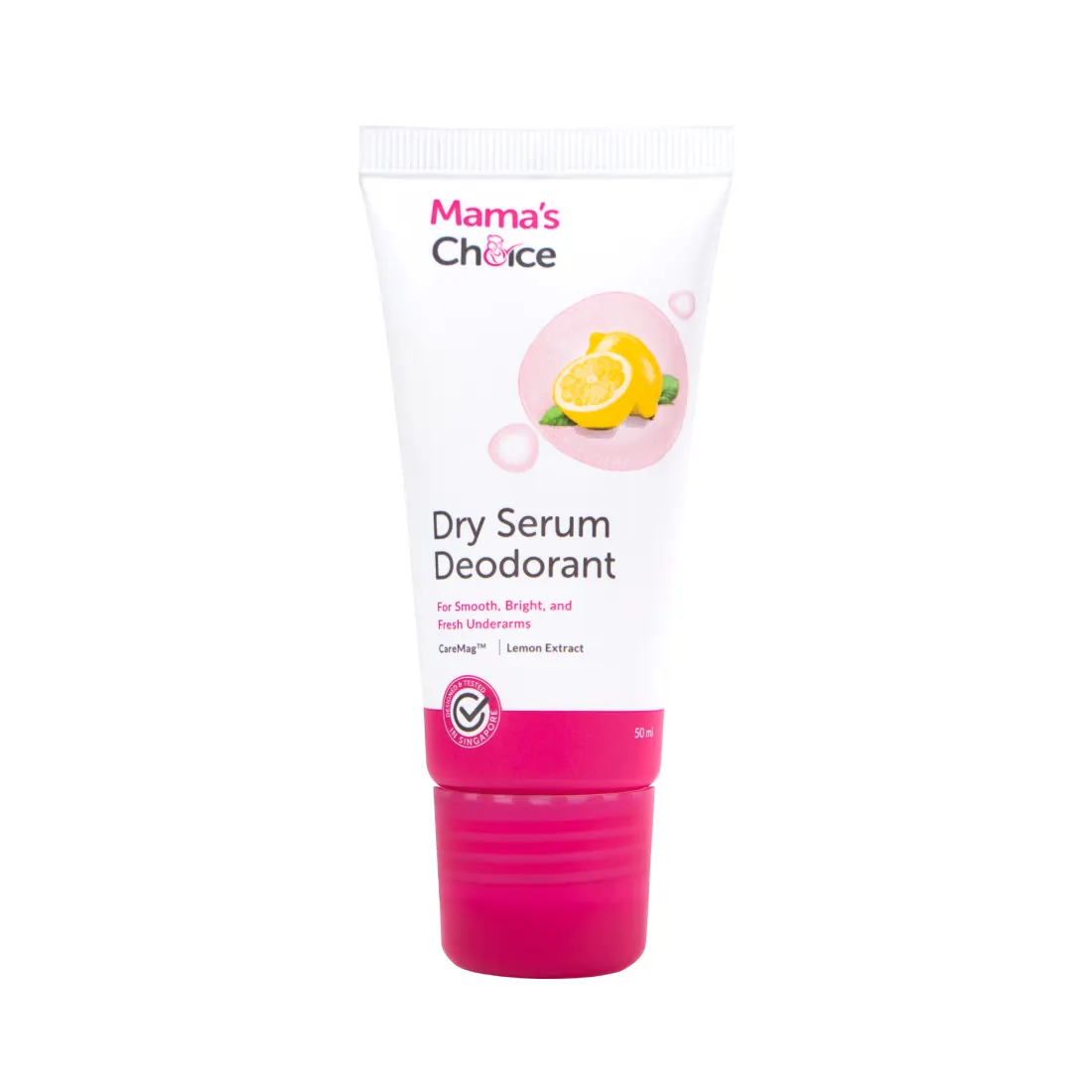
Niacinamide is in there for tone. Underarms often darken in pregnancy, from the same hormonal pigment change that draws the line down your belly.
Full ingredient lists are in our ingredient dictionary.
Using it
- Clean, dry skin
- Not straight after shaving, which is when anything stings most
- Let it dry fully before you dress
- Reapply after exercise or a shower rather than over old product
Red or itchy skin means stop for a few days. Underarm skin is thinner than most, and it reacts more readily now.
What else is affecting the smell
Your clothes. Synthetics hold sweat residue far longer than cotton. Odour returning within hours of a wash usually means the shirt.
Your hair. Thicker underarm hair holds sweat against skin for longer.
Your food. Red meat, seafood and onions are linked to stronger odour in some people.
Not your water intake. Worth being accurate: drinking more does not reduce sweat production, which is triggered by your core temperature rising.
Darker underarms, while we are here
Most Mamas notice this alongside everything else, and assume the deodorant caused it.
It did not. It is the same hormonal pigment change that draws the line down your belly and darkens your nipples, and it fades gradually after the birth.
What genuinely does make it worse is harsh hair removal. A blunt razor, plucking, or waxing skin that is already irritated will all set it back further than any product will move it forward.
Niacinamide helps with tone over months rather than weeks. Nothing fixes it in a fortnight, and anything promising to is selling you a fortnight of disappointment.
What to expect from any of this
A deodorant is a daily comfort, not a cure for a body doing what pregnancy makes bodies do.
You will still sweat more than you used to, because you are carrying more, running warmer, and moving more blood around. That does not stop until after the birth.
What you can change is how long sweat sits on your skin and how many bacteria are working on it. That is the whole mechanism, and it is why washing, drying properly and changing your shirt do at least as much as anything you buy.
When to mention it to a doctor
- Sweating heavy enough to disrupt your day
- Underarm skin that stays red, sore or rashy
- A sudden change in odour with other symptoms
- Fever, fatigue, or unexplained weight loss
After the birth, hormones settle and sweating usually goes back to what it was.
Sources
Share this article
This article is for information only and is not a substitute for diagnosis or medical advice. Please discuss your own situation with your midwife or doctor.