Choosing a Milk Booster: What to Look For
What galactagogues can and cannot do, how to read the survey numbers on the packaging, and what raises supply more reliably than any product.

You are three weeks in, your breasts feel soft, and someone has sent you a link to a tin that promises abundance.
Before you buy it, two things: what these products can realistically do, and how to read the numbers on the front.
How supply actually works
Milk runs on demand. Milk taken out signals your body to make more. Milk left in signals it to make less.
Which means the most effective thing you can do about supply has nothing to do with what you swallow. Feeding or expressing more often, and checking your baby is actually transferring milk rather than just attached, does more than any tin on the market.
A booster supports that. It does not stand in for it.
What is actually in them
Fenugreek is the most studied of the traditional boosters, which is not the same as being well studied. Small trials, varying methods, mixed results. Some Mamas notice a difference in days. Some notice nothing. It can upset your stomach and make your sweat smell of maple syrup, and skip it if you have a peanut or chickpea allergy, because it is in the same family.
Katuk leaf (Sauropus androgynus) is used across Indonesia. The "50.7% increase" you will see quoted comes from one small study and deserves the caution any single small study deserves. Very high intakes of raw katuk have been linked to lung problems, so cooked, in normal amounts.
Almond brings protein, vitamin E and calories. Nutritional, not hormonal.
Dates are traditionally linked to oxytocin and let-down. The evidence is thin. The sugar and iron are real.
DHA does nothing for volume. It changes what is in your milk, which is a different claim and a fair one.
How to read the percentages
Figures like "94% of Mamas felt..." come from internal customer satisfaction surveys: how many respondents felt a change.
That is not a clinical measurement. "72% felt their stretch marks looked fainter" is a different sentence from "stretch marks reduced by 72%", and reported comfort is not evidence of a medical effect.
The numbers are a fair picture of user experience. An efficacy claim needs a stated method, a sample size, a comparison group and a defined measurement point.
Ours
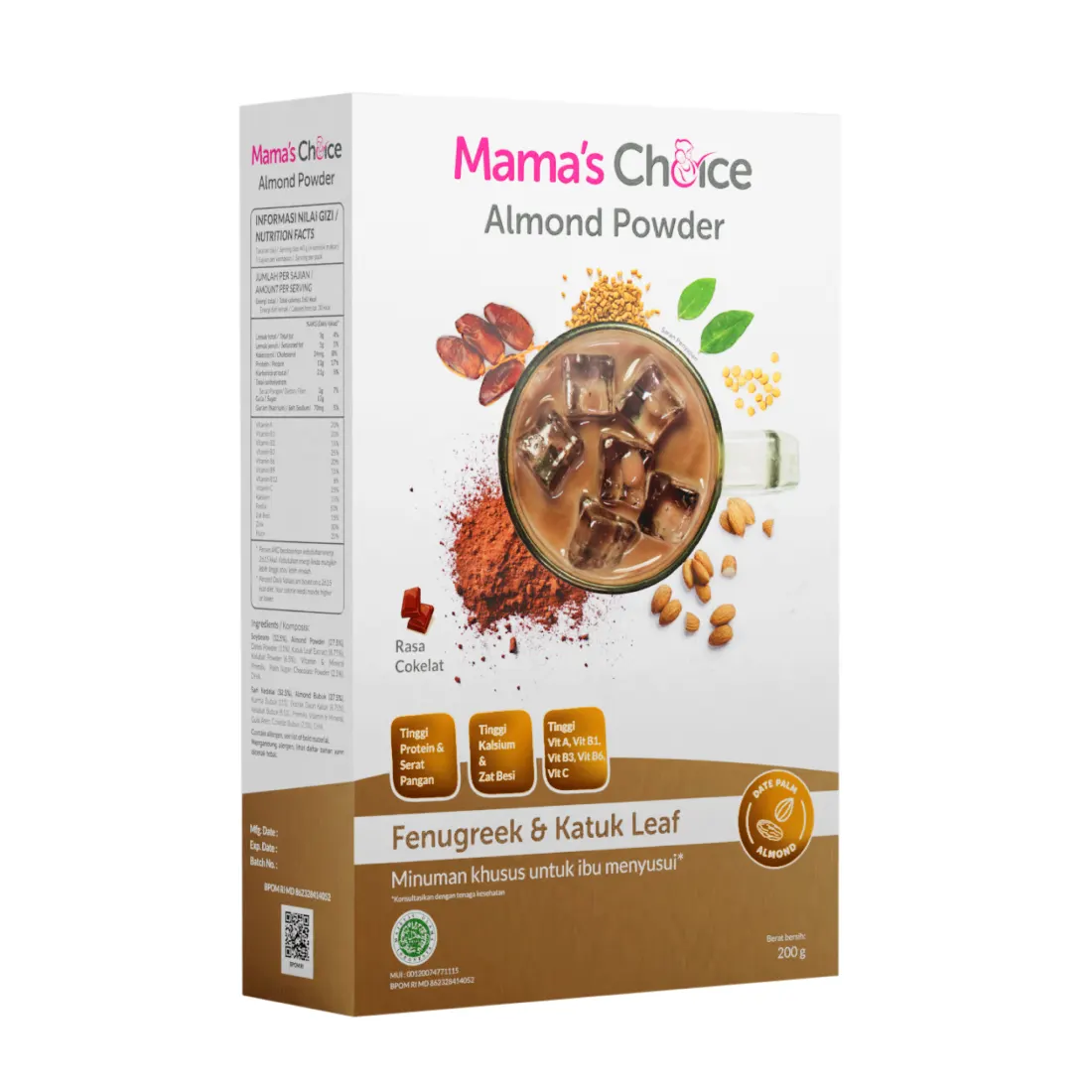
Almond Milk Powder is a chocolate drink with DHA, fenugreek, katuk leaf, almond and dates. Use 3 to 4 tablespoons in 150ml of warm water, stirred smooth. Warm or chilled.
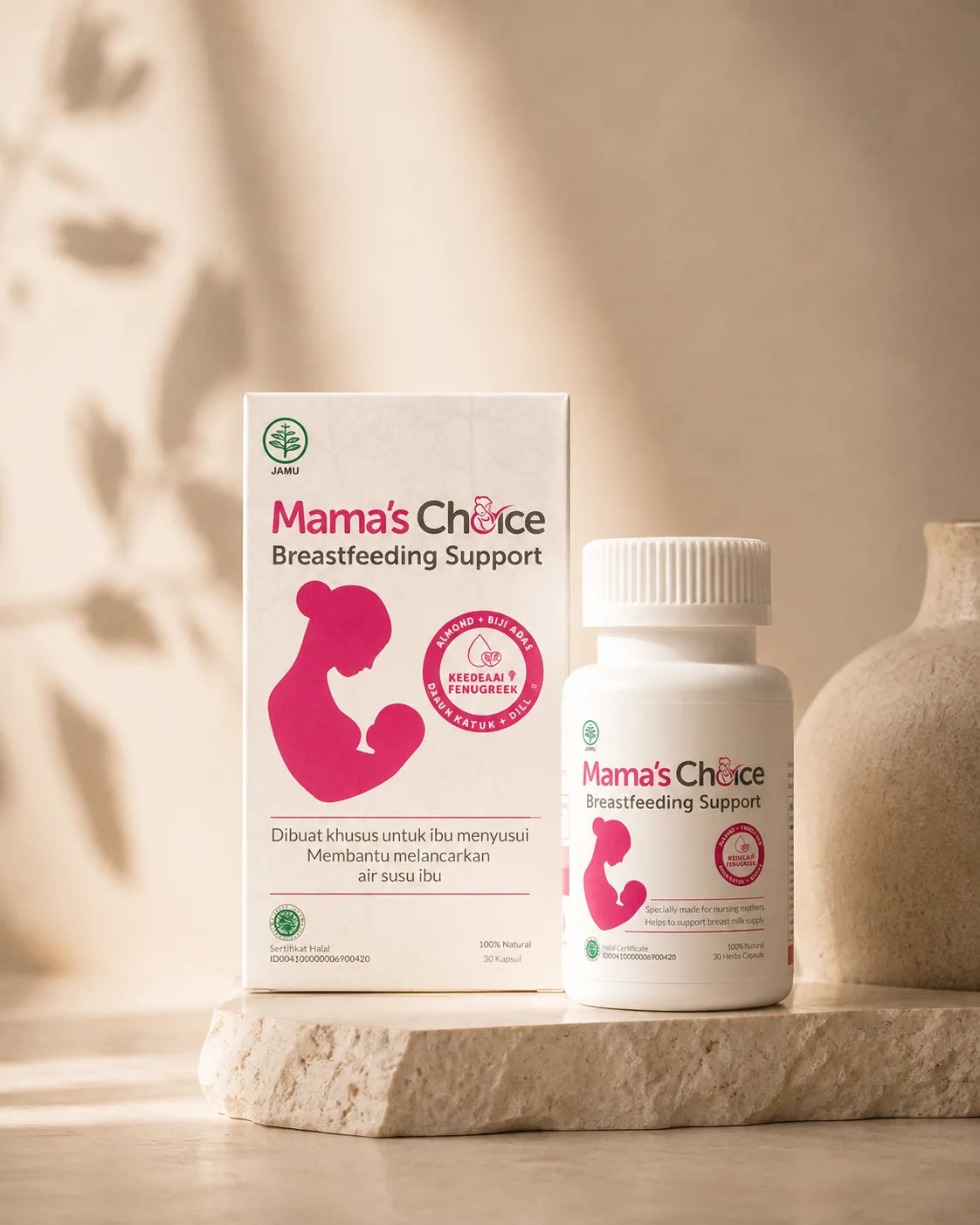
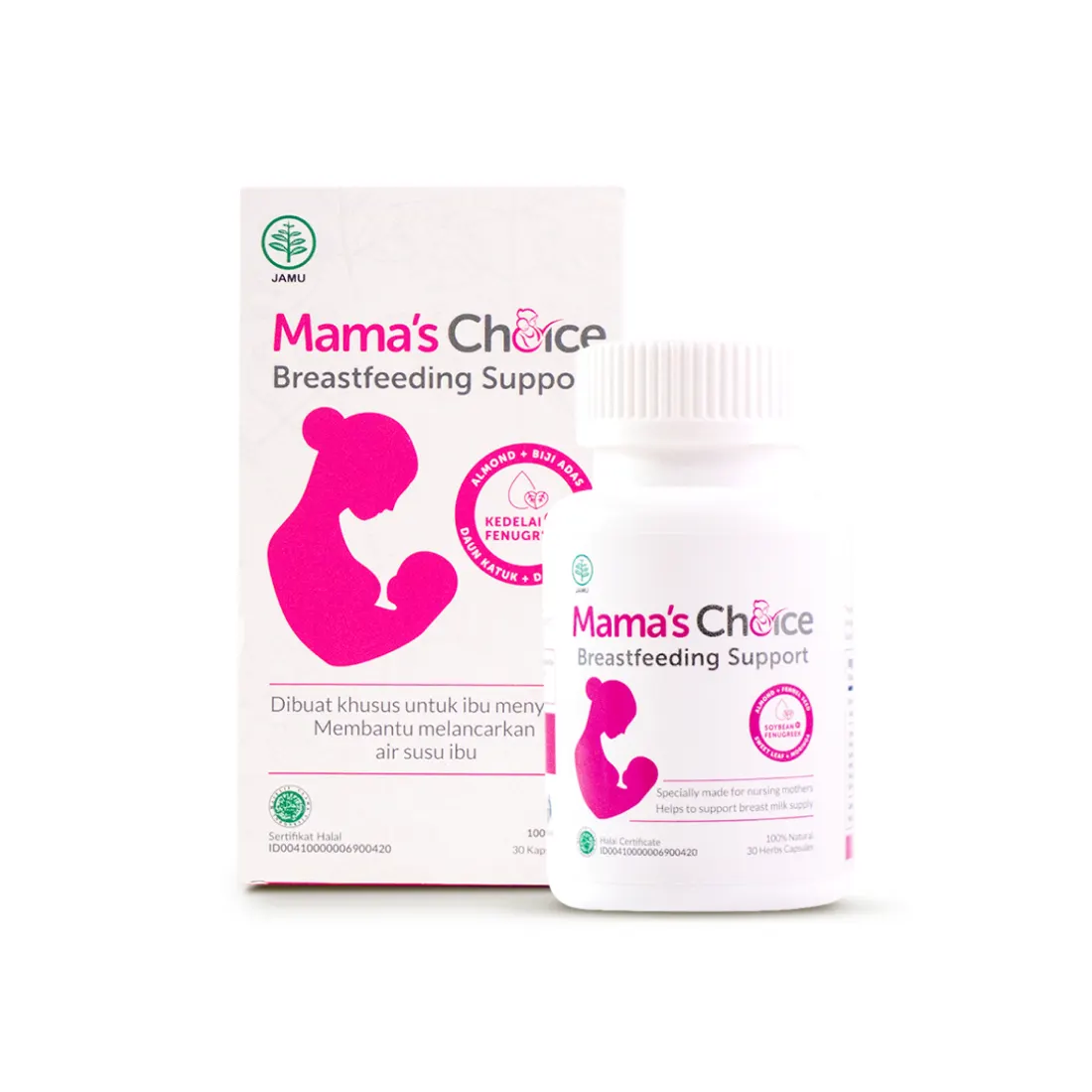
Breastfeeding Support is the same idea as a capsule, with almond, fenugreek, katuk leaf and soy, if you would rather not drink something.
Both BPOM registered and halal certified. Neither will fix a latch.
Check these first
How often she feeds. Newborns feed 8 to 12 times in 24 hours. Fewer than that and supply drops whatever you drink.
Her nappies. Six or more heavy wet ones a day, and steady weight gain, means she is getting enough even if your breasts feel empty.
Her latch. Shallow means milk is not coming out properly, and nothing you swallow compensates.
The obvious. Eating enough, drinking enough, sleeping when you can. Dieting while breastfeeding lowers supply.
The timing. Supply dips during growth spurts and comes back within days. A lot of Mamas buy a booster at exactly the moment their supply was about to recover anyway, which is also why so many boosters appear to work.
Get help instead of a tin if
- She has not regained her birth weight by 2 weeks
- Fewer than 6 wet nappies a day after the first week
- Feeding hurts, or your nipples are cracked
- Supply dropped suddenly with no obvious cause
- Every feed takes over an hour and she is still unsettled afterwards
A lactation consultant or midwife sorts most of these out. A tin will not.
If you do take something
Give it two weeks. Take it consistently rather than when you remember. Change one thing at a time, or you will never know what worked.
And tell your doctor what you are on, particularly if you take thyroid medication, diabetes medication or blood thinners. Fenugreek interacts with all three.
Sources
Share this article
This article is for information only and is not a substitute for diagnosis or medical advice. Please discuss your own situation with your midwife or doctor.