Choosing a Baby Rash Cream, and What It Can Treat
Nappy rash has several different causes, and a barrier cream only helps with some of them. What is in the Mama's Choice cream, and when a rash needs a doctor.
The rash appeared overnight and you want something to put on it. Before you buy, one thing is worth thirty seconds.
Nappy rash is not one thing
The American Academy of Pediatrics lists several different causes.
The two most common are contact irritation, where skin has sat too long against a wet nappy, and Candida, which is a fungal infection.
They look nearly identical to a parent at 6am. They are not treated the same way at all. A Candida rash will not clear with a barrier cream, and usually needs an antifungal from a doctor.
So a rash cream helps you care for the skin. It does not tell you what you are looking at. Mama's Choice Baby Rash Cream can be used for nappy rash and mild irritation. If it worsens, spreads, or comes with broken skin, blisters, pus or a fever, or is no better after a few days, see a doctor.
What matters more than which tube you buy
Most of the work is in the routine.
- Change the nappy as soon as it is wet
- Clean with water and pat dry, do not rub
- Leave the area open to the air for a few minutes before the fresh nappy goes on
- Check the size, because a tight nappy adds friction
Get those right and the cream has far less to do.
What is in ours
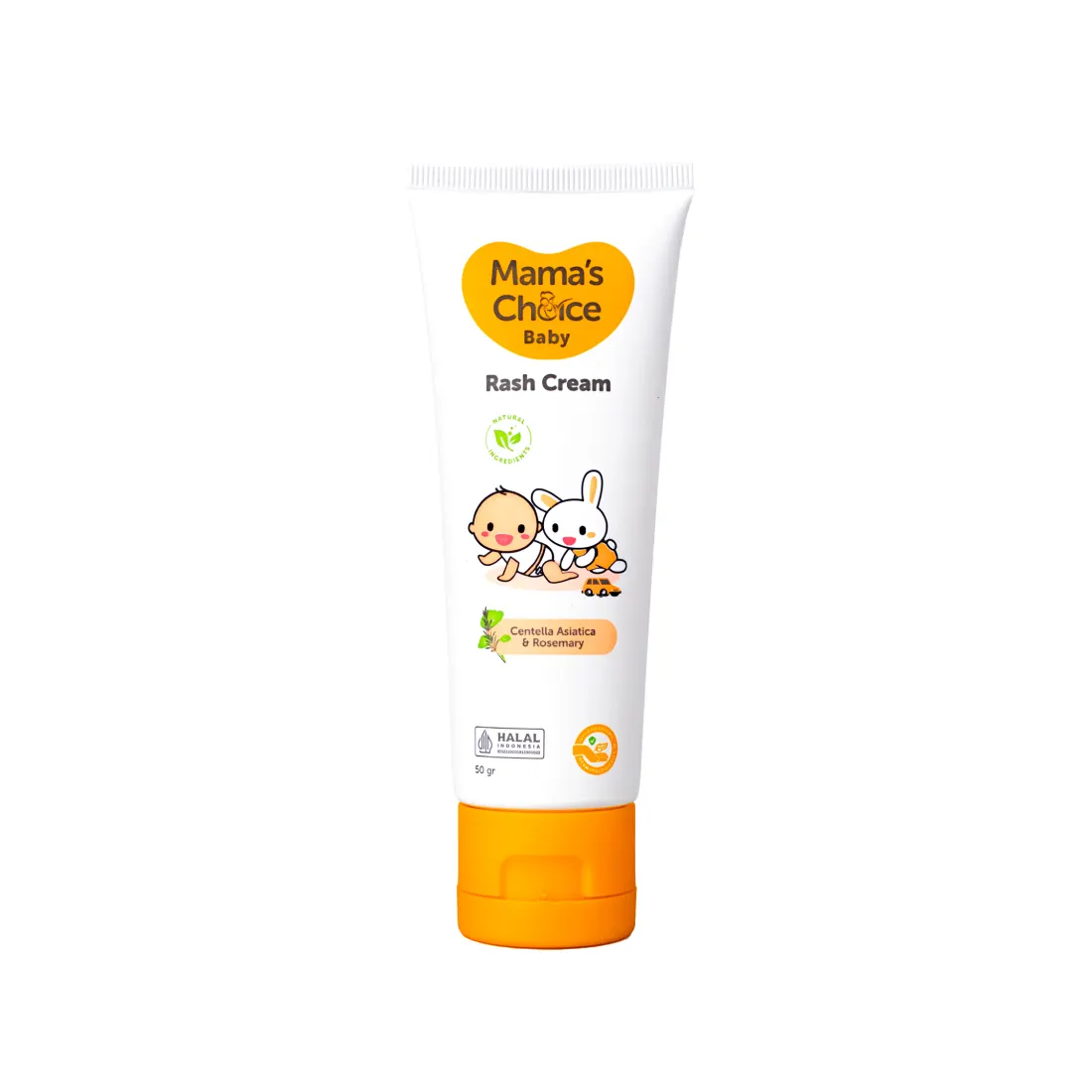
A protective layer, plus eight herbal ingredients.
The mechanism is straightforward, and it explains why an irritant rash settles faster. The cream forms a barrier so the sore area stops rubbing against the nappy and stops sitting in moisture, which are the two things keeping it going.
Underneath that, eight herbal ingredients calm the inflammation: sweet almond, centella asiatica, Japanese knotweed, skullcap, green tea, licorice, chamomile and rosemary.
The claim that it "helps ease a rash within 3 applications" comes from the Mama's Choice Efficacy Test 2021 (n=30), a use test on the finished product where participants reported improvement, not clearing, and which was not a controlled clinical trial.
From a 2022 consumer satisfaction survey (n=103), 98% of Mamas said it helped reduce the look of a rash, and 96% felt their baby's skin showed no irritation during use. Reported impressions, not measurements.
A texture that actually absorbs.
"Easy to spread, not too sticky. Rash creams like this are usually sticky and hard to spread."
Home panel test feedback
Sounds like a small thing. It is not, when you are waiting for a cream to sink in with a wriggling baby on a changing mat.
No parabens, phthalates, alcohol or mineral oil. Sore skin does not need more things to react to. Dermatologically tested and hypoallergenic.
BPOM NA 18200105121, halal certified by MUI 00150093250119.
Using it
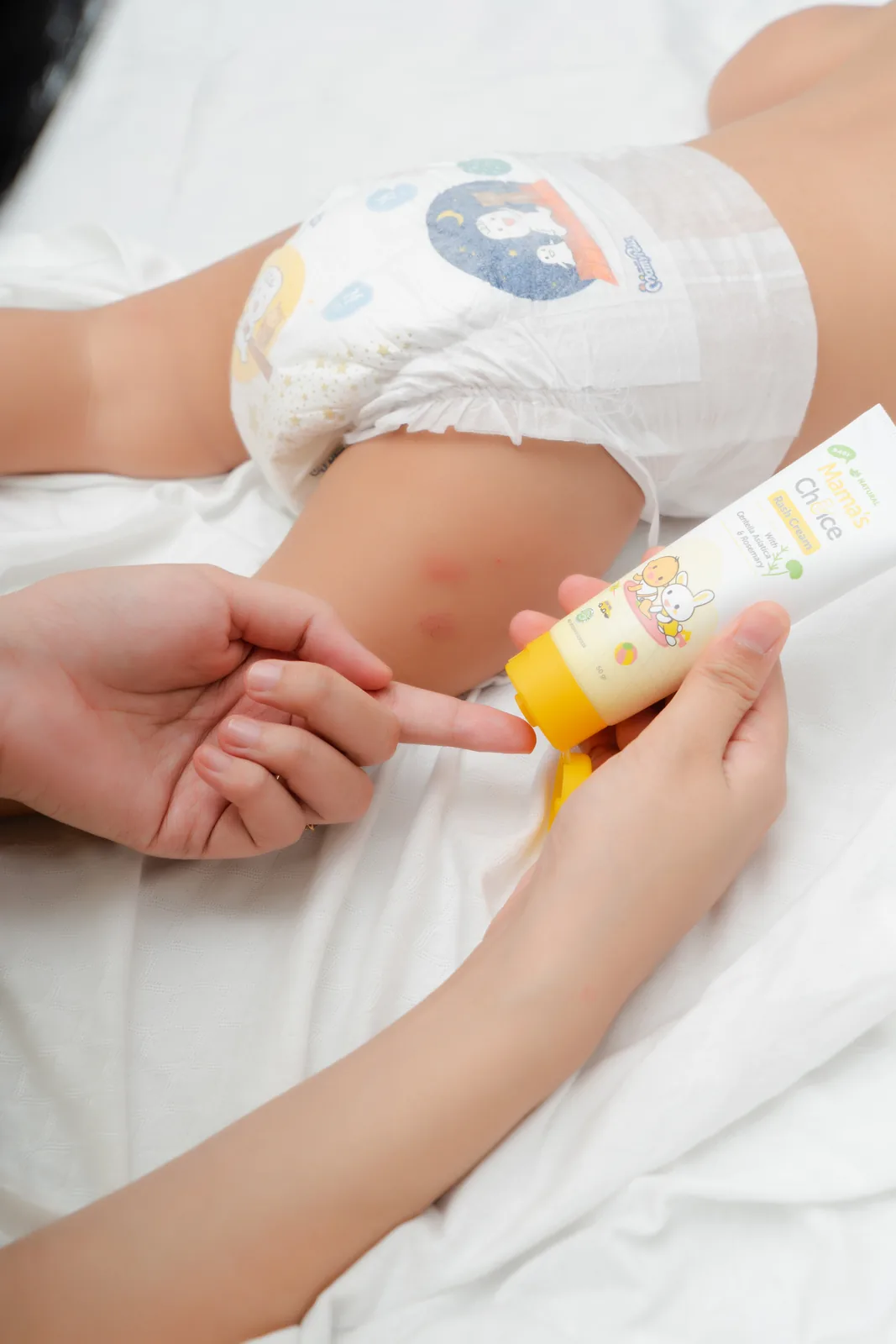
On a rash: clean the skin, dry it, apply, and let it absorb before the nappy goes back on. Repeat at every change.
To prevent one: after bathing, on the places that tend to go: nappy area, neck folds, underarms.
Newborn through childhood, anywhere on the body.
Why it keeps coming back
Usually practical rather than medical.
Wipes with alcohol or fragrance, on skin that is already sore.
Not drying properly, so you seal the moisture in under the cream.
Not changing often enough, particularly overnight.
Diarrhoea, which is the fastest route to a rash and needs more changes rather than more cream.
Detergent left in cloth nappies, which usually means rinsing twice.
When a barrier cream is the wrong tool
- Fungal (Candida): bright red, clearly edged, small spots scattered around it. Needs an antifungal
- Bacterial: oozing pus, yellow crusting, skin hot to touch
- Eczema: dry and flaking, and usually somewhere else on her body too
- Heat rash: tiny red spots wherever she is covered and sweaty
If it is no better in a few days, spreads past the nappy area, blisters or oozes, go to a doctor rather than adding another layer.
Sources
- American Academy of Pediatrics — Diaper rash (Pediatric Care Online)
- Mama's Choice Efficacy Test 2021, n=30
- Mama's Choice — consumer satisfaction survey 2022, n=103
Share this article
This article is for information only and is not a substitute for diagnosis or medical advice. Please discuss your own situation with your midwife or doctor.