Centella Asiatica for Skin: What It Does
Centella asiatica appears in scar care, acne products and baby creams. What the research supports, what it is used for, and where the limits are.
It is on the front of half the pots in the shop, usually shortened to cica, and rarely explained.
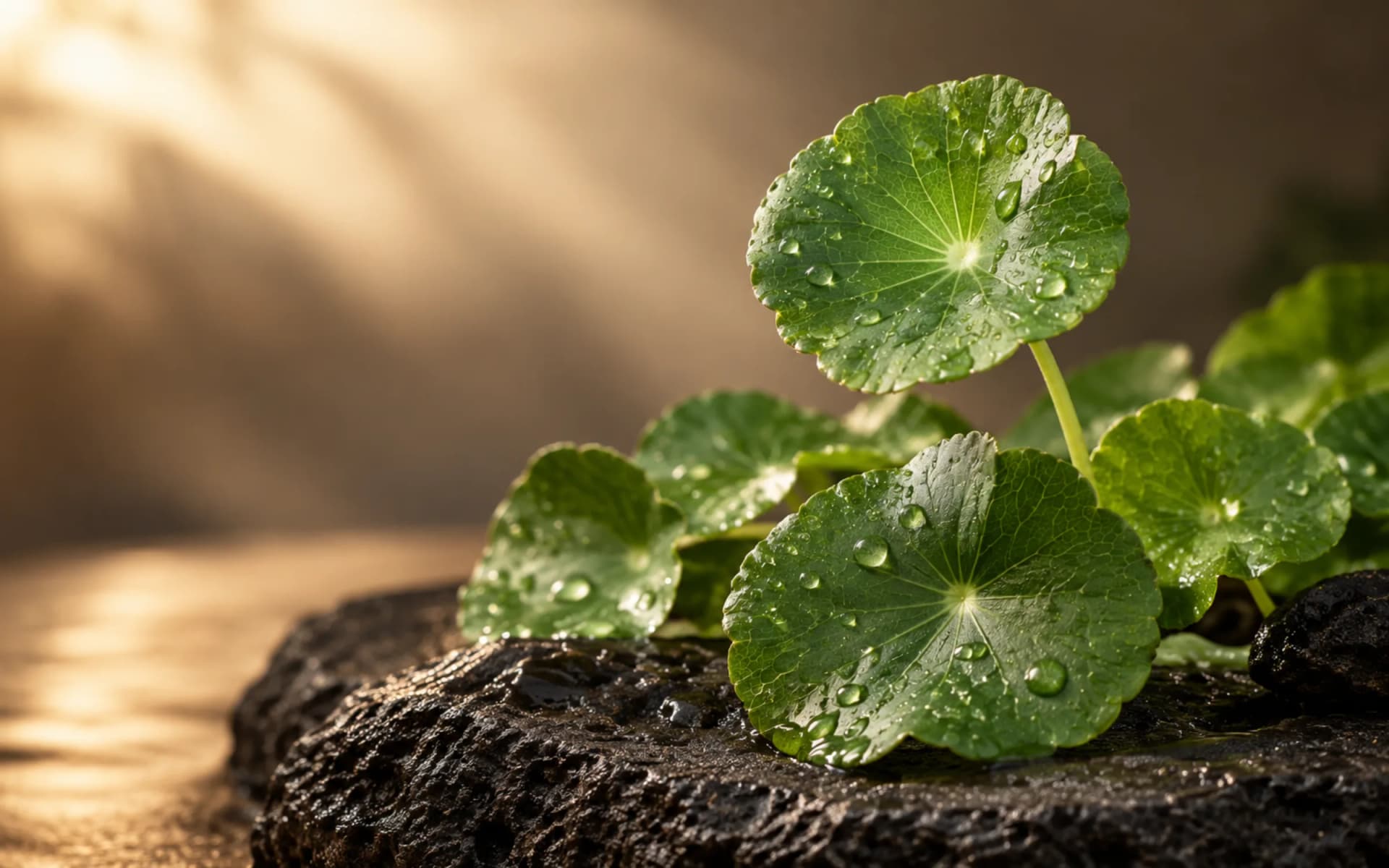
Centella asiatica is a low-growing plant used in traditional medicine across Asia for centuries. The reputation is largely deserved, which makes it worth being precise about what it actually does.
What is in it
The activity comes from a group of compounds: asiaticoside, madecassoside, asiatic acid and madecassic acid.
Between them they have been studied for effects on collagen synthesis, on inflammation and on wound repair. That range is why the same plant turns up in scar creams, in acne products and in formulas for skin that reacts to everything.
What it is good for
Holding water in. Centella supports the skin barrier, and a working barrier is what stops water escaping. Less water lost, less dryness.
Oxidative stress. The compounds have antioxidant activity, which matters for skin dealing with pollution and UV. A supporting role, not a substitute for sunscreen.
Wound repair. The most studied of its uses. The research points to effects on collagen production and on the early stages of healing, which is why it shows up in scar creams and in what dermatologists hand you after a procedure.
Calming a breakout. The anti-inflammatory effect takes the anger out of the redness around a spot. It does not treat what causes acne, and making irritated skin less irritated is usually what you actually want alongside a treatment.
Settling reactive skin generally. The broadest use, and why it appears in products for eczema-prone skin.
Where it stops
It is not a treatment for a medical condition. Moderate or severe eczema, infected skin and persistent acne need prescribed treatment. Centella does not replace any of that.
It does not remove scars. It supports repair. Scar tissue already formed stays formed.
"Cica" on the front tells you nothing about how much is in there. Products vary enormously. Where it sits in the ingredient list tells you more than the packaging does.
On baby skin
Centella calms and supports the barrier at the same time, which suits skin that is thinner than yours and loses water faster.
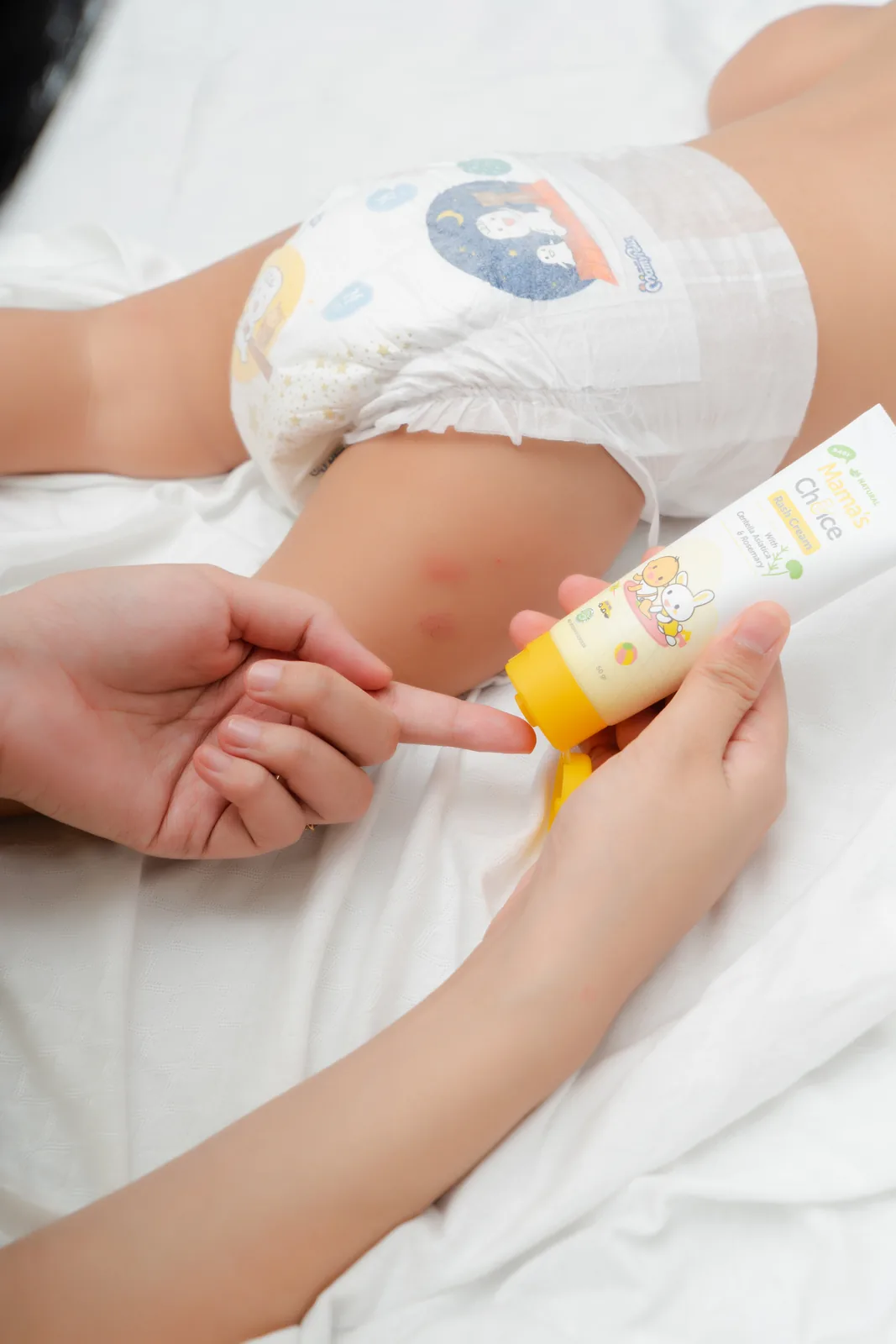
Mama's Choice Baby Rash Cream uses centella asiatica with seven other natural ingredients, including chamomile, licorice, green tea and sweet almond.
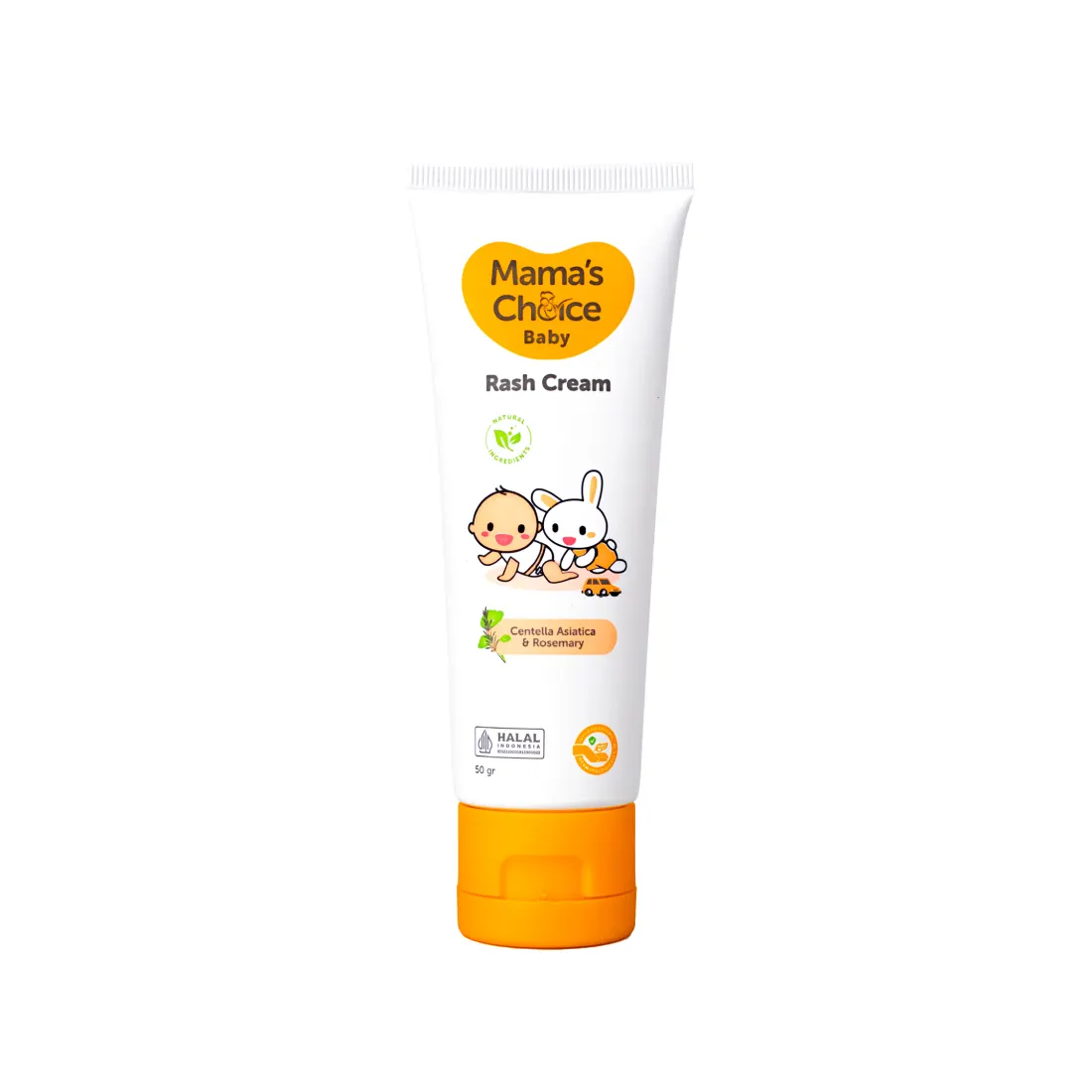
Worth restating how it works on nappy rash specifically: the cream forms a protective layer that keeps irritants off the skin, while the botanicals settle the inflammation underneath. Two different jobs in one pot.
In pregnancy
Centella is generally considered fine during pregnancy, which is not true of many actives used for similar purposes.
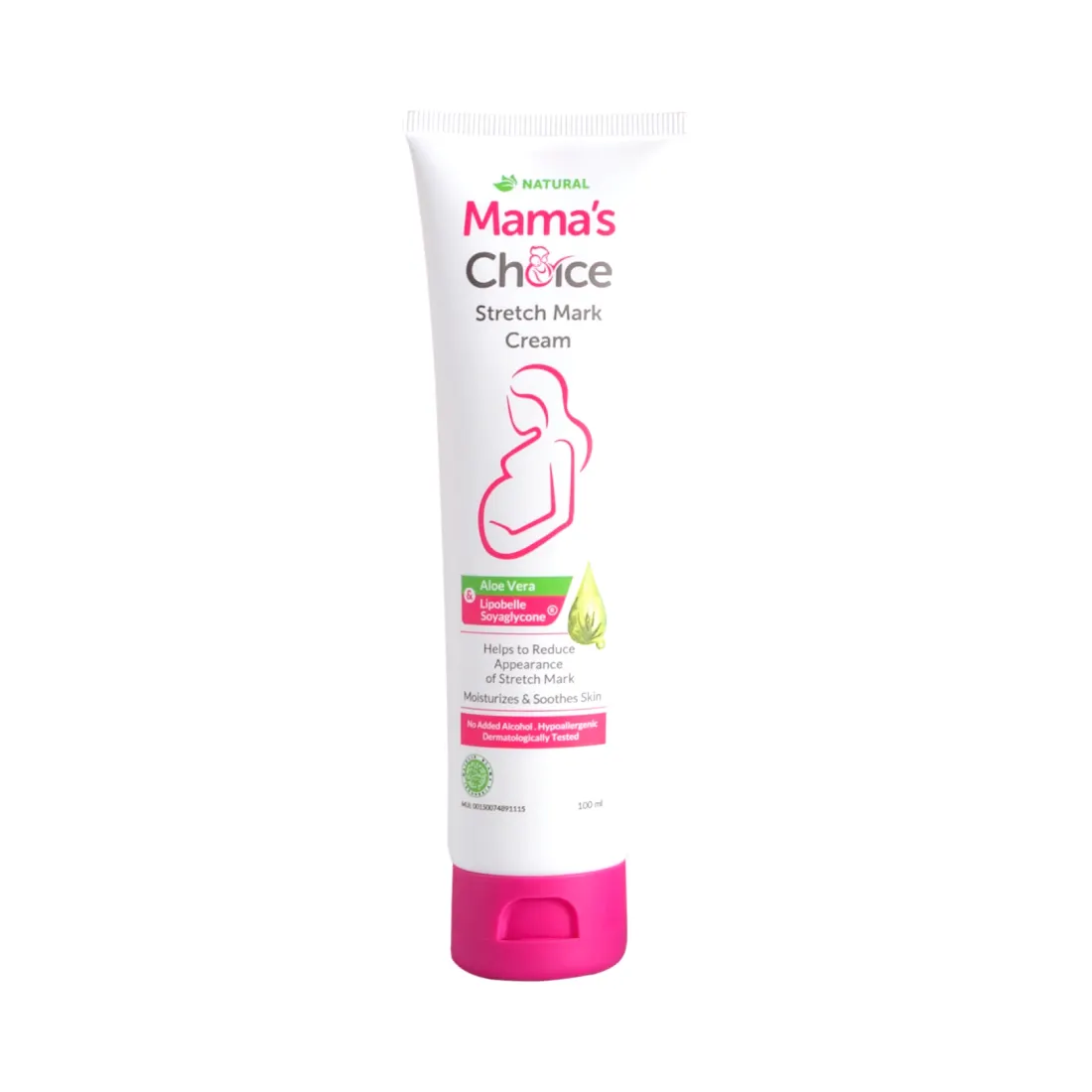
That makes it genuinely useful in a stretch when retinoids and high-dose acids are off the table, and it is one reason it turns up in stretch mark products alongside soy isoflavones and shea butter.
Mama's Choice Stretch Mark Cream is formulated for use right through pregnancy and breastfeeding.
Using it without trouble
- Patch test on your inner arm for two days, as with anything new
- Introduce one product at a time, so you know what did what
- Stop if redness or itching appears. Any botanical does this to a small number of people
- Do not expect it to stand in for something a doctor prescribed
Full ingredient lists for every product, and what each one is doing there, are in our ingredient dictionary.
When a rash needs a doctor instead
- No better within a few days, or spreading
- Blisters, open sores or pus
- A fever with it, especially in a baby under three months
- Skin around it swollen and hot
A calming botanical is a good thing to have in a formula. It is not what a fungal or bacterial infection responds to, and a few days spent finding that out is a few days lost.
Sources
Share this article
This article is for information only and is not a substitute for diagnosis or medical advice. Please discuss your own situation with your midwife or doctor.