Dry Frizzy Hair: What Helps in a Humid Climate
Why hair frizzes in a humid climate, the washing and conditioning habits that genuinely help, and which pieces of the usual advice to ignore.
You leave the house with smooth hair and arrive somewhere with a halo.
Frizz is dry hair meeting humid air. The hair takes up moisture unevenly, the cuticle lifts, and every strand strikes out on its own. In this climate that is most of the year, so the dryness is the part to work on.
Why it went dry
Heat. Dryers, straighteners and hot water all lift and damage the cuticle.
Washing too often. Shampoo removes oil. That is its job. Daily removes more than your scalp replaces.
Harsh surfactants. High concentrations of SLS strip hair that had nothing spare.
Sun and chlorine. Both wear down the hair shaft over time.
Rough handling. Brushing it wet, rubbing it with a towel, tight styles. All cause breakage that shows up as frizz along the lengths.
Pregnancy. Texture changes for a lot of Mamas, and sometimes it does not change back.
What helps
Cut the ends
Split ends travel upwards. No product repairs a split, and cutting it off is the only thing that does. Hair looks smoother the same afternoon.
Wash less
Every second or third day suits most dry hair. Scalp oil is what conditions your lengths naturally, and washing it away daily leaves you nothing to work with.
Use conditioner properly
On the lengths and ends, never the scalp. Leave it a minute or two instead of rinsing straight off.
This is the step that does the most for frizz, and the one everybody rushes.
Rinse cooler
Hot water lifts the cuticle. A cool rinse at the end lays it flat, which is what looks smooth.
Turn the heat down
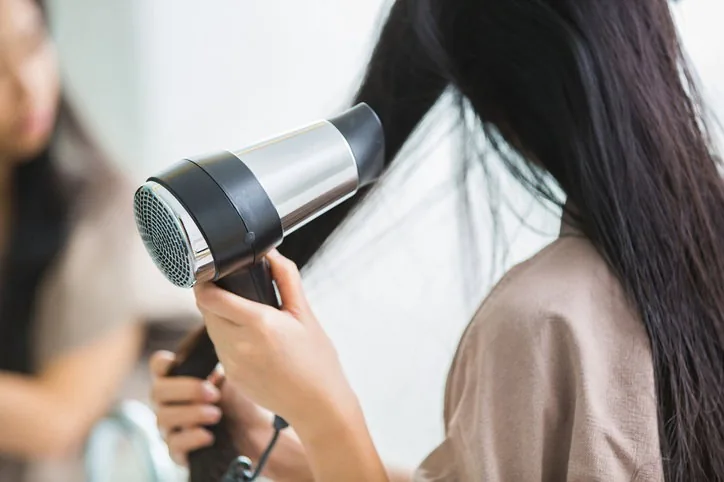
Lower setting on the dryer, keep it moving. Air drying is better where the day allows, which after a baby arrives it usually does by default.
A leave-in serum
A small amount on damp lengths coats the cuticle and slows how much humidity the hair takes up. Too much weighs it down and looks greasy.
A mask once a week
A deep conditioner gives dry hair more in ten minutes than a rinse-out can in two.
Ignore these
A hundred brush strokes a night. Causes breakage, not shine.
Terry towels. Squeeze it in a soft cloth or an old t-shirt.
Anything promising to repair damage. Products coat and smooth. They do not rebuild a damaged shaft. Coating is genuinely useful and it is a smaller claim.
Frequent protein treatments. Overdone, they leave hair stiff and quicker to snap.
What to use
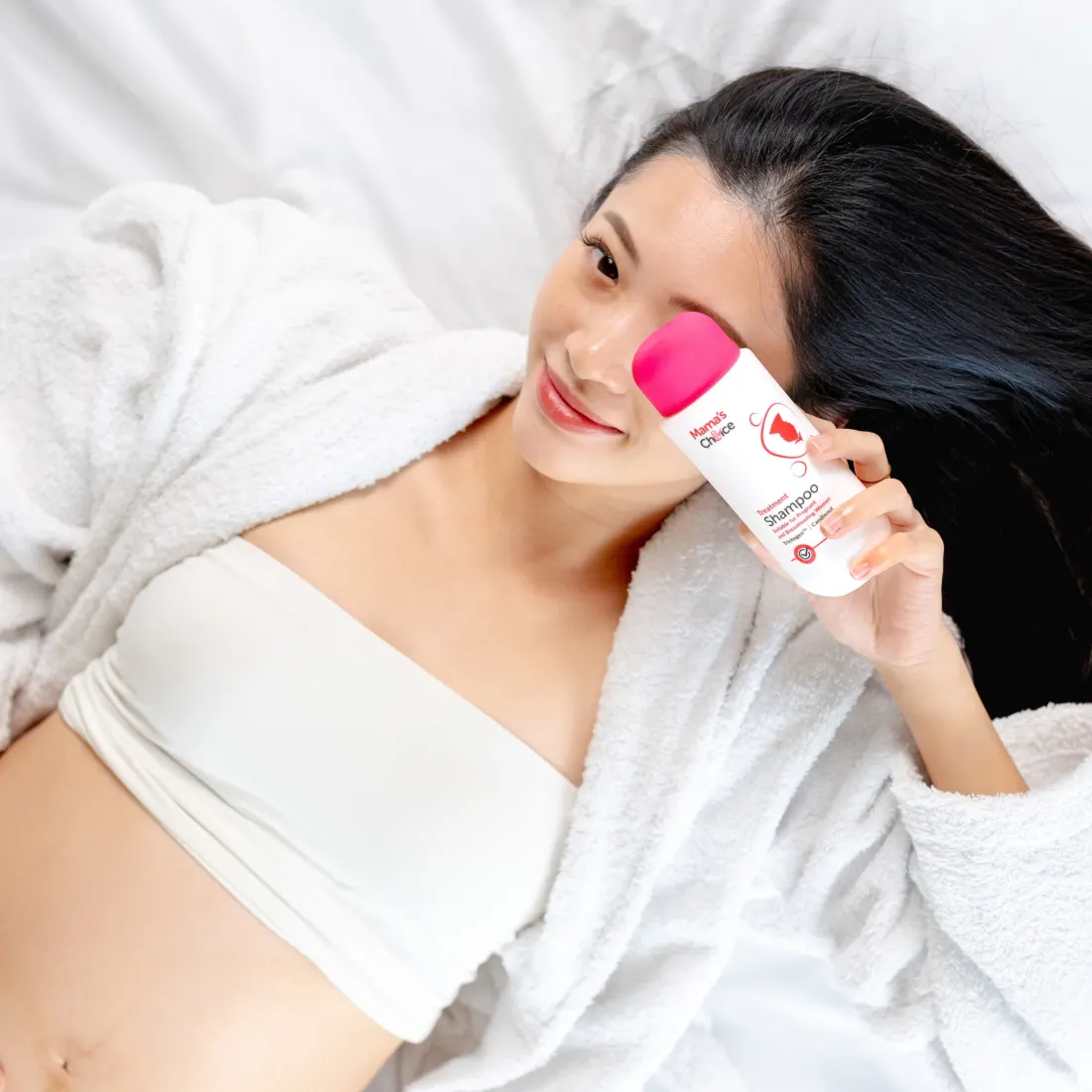
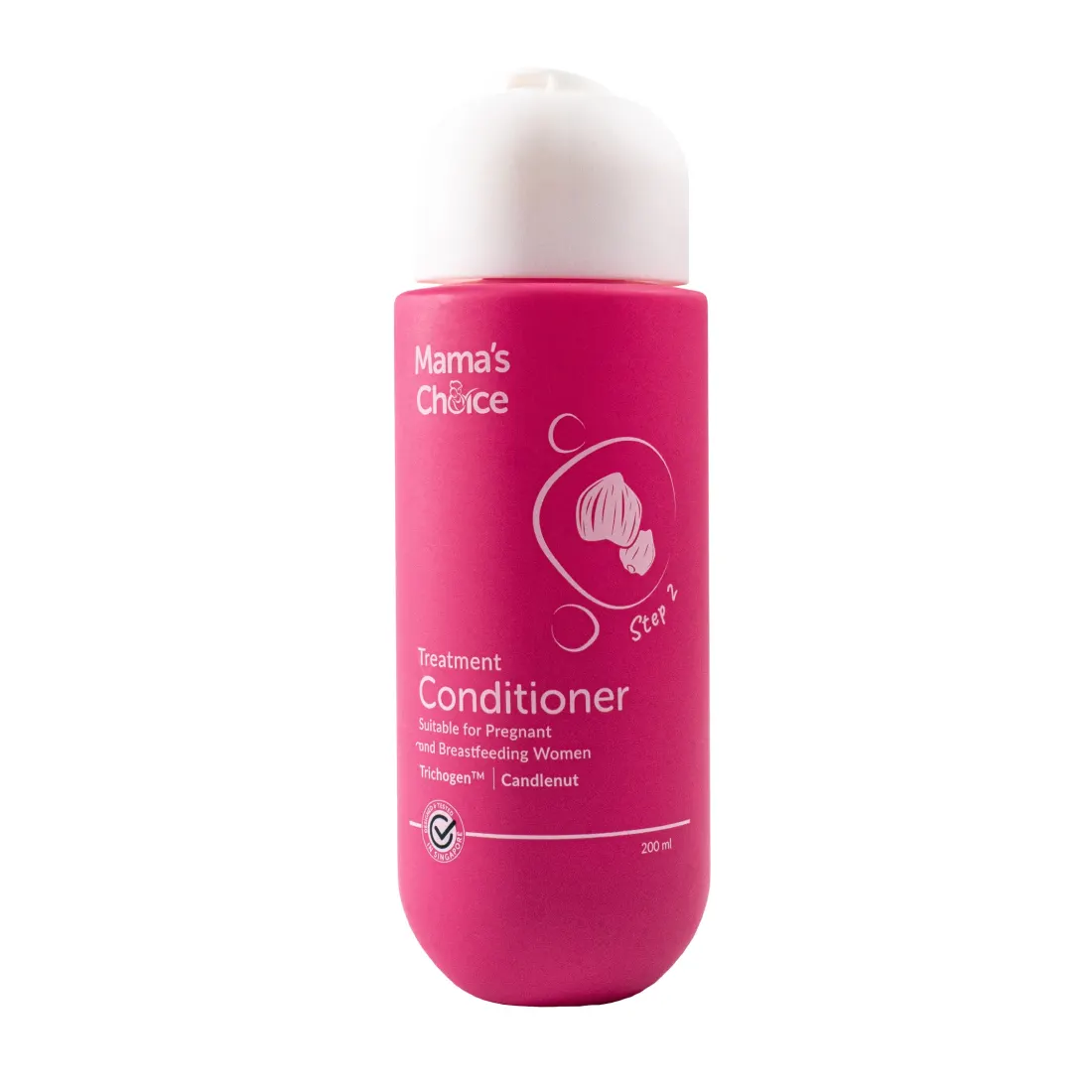
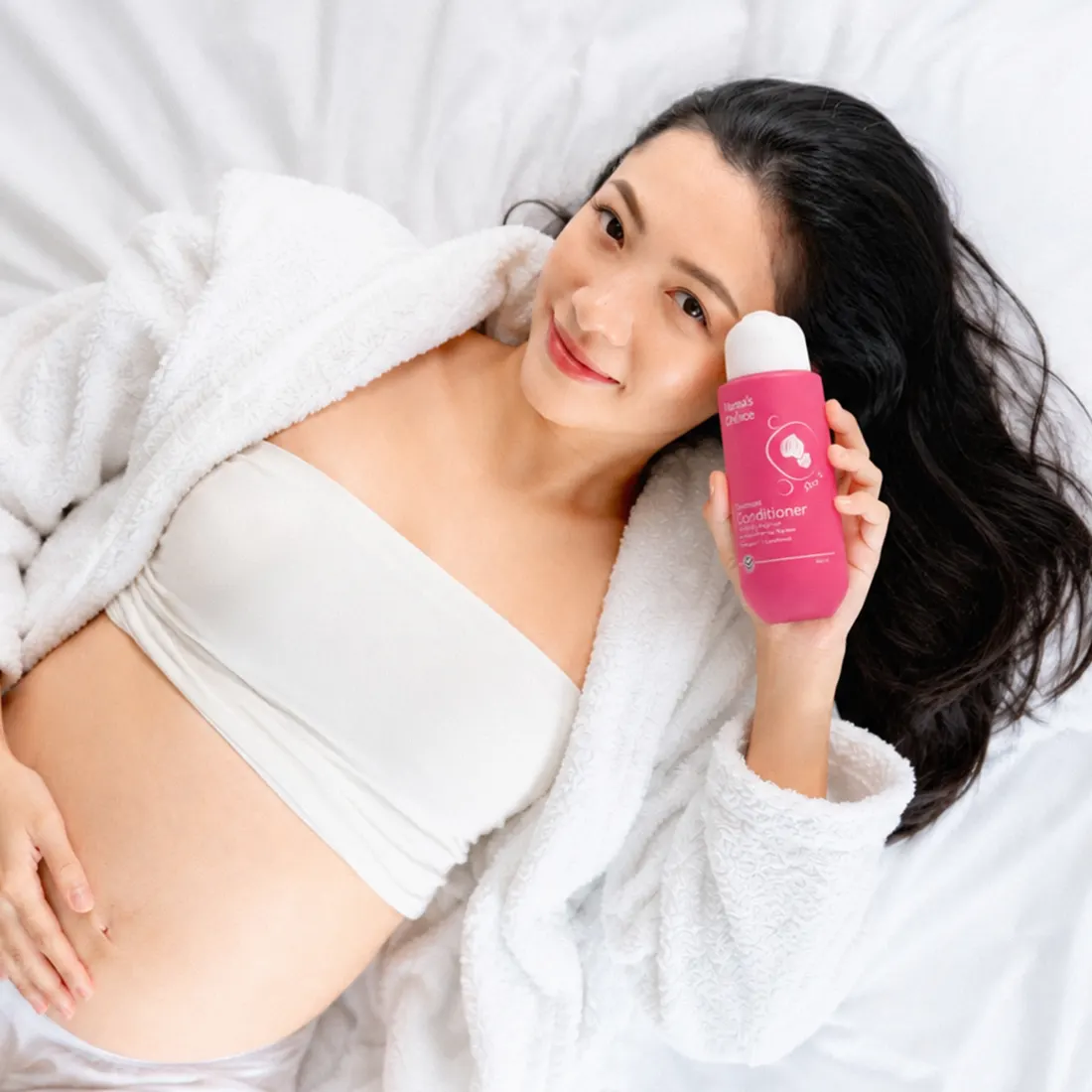
Treatment Shampoo and Treatment Conditioner are made for pregnancy and breastfeeding, with kiwi, candlenut and green pea, and without SLS, silicones, parabens or synthetic fragrance.
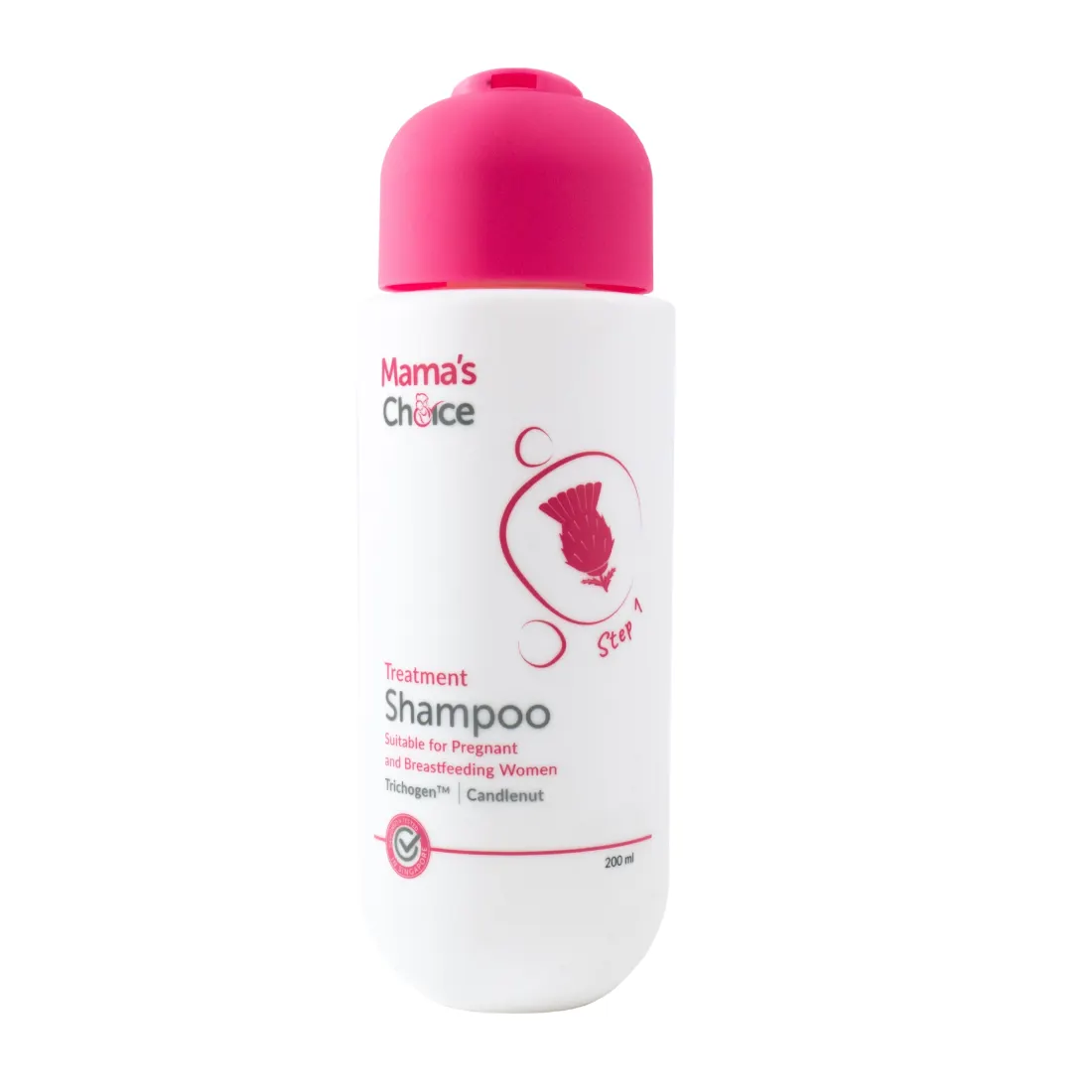
Where they go matters as much as what is in them. Shampoo on the scalp, conditioner on the lengths.
If it is falling out too
Different problem, different cause, and worth separating.
Shedding after birth peaks around the fourth month, comes from the drop in oestrogen, and finishes on its own between six and twelve. No shampoo shortens that.
What hair care can do is cut down breakage, so the new growth gets a chance to grow long. Worth doing, and a much smaller claim than most bottles make.
When to see a doctor
- Still shedding heavily twelve months after the birth
- Round bald patches rather than even thinning
- A scalp that is red, scaly or sore
- Hair changes with heavy fatigue, palpitations or unexplained weight change
That last one can be a thyroid problem, which is common after birth and settled with one blood test.
Sources
Share this article
This article is for information only and is not a substitute for diagnosis or medical advice. Please discuss your own situation with your midwife or doctor.