Baby Sunburn: What to Do and What to Avoid
Sunburn on a baby needs medical assessment, not a moisturiser. What to do first, what protection looks like by age, and what never to put on burnt skin.

If your baby is burnt, do not reach for the lotion. Reach for the phone.
Baby skin is much thinner than yours and carries very little melanin, the pigment that gives some natural protection against UV. A burn that would be a nuisance on you is a medical problem on him.
Ring a doctor today if
- He is under one year old and has burnt at all, however small the patch
- Blisters have come up
- A large area is burnt
- There is fever, floppiness, vomiting, or he is hard to wake
- He seems to be in real pain
While you are sorting that out: get him into shade, put a cool compress on it, offer milk or fluids more often than usual. Do not put oil, butter or toothpaste on burnt skin. People still suggest all three.
What helps while it heals
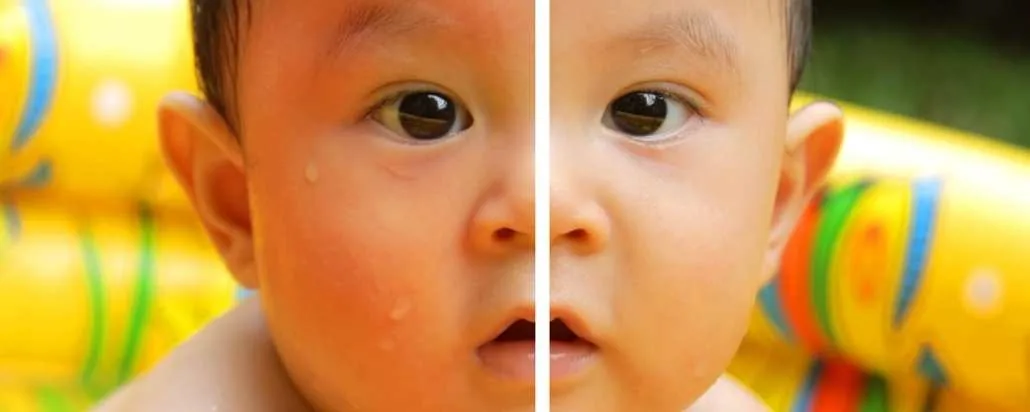
Keep him out of the heat. Not back outside until it has healed.
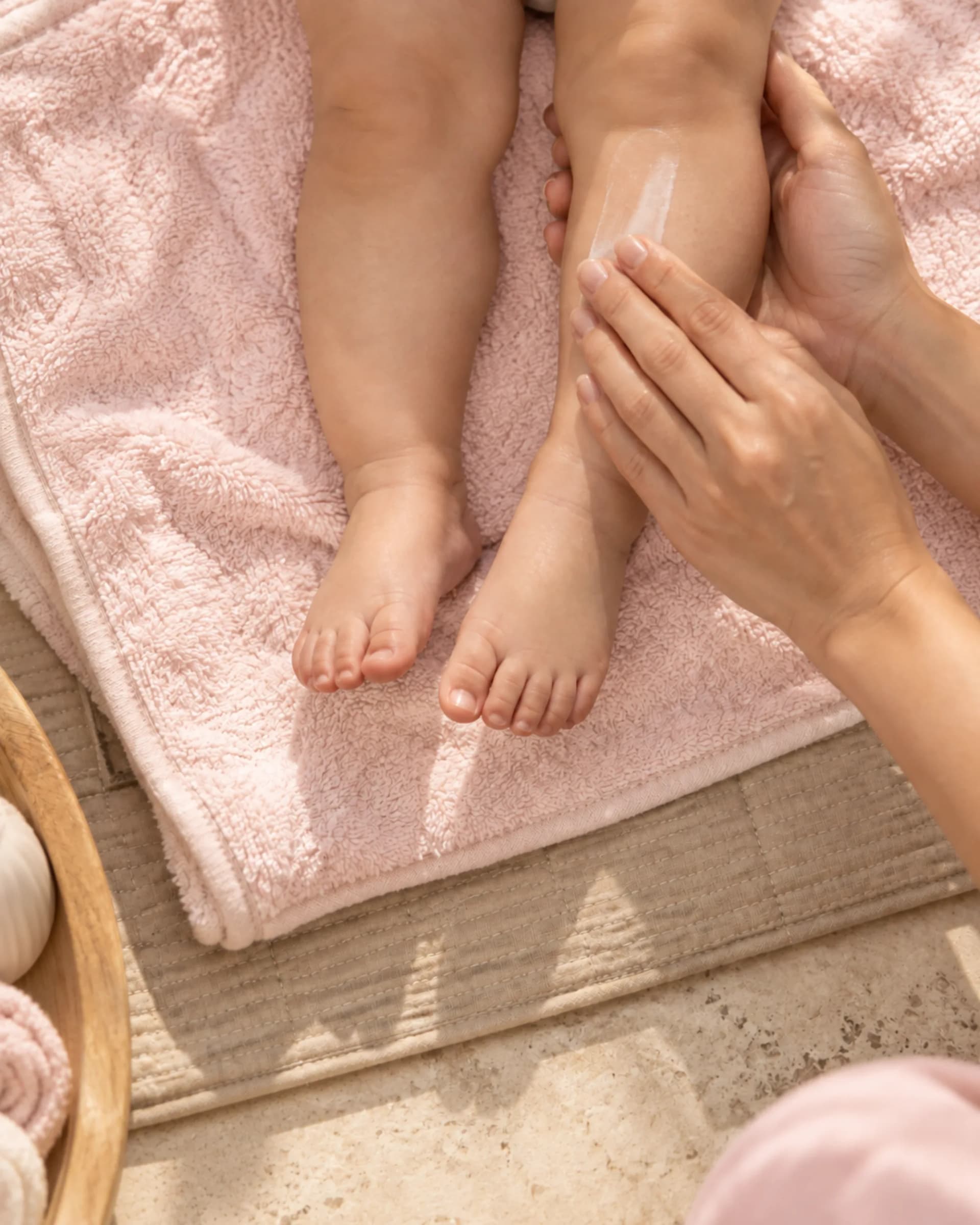
Cool compresses. The American Academy of Pediatrics suggests cool running water or a compress for about five minutes. Cool, meaning room temperature. Not iced.
More fluids, more often. Burnt skin loses water faster and dehydration comes on quicker.
Soft loose clothes, and keep the area clean.
Paracetamol can help with the pain. Check the dose with a paediatrician rather than reading it off the box, because infant dosing goes by weight.
What protection looks like, by age
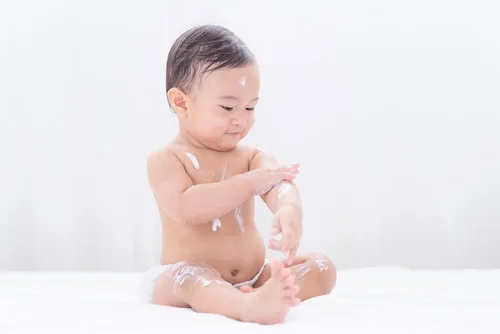
Under six months. Shade, covering clothes and a wide-brimmed hat are the protection. Sunscreen goes only on the small bits you cannot cover, and only when there is genuinely no shade.
Six months and up. Mineral sunscreen, SPF 30 or higher, on exposed skin, topped up every two hours and after swimming. Clothes and shade are still the first layer.
The Skin Cancer Foundation puts the start line at six months.
Sunbathing him is not skincare
Putting a baby in the sun deliberately is not recommended, including for vitamin D.
It is a long-standing habit across Indonesia and it comes from a good place. But his skin is far thinner than yours and burns far faster, and the trade is a bad one. If vitamin D is the worry, that is a conversation with a paediatrician about drops, not a reason to put him in the sun.
If he is going out at all, avoid 10am to 4pm.
Why any of this matters beyond a sore few days
UVA reaches the deep layers and damages the structures there. Years later that shows as premature ageing.
UVB does the visible part: the burn, the redness.
Heavy UV exposure in childhood is a significant factor in skin cancer risk decades later. That is the real reason to be strict about it now, when he cannot tell you it hurts.
Choosing a sunscreen for him
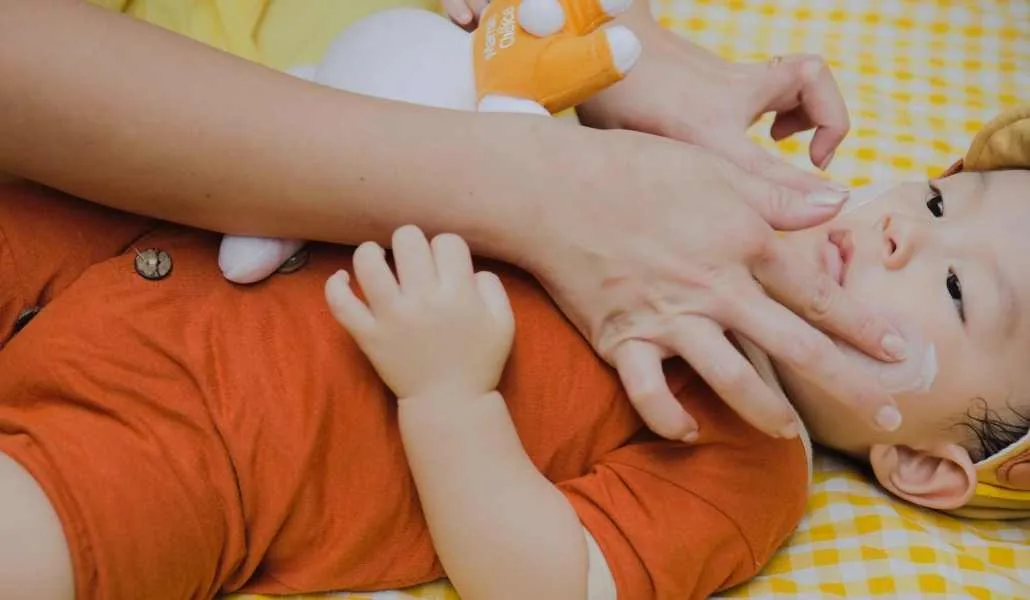
Mineral sunscreen sits on the surface and reflects UV, which means it works the moment it goes on rather than needing twenty minutes.
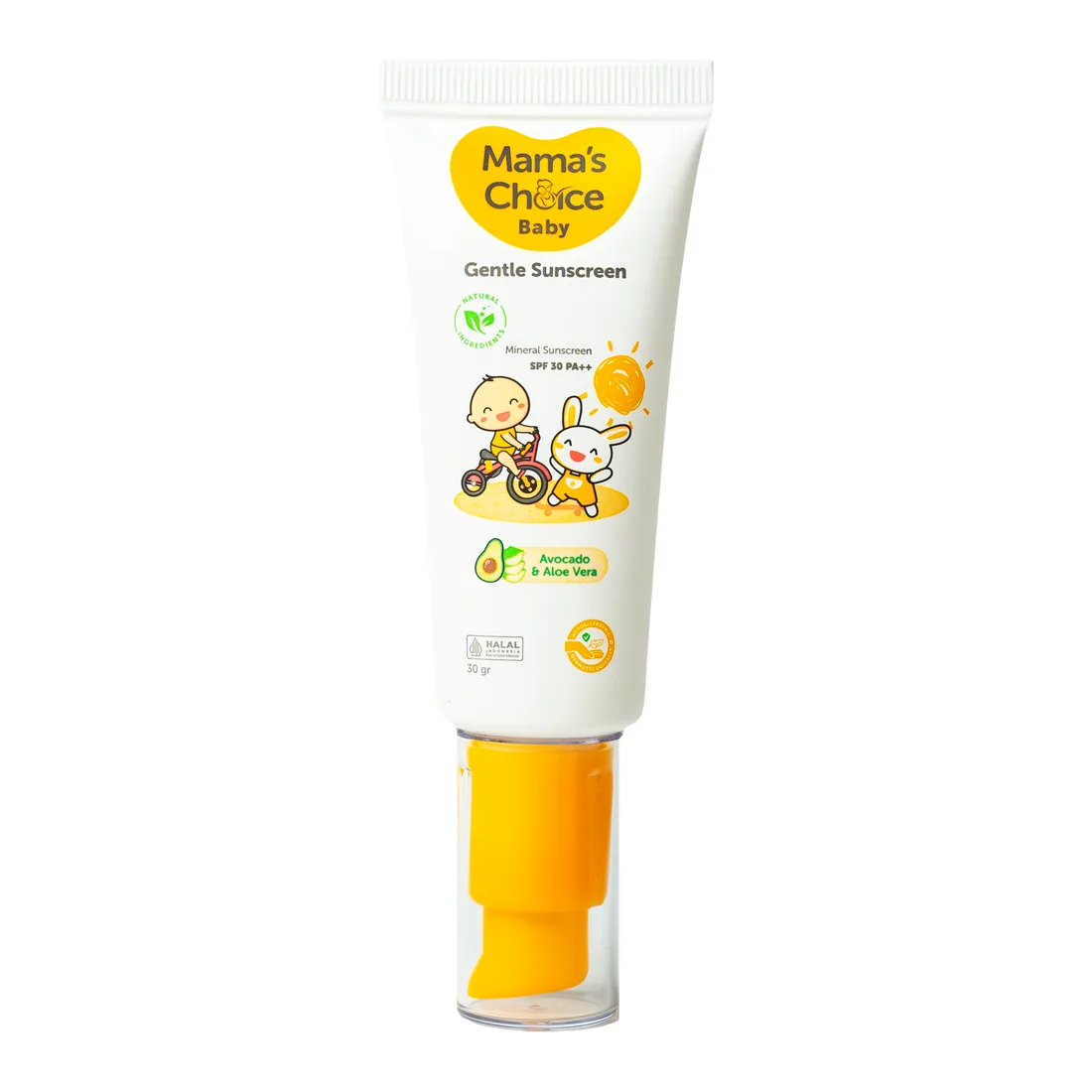
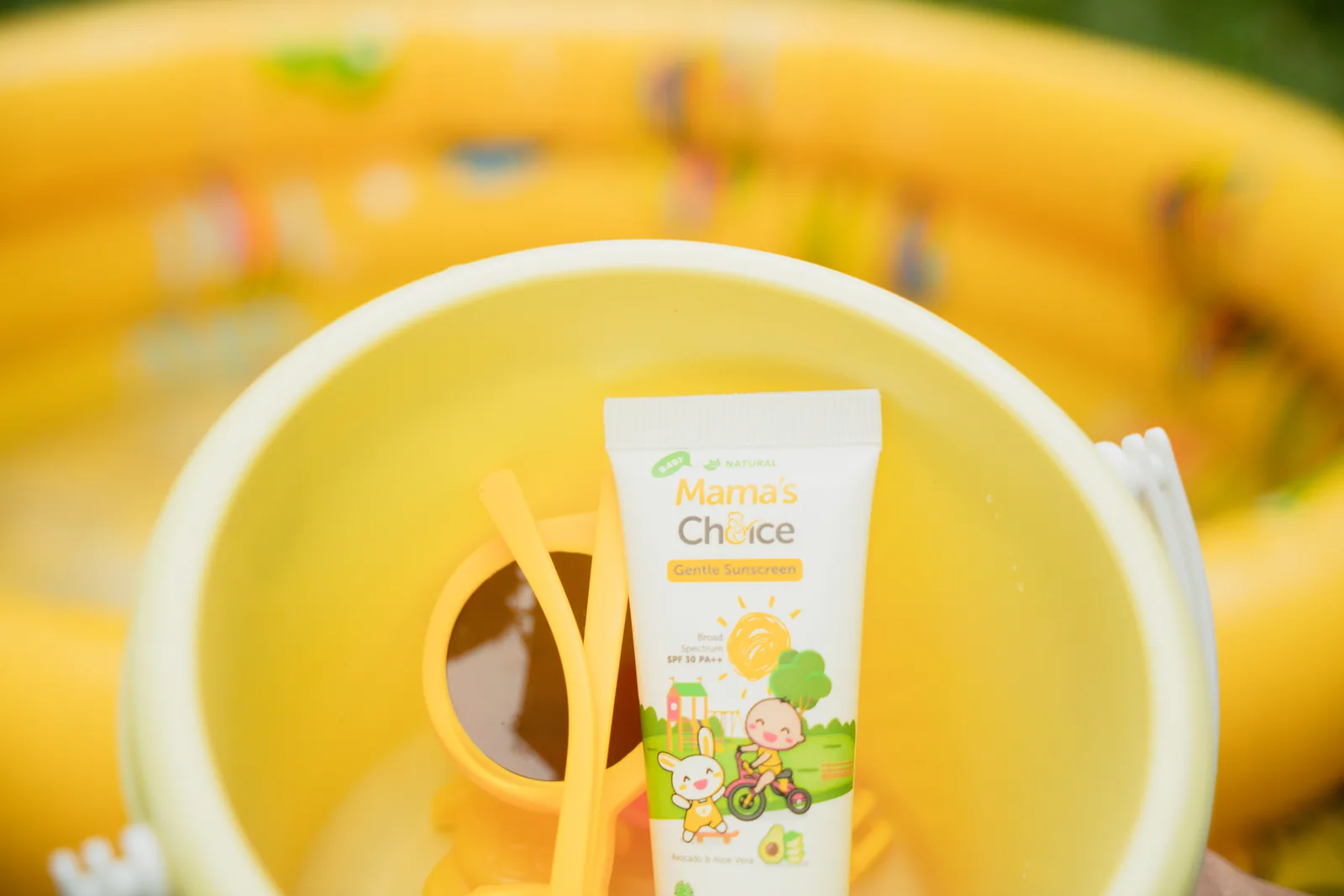
Mama's Choice Baby Gentle Sunscreen uses a mineral filter, SPF 30++ broad spectrum, with avocado, aloe vera and coconut, tested water resistant for 80 minutes.
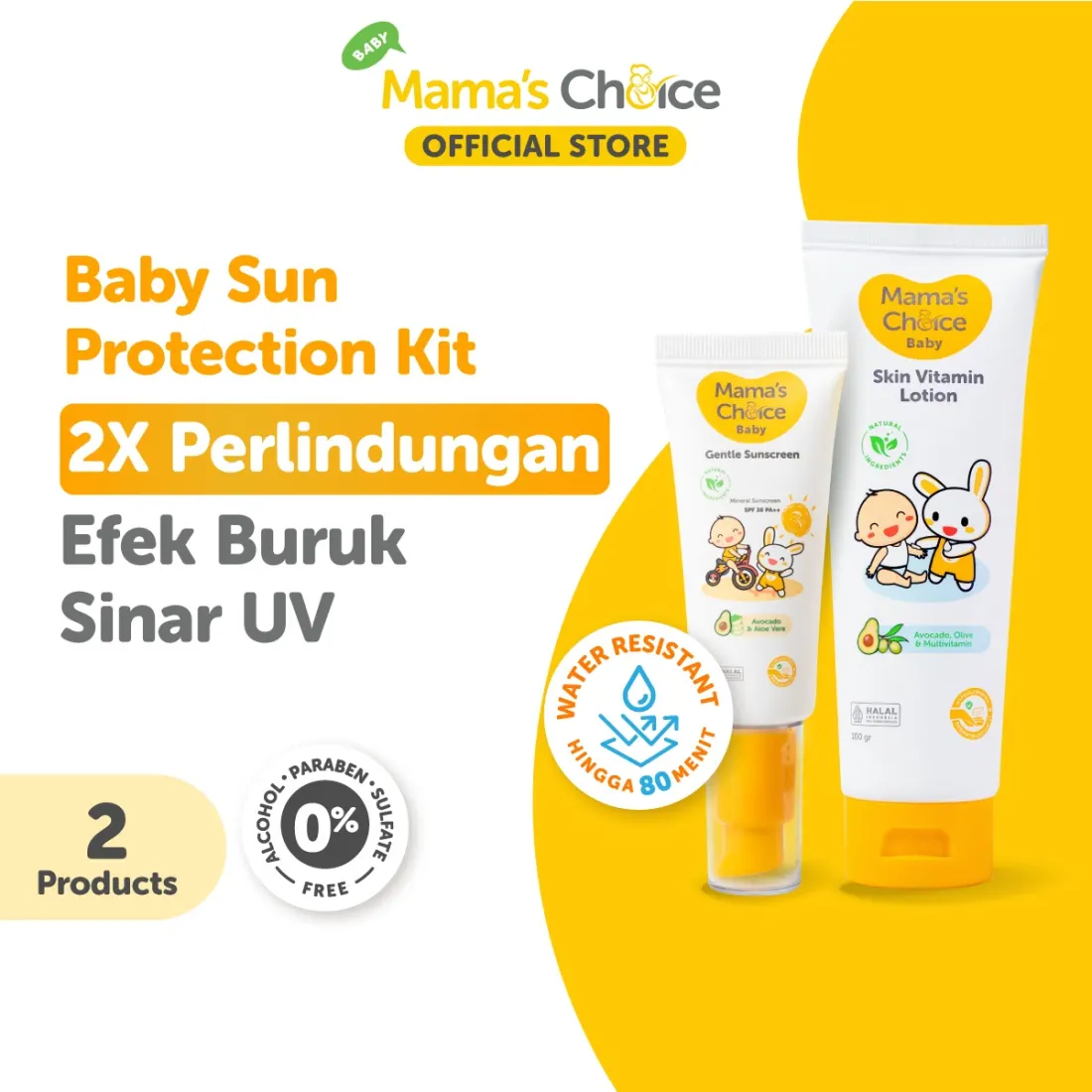
Do not use your own sunscreen on him.
A note on claims: figures like "9 in 10 Mamas felt their baby's skin was protected" come from consumer satisfaction surveys. They record impressions, not a measurement of UV protection.
Once the skin has healed
Mama's Choice Baby Skin Vitamin Lotion is for sensitive baby skin, with avocado, olive and vitamins C, E, B3 and B5.
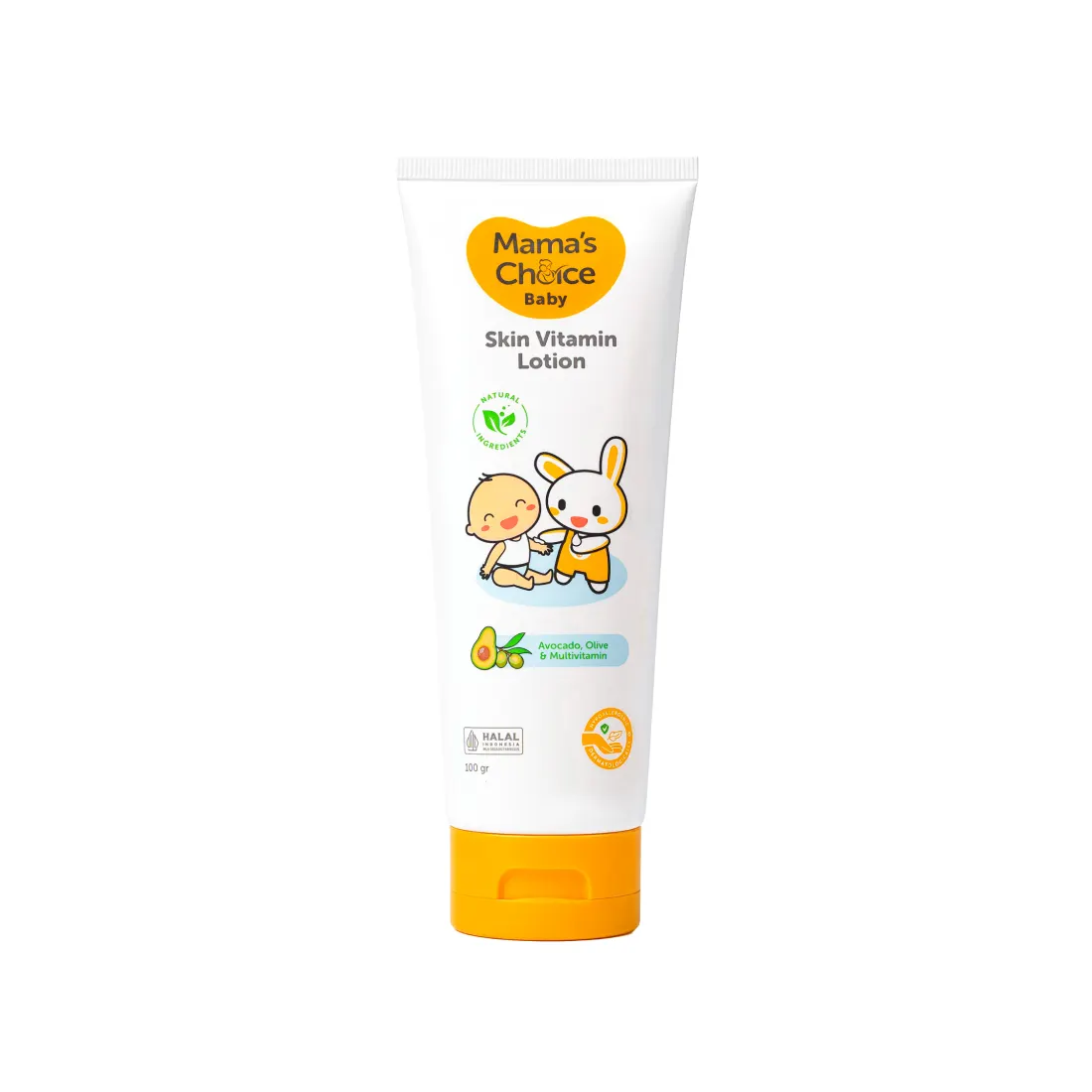
Everyday moisturising only. Skin that is actually burnt needs a doctor first.
Stopping it happening again
- Outside 10am to 4pm
- Light covering clothes that absorb sweat
- A wide-brimmed hat, and sunglasses that stay on
- An umbrella or pram cover
- Sunscreen topped up every two hours, over six months
Shade and clothing are the layer that works at any age, in any weather, without you having to remember anything.
Sources
Share this article
This article is for information only and is not a substitute for diagnosis or medical advice. Please discuss your own situation with your midwife or doctor.